The swoosh of the Nike symbol seems to grace almost everybody’s wardrobe from sweatshirts to shoes, as Nike has built a successful business that continues to trend upwards. But, just how did Nike become so successful?
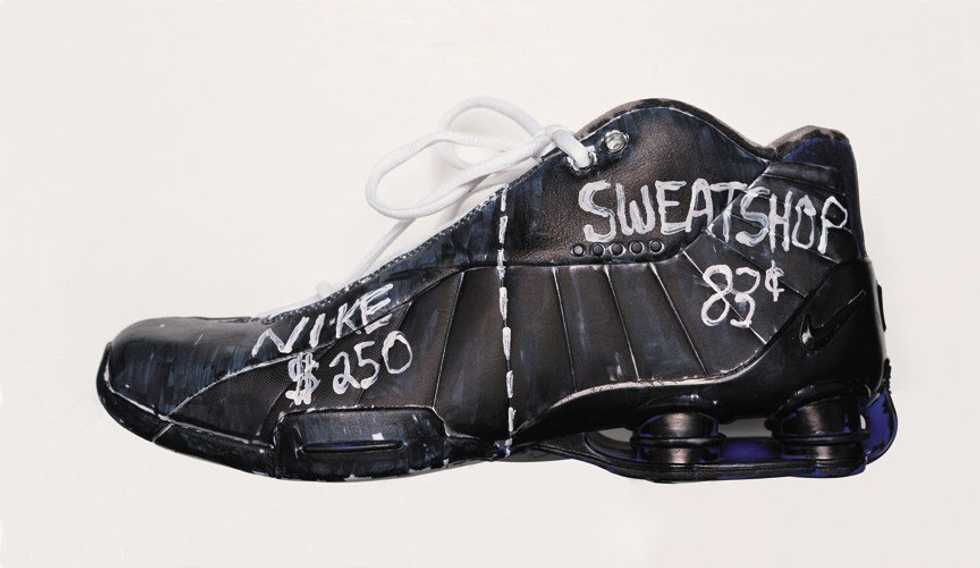
Well, if you know Nike, their marketing is everywhere and it is a standard for most companies. They somehow spread their symbol and ads in every part of our society. To make up for the intense marketing towards you, they aggressively outsource on the other end, the manufacturing end. They use what are called sweatshops, and they are grueling, unapologetic, severely below minimum-wage income jobs. The person who made your sweatshirt most likely has to decide, daily, whether they’re going to shave or eat. Now, though this is still going on, Nike has and is trying to turn itself around.
The factories' problems were first exposed when Jeff Ballinger published a report showing the terrible working conditions of one Indonesian man in the ‘90s. He was being paid 14 cents an hour, below Indonesia’s minimum wage. In lieu of this report and many others, protests against the company increased throughout the ’90’s. As a result, Nike decided to create the Fair Labor Association, a non-profit group that emphasizes human rights while also making a concrete minimum wage. But, the best thing Nike did was publish it’s factories locations and the working conditions within them. They continually recognize the problems and try and work on them, even in the present.
Presently, all is well and good for Nike, as their image has turned around from the ’90’s. However, it doesn’t change the fact that their outsourced labor is a huge problem as they can’t seem to control the thousands of factories they house across the world.
In 2011, workers, once again in Indonesia, complained of higher-ups kicking, slapping, and calling them dogs and pigs. While Nike recognized this, they said there was, “little they could do about it.” The factories are mostly made of women who often say that they are, "powerless” because if they speak up they’ll be fired.
Nike continually receives complaints from workers and their call of action is to send a “warning letter” to the higher-ups. If Nike really wants to turn themselves around, they need to take more action in a clearly corrupt environment they are fostering.
Even more concerning, in October of 2014, Nike declared that they will "not permit third parties into their factories". It was not just a refusal, but rather a policy refusing access. When a Vietnam factory recently went on strike, Workers Rights Consortium, an independent labor rights group, tried to monitor the factories but were told it was against policy. Nike stated the issues were already resolved and therefore did not need any monitoring.
The only companies allowed to currently investigate the factories are Fair Labor Association and Better Work, both favorable auditors for Nike. Surprisingly, the WRC has been able to cooperate with Nike for fifteen years but recently Nike has capped their access fully.
Outside of just Nike, the U.S is currently trying to make a trade agreement with Vietnam that will increase the wages for a country that makes up to 1/3 of the Nike products made. Though at face value this is beneficial, if looked at from the inside, one can see that the way workers are treated is still poor and human trafficking as well as child labor exists in the confines of these jobs. If Nike and other companies want to make an impact they would make sure the rights of the workers are respected as well as supporting the trade agreement.
Nike can and is likely to throw away the sweatshop image year by year, but it is our job as consumers to keep them in check. Put yourself in the workers’ shoes and realize that no one’s basic rights should be abused for the pair of shoes you wear.
The broader question that needs to be asked is: Are what Nike and other companies doing, enough?
WRC Monitoring: http://ignatiansolidarity.net/blog/2015/12/16/nike...