

39 years ago on September 5, 1977, NASA launched the Voyager 1 space probe. Today, at approximately 135 times the distance from the Earth to the Sun, or 2.02x10^10 km because every professor likes three sig figs and SI units, Voyager 1 is also the furthest object away from Earth that humanity has built.
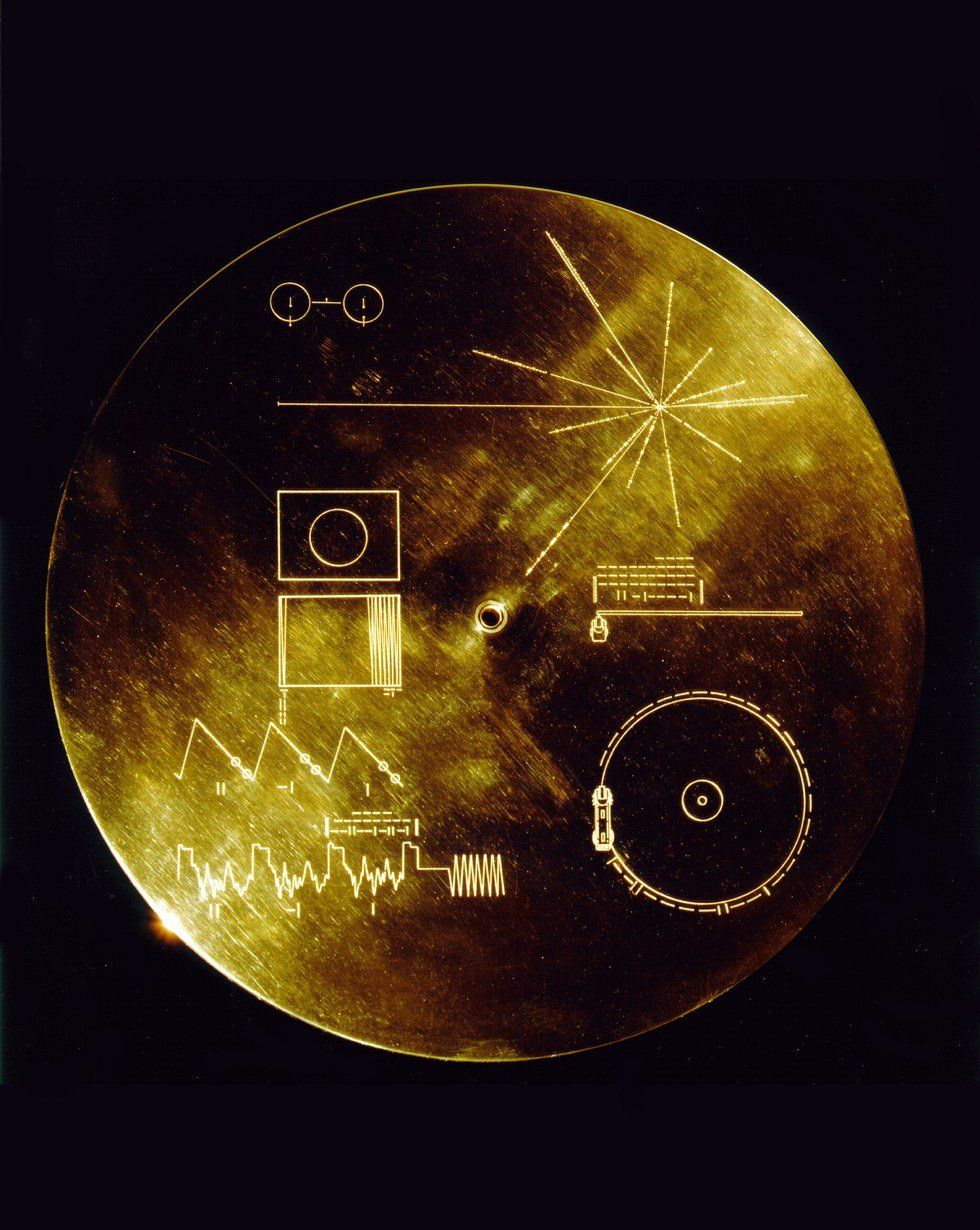
Included on Voyager is the Golden Record. The Record is a gold-plated copper disc that contains greetings in 55 human languages, “Sounds of Earth” collection of everyday noises, messages by President Carter and former UN Secretary-General Kurt Waldheim, and 90 minutes of music from around the world. Fun fact: this record has a projected shelf life of a thousand million years (fun fact number 2: a billion is not a universal measurement).
I’ve done hypotheticals in some of my previous articles and I’d like to continue that trend. Suppose you were working with the team making the Golden Record in 1977, what kind of music would you suggest be put on it? Would you pick something off the Top 40 for every country? Something patriotic to show national pride, like a military march or folk song? When the United States decided to add their four songs, guess what we settled on; Melancholy Blues by Louis Armstrong, a Night Chant by a Navajo choir, Johnny B. Goode by Chuck Berry, and Dark Was The Night/Cold Was The Ground by Blind Willie Johnson. In fact, every song on this record is selected from either cultural folk songs representing the native inhabitants of a respective country or songs representing the spirit of a country’s population.
The greetings onboard Voyager are some of the most down-to-earth messages you could think to say to somebody. “Wishing you a peaceful future from the earthlings.” (Nepali). “How's everyone? We all very much wish to meet you, if you're free please come and visit.” (Mandarin Chinese). “Greetings to our friends from the stars, may time bring us together.” (Arabic). And finally my personal favorite, “Hello. How are you?” (Japanese). I’m just waiting for some alien 50 million years from now hearing any one of these to turn to his friend and say, “These aliens had some weird music.
But put Voyager in perspective; it’s the beginning of the thaw of the Cold War, the US and the Soviet Union have been cooperating nicely with the SALT Treaties, Pres. Carter was inaugurated a few months ago, and the world seems like it’ll keep going for a little while longer. Compared to 20 years ago when we were teaching students to hide under their desks in case of total nuclear war, 1977 doesn’t seem too bad. And with that optimism, we decided to bring together a fraction of the culture of Earth together on a little gold plate, and throw into space.
It would be another 15 years until the fall of the Soviet Union and the more or less official end of the Cold War, and any optimism we had in previous decades seems to have faded. If you watch the news, you constantly hear about the looming threat of terrorism, the “terrible” state of our economy, and endless and necessary news about police brutality, systemic racism, and the neglect of people in our society. What we need, now more than ever, is another Golden Record.
I don’t mean actually build one and launch it into space at 29,000 mph (or 13 km/s, because don’t forget your SI units). But we can make one by acknowledging that no one culture is objectively superior to another, talking about and sharing our cultures, and that it’s beneficial to accept people’s traditions and values regardless of where they are from.
We need to think about how to come together and help each other when listening to Dark Was The Night/Cold Was The Ground, and think about how Blind Willie Johnson used to live in the burned out wreckage of his house with nowhere else to go. We need to think about how to respect traditions and personal freedoms while listening to the Navajo Night Chant, and think about the treatment that minorities across the US over our nation’s history.
Some nights, when you look at the sky and wonder what’s out there, imagine Voyager ripping through space, and imagine the time we came together to recognize and celebrate our cultures.
















