

Author's note: As we all know, global warming has been an issue since we were born. Everyone's always saying "Save the Planet!" or "Go Green!" But have you ever really thought about it?
I had to write a paper on a topic of interest for my Ecology class last semester. It really opened my eyes to how much our planet needs us. The research I have done is seen below. I hope you appreciate the information as much as I did, and start contemplating how you can help to save our planet.
The aspect of “global change” has become a very recognizable issue. People all over the world have become aware of the many issues contributing to the planet’s decline and unsustainable future. These environmental changes are continuously being researched and addressed, but no one really understands the extreme effects of this global change. The most vulnerable concept is the change in climate. The ATEAM project conducted by M.J. Metzger, M.D.A. Rounsevell, L. Acosta-Michlik, R. Leemans and D. Schroter, was used to study this vulnerability. They conducted the study through the use of indicators and developed ways to help “regions in Europe cope with the effects of global change”. Through this study, humans were seen to have a major role in climate change.
Humans are considered to be a major cause of climate change. In fact, because of humans, the atmospheric carbon dioxide has increased about thirty percent in the past three centuries, due to fossil-fuel combustion and deforestation; causing global warming. The continuous burning and cutting down of trees, creating more carbon pollution, is detrimental to Earth. However, if the forests are constantly being destroyed, the animals living there will no longer have a place to live and the Earth will continue to rise in temperature.
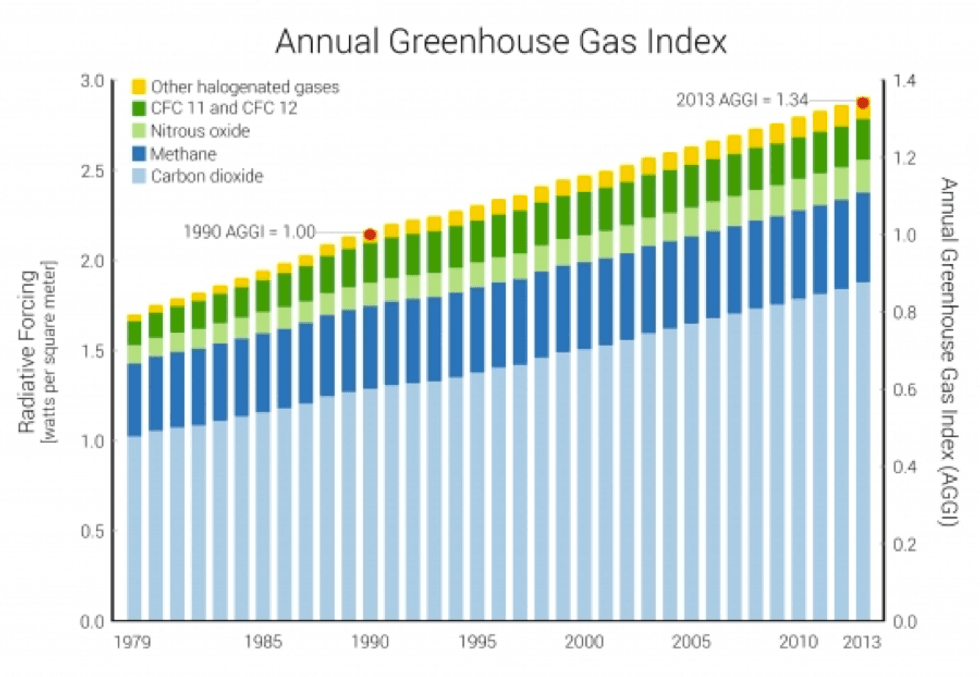
Figure 1
This increase in temperature is due to the sun’s rays becoming trapped in the Earth’s atmosphere, known as the greenhouse effect. Greenhouse gases such as water vapor, carbon dioxide, methane, chlorofluorocarbons, and nitrous oxide are part of the issue. With Earth being dependent on the sun for energy, this causes an increase in these gases. According to “A blanket around the Earth,” about half of the sun’s rays that pass through to Earth’s surface are absorbed and radiated back towards the sun. However, about 90 percent of this radiated heat is being trapped by greenhouse gases and radiated back to the Earth’s surface, causing global warming. This aspect has been scientifically proven to raise the Earth’s temperature by one degree every 140 years, potentially damaging many species. This aspect of global warming has a huge impact in the climate change and at this rate, may cause species to become extinct.
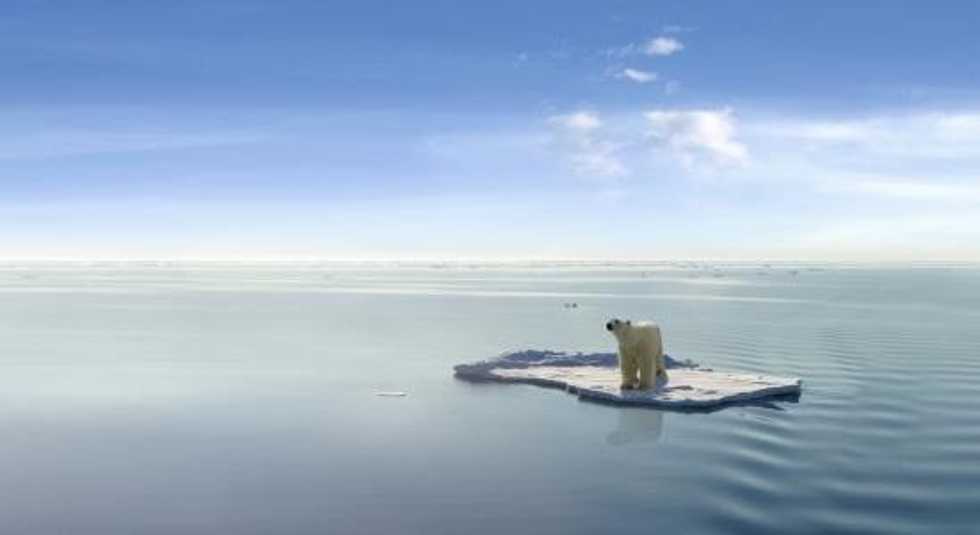
Humans are not the only species being affected by climate change. Many species including polar bears, reindeer, penguins and many others are being affected as well. Polar bears, as mentioned, have lost their Arctic habitat due to global warming. These Arctic habitats, consisting of ice platforms, are necessary for their survival. This dramatic decrease of ice due to climate change, will cause a dramatic decline in the polar bear population, losing about two thirds by the year 2050. During the summer in places like the Hudson Bay, Canada, there is no ice for the polar bears forcing them to live on land. Unfortunately, without these platforms, the bears are not able to catch fish, which leads them to starve. As a result, the polar bears are losing a tremendous amount of weight, averaging a decrease of fifteen percent and being forced to live in a cannibalistic manor. This scarcity of food leaves the polar bear population in despair.
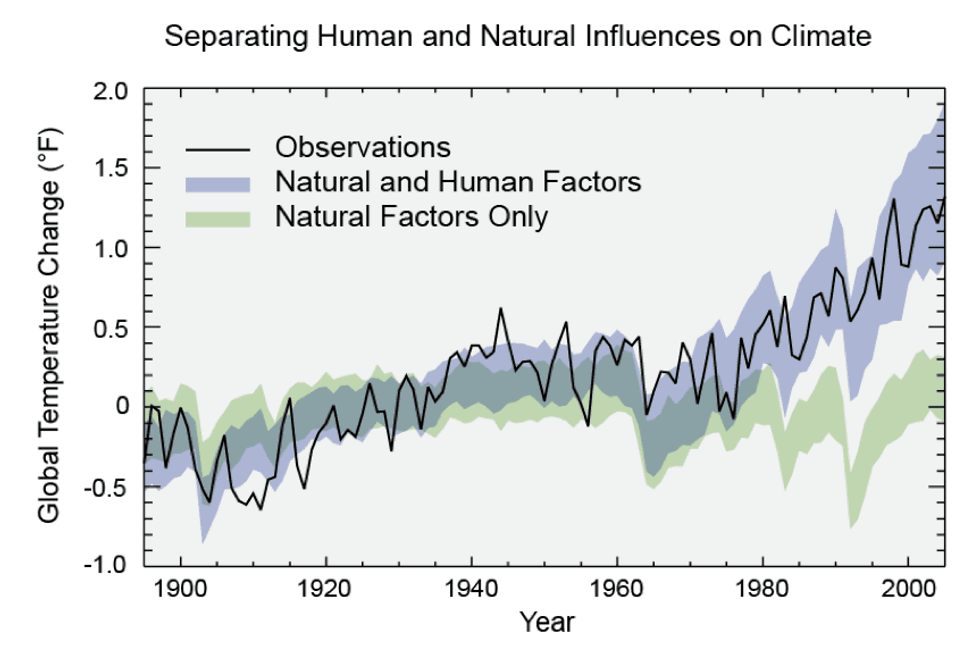
Figure 2
Global warming, however, also leads to a rise in natural disasters. An increase in drought, flooding, storms, and increase in sea level and agriculture are all possible affects of this climate change seen around the world (Figure 4). It is said that the regional patterns of US agriculture will shift and the impact on the economy strongly depends on the climate. These disasters, ranging from flooding to hurricanes, cause damage to the surrounding area, leaving that area in debt. The destruction of many manmade structures like homes, bridges, railroads and airports are destroyed and must be rebuilt. This is a huge issue that is already being seen throughout recent history. For example, the rising sea level, especially in Iraq is a huge issue related to climate change. Bangladesh is another area that is one of the most susceptible countries at risk of flooding (from an increase of the glacial melt from the Himalayan ranges). This melt is “set to swell the Ganges and Brahmaptura Rivers and their hundreds of tributaries, flooding 30-70 percent of the country each year as the water makes its way to the Bay of Bengal in the south, where the coast is also vulnerable to flooding from rising sea levels”. This large issue is already occurring and cannot go any farther.
A regulation in greenhouse gases may be a solution to these natural disasters. Climate-regulating services have thought to directly remove carbon dioxide from the atmosphere or have thought to plant more vegetation in cities in order to use the extra carbon dioxide being produced on a daily basis. However, in cities there is not enough space for large trees to grow, restricting their rooting volumes. It is thought that these trees could be used to shade buildings in warmer climates, potentially decreasing the building temperature. By decreasing the building temperature, the buildings may not need an air conditioner, lessening greenhouse gas emissions and energy use. In order to test this hypothesis, scientists use a range of tests.
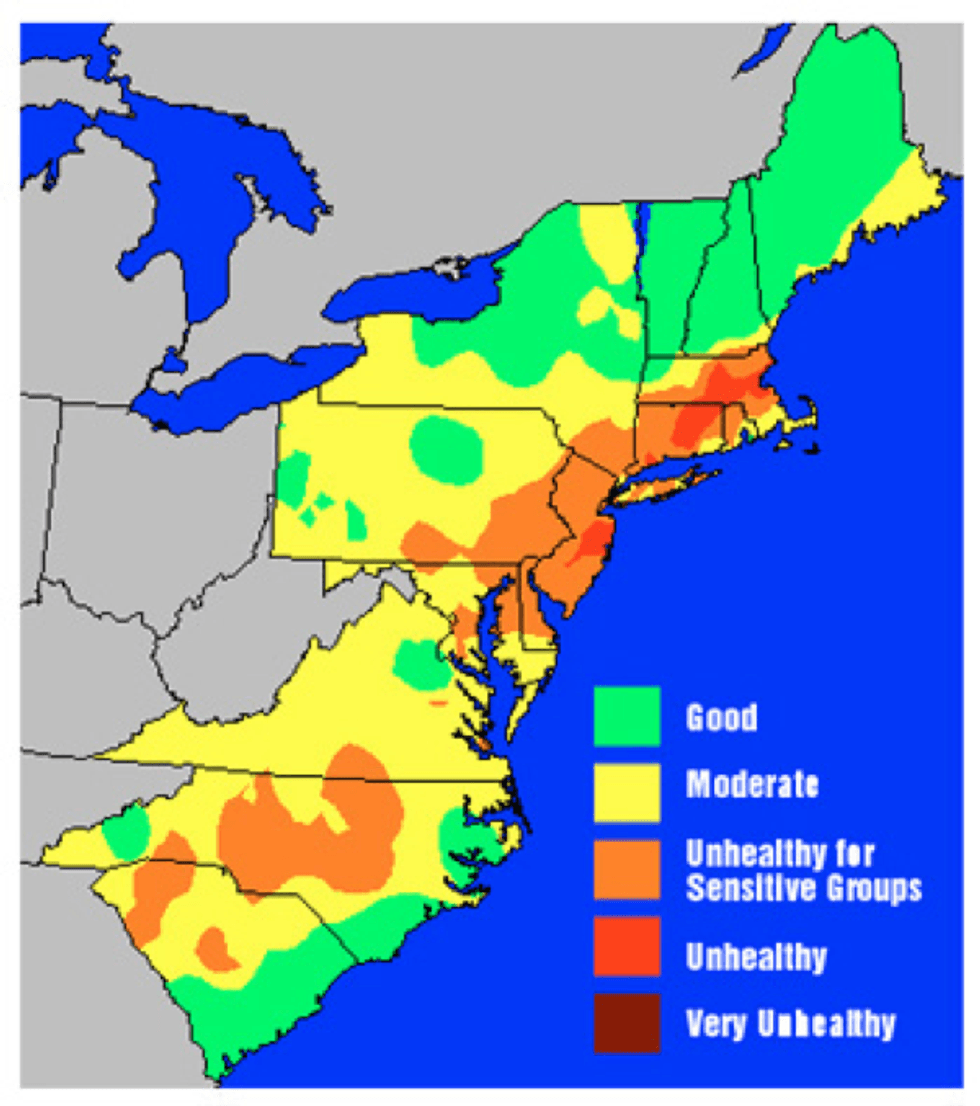
Figure 3
One test to evaluate climate change a tool called an indicator. Scientists, in order to track conditions or trends of the Earth, use indicators, generally observations or calculations. By looking at an indicator called the Annual Greenhouse Gas Index, it is seen that the temperature is continuously increasing on Earth. Based on the “measure of the capacity of Earth’s atmosphere to trap heat as a result of the presence of long-lived greenhouse gases” (Figure 1) it is determined that global warming is continuous. Taking a closer look, the AGG provides the standardized information on human activity that has affected the climate through greenhouse gas emissions. By The measure of greenhouse gases, AGG, and the radiative forcing, or the change in the amount of solar radiation that is trapped by Earth’s atmosphere, are both seen to continuously increase. Therefore, the AGG Index provides evidence to support that the Earth’s temperature is constantly increasing over a period of time.
By comparing the human and natural influences to only the natural influences on climate depicts that humans are a large cause of global warming (Figure 2). Both factors together are constantly increasing and are seen to spike around the 1970s, where the Industrial Revolution began. The Industrial Revolution is known to be the start of powered machinery, today known to produce a surplus amount of pollution. Here, pollution started to increase as more factories were being built, leading to the effects of global warming.
Recently, plans have been developed to help limit pollution in cities. Cities are voluntarily signing an agreement to reduce greenhouse gas emissions and joining the Cities for Climate Protection program. There have been “efforts on designing and implementing ecosystem-services-based “green infrastructure” in urban environments” as well. They hope to improve air quality and health. Clean water is crucial to any living organism, sometimes helping to dilute pollution . However, water runoff an issue relating to pollution, comes from the every day agriculture. The wasted soil and other contaminated materials find their way down into estuaries and ponds causing massive destruction to not only the water, but to the animals living there as well. Eutrophication, however, is the “biggest problem in most coastal waters,” making the water even more polluted.
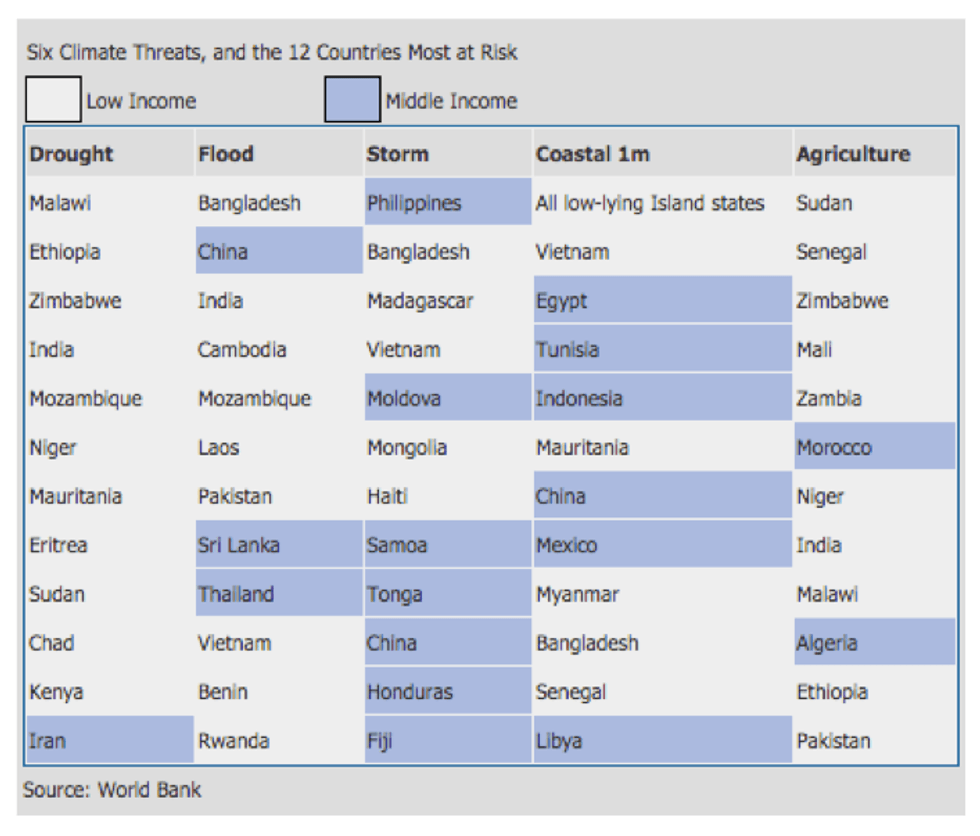
Figure 4
Another effect in climate change is the decrease in crop production. As the temperature continues to increase, the water supply decreases along with a higher evaporative rate in soil. This heat could potentially cause droughts and reduce water availability as seen in 2007 when “a major drought hit the southeastern United States. Lake Lanier, which is the main source of drinking water for the Atlanta area, was reduced to record-low water levels. People had to use less water in their homes and businesses and make other changes…”. By using ecosystem services, the climate may cool, the water cycle may be regulated, and runoff my potentially decrease. However, not all services work effectively.
Pollution, a main concern, has had many scientists worried for years. Being only one leading cause to the increase in Earth’s temperature not only has a negative effect on the planet, but also has a negative effect on living organisms. Air pollution for example, has become worse with Earth’s rising temperature. When the sunlight beats down on vehicles and factories, the rays react off the pollution, creating a type of smog called ozone smog. This smog, as seen in major cities, can put many people at health risk, especially if they have asthma or allergies.
As the temperature increases, pollen production increases and so does the common allergy. In the state of New York, 23 counties have unhealthy smog levels with an estimation of 415,900 children and 1.3 million adults with asthma. This is a large amount of people suffering from the smog from pollution. Some people in New York, called sensitive groups, are asked to limit their time outdoors to protect themselves from eye irritations or asthma attacks (Figure 3). This smog will continuously increase if the pollution increases. However, pollution increase is not the only thing harming the population.
As the temperature increases, the disease risk increases. The current warmer summers and milder winters are starting to result in the growth and spread of pathogens around the world, triggering disease epidemics. The spread of diseases can only get worse if the temperature continues to increase.
There are several negative effects of climate change on Earth. This temperature increase is essential to species survival and must be stopped. If the temperature continues to increase, this may lead to a rise in natural disasters, a decrease in animal diversity and a decline in human resources. There is hope to stop this constant increase by conserving energy and being aware of this global change.
Keep smiling.