


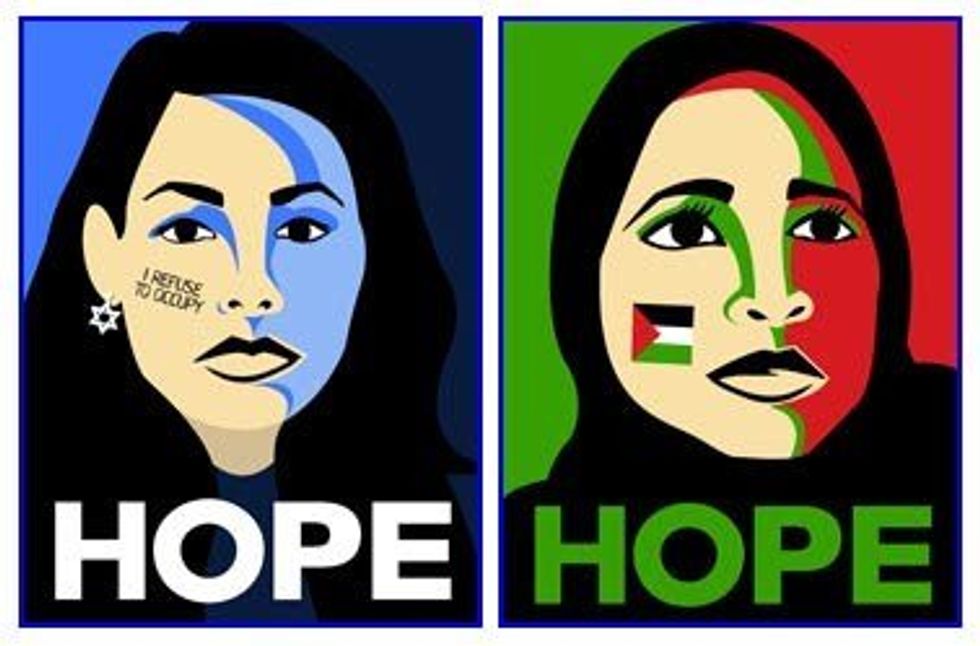
It is hard to keep up to date with Middle Eastern conflicts. From western and eastern intervention to conflict within the area, the region is an important actor that is frequently spotlighted in the international community. The spotlight shifts and fades, though it has remained fairly consistent on the Israeli-Palestinian conflict. International hostility is incredibly complex and only continues to get more complex with the addition of religious and land conflict. This is definitely the case between the Palestinian Authority and the Israeli government.
Historically, most of the western world has supported Israel and Palestine maintains its support from western rivals and neighboring Arab nations. However, recent measures taken by influential European states have caused a large unrest between the conflicting sides as it appears that slowly and silently, the internationally community is shifting to support of the Palestinian Authority.
In the case of most political disputes, there is a long and complex history that preludes the current problems of today, and this can be said for the current Israeli-Palestinian conflict. Many historians and anthropologists disagree on the Holy Land’s original settlers. Some believe that the Jewish community settled the land after being freed from religious persecution in Egypt and then fled from their "Promised Land" from fear of persecution again; yet others will say that Arab Palestinian ancestors colonized the land before Jews. However, the former is more widely accepted than the latter. What is known is that both ethnic groups had settled there at one point and the modern conflict can be traced back to the late 19th Century.
Three regions, the West Bank, Gaza, and Israel, were formally known as Palestine until the migration of the Israeli Jews in 1880. The Israelis cite that they were the original owners of the land and that it was promised to them by Adonai, or God (literally translated as "My Lord"). In contrast, the Palestinians disagree and believe that they are the rightful owners of the Israeli land, considering that their people have lived their for years before the 1880 migration. After the Arab-Israeli War of 1947-1948, The region was split into the three sections above and recognized collectively as the sovereign state of Israel.
Conflict over land ownership continued through the twentieth century, but peace seemed to be an obtainable goal after the 1993 Oslo Accords. The Oslo Accords called for Palestinian autonomy in the Gaza Strip and the removal of Israeli occupation in that territory. In return, the newly founded Palestinian Authority would renounce terrorism against Israel and amend sections of the Palestinian Liberation Organization (PLO) that called for the extermination of Israel. However, internationally, Israel still controls borders and import/exports within the Gaza Strip which has created animosity within Palestinians.
Patterns regarding outbreaks between the Palestinian Authority (ruling the Palestinian West Bank), Hamas (ruling power in Gaza), and the Israeli government have emerged. There is sustained violence; however, large, publicized outbreaks occur every couple months. Between July and August 2014, around 2100 Palestinians were killed, nearly 1500 being civilians, and about 500 being children. Combined, Hamas and Israeli forces in Gaza launched 4800 indiscriminate missiles into Israeli populated hubs. Today in 2015, Palestinians and Israeli tensions are heightened again. Recent violence has increased international attention to the ongoing dispute between the two rivaling entities. Since the beginning of October, 77 Palestinians and 10 Israelis have been killed and over 2000 Palestinians and more than 100 Israelis have been injured in violent attacks. One of the most disturbing images is of a father clutching his two-year-old child, begging to “wake up” after an Israeli air attack on a Hamas training camp.
Diplomatic threats and actions have also been taken against the opposing sides. Both groups have violated the 1993 Oslo Accords through obstruction or destruction of holy sites, which are under the protection of Accords. Israeli military forces obstructed entrance and occupied the al-Aqsa mosque compound. The Israelis released tear gas, stun grenades, and opened fire with rubber-covered steel bullets on worshipers. Palestinian rebels set fire to the Joseph’s Temple, a Jewish holy site in Palestinian Jerusalem in October of 2015 in retaliation. Unfortunately, this is not the first time Joseph’s Temple has been attacked by Palestinian rebels.The Palestinian Authority and PLO have also discussed revoking recognition of Israel as a sovereign state, another violation of the Oslo Accords.
The conflict has not gone unnoticed by the international community. Israel maintains the majority of support, namely from the United States, though recent steps taken by European states insinuate a shift from Israeli support to Palestinian support. On 13 May 2015, the Vatican City, under Pope Francis, officially announced the finalizing of a treaty that recognizes the Palestinian state rather than solely the PLO. Pope Francis’ influence over Catholic members of the international community has sparked discussion about the legitimacy of an independent Palestine.
Member states among the European Union (EU) have also made drastic changes in their support. The 2014 decision by Sweden to recognize Palestine has been expanded in 2015 by their establishment of a Palestinian embassy in the Swedish capital, Stockholm. In more recent news, the British Parliament voted and passed, with an overwhelming majority (274:12), a nonbinding resolution to recognize the State of Palestine. While the resolution is not legally binding, the resolution has sparked conflict between Israel and the British Parliament. Fear of future sanctions, boycotts, and embargoes placed on Israel have only been heightened by another recent resolution by the European Union. The 28 member states announced on 11 November 2015 that they will be requiring Israeli imports goods that were seized in the 1967 war to be labeled as “Made in Settlement.” This resolution affects products produced in East Jerusalem, Gaza, and the Golan Heights (an annexed territory, formerly belonging to Syria). Products bearing a “Made in Israel” label can enter the European Union with little to no taxes or tariffs, though the same cannot be said for “Made in Settlement” products, meaning that the Israeli government, who still controls the flow of goods from occupied territories, will have to begin paying high fees to import goods into the EU. Even with the European Union being Israel’s largest trading partner, the goods affected by labeling only account for about 1 percent of the total Israeli economy. While the economic hit might be minimal, Israelis believe that the EU’s resolution is also a political attack, which accuses Israel of currently occupying land that does not belong to them. Fear of sanctions and embargoes on “Made in Settlement” goods by international companies could have a large and damaging effect on Israel. Perhaps slightly more far-fetched, some speculate that this resolution may revoke the ability of Israelis living in settlements to travel to European Union states without a visa. Despite the European Union’s continued claims that this is not a boycott on Israel, the Israeli government continues to condemn member states.
The concept of a completely peaceful resolution is not possible when it comes to Israeli-Palestinian relations, and diplomatic decisions made by European states only continues to convolute the dispute. Announcements from state governments, such as the Vatican City, Sweden, and the British Parliament, increase the favor of a Palestinian state. The same can be said about the collective decision from all 28 European Union members to require the labeling of settlement vs. Israeli products; which is being viewed as an official statement that Israel is occupying stolen land belonging to Palestine. While peace talks, such as the Oslo Accords, increase safety momentarily, it seems that many states are beginning to favor the idea of a separate, sovereign Palestine.Bibliography
1.) Abunimah, Ali. “Destruction of Jerusalem’s al-Aqsa mosque is Israeli groups’ ultimate goal.” The Electronic Intifada. 16 September, 2015.
2.) “A Brief History of the Israeli-Palestinian Conflict.” New York Times. 9 January 2009. Castle, Stephen and Jodi Rudoren. “A Symbolic Vote in Britain Recognizes a Palestinian State.” New York Times. 13 October 2015.
3.) “First Palestinian embassy in W. Europe opens in Sweden.” Russia Today. 10 February 2015.
4.) Human Rights Watch. “World Report 2015: Israel/Palestine.” January 2015.
5.) “Mapping the dead in latest Israeli-Palestinian violence.” Al Jazeera. 9 November 2015.
6.) “Palestinians Burn Jewish Holy Site, Violating Oslo Accords.” The Tower. 16 September 2015.
7.) PBS Frontline. “Shattered Dreams of Peace.” June 2002.
8.) Rudoren, Jodi and Sewell Chan. “E.U. Move to Label Israeli Settlement Goods Strains Ties.” New York Times. 11 November 2015.
9.) Tharoor, Ishaan. “What the Vatican’s recognition of the state of Palestine means.” New York Times. 13 May 2015.

















