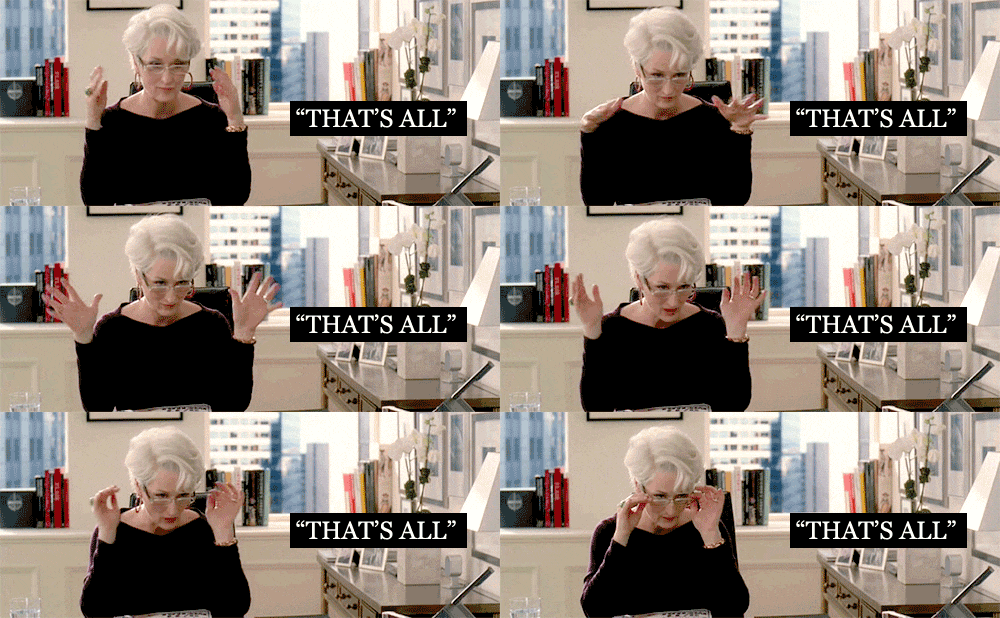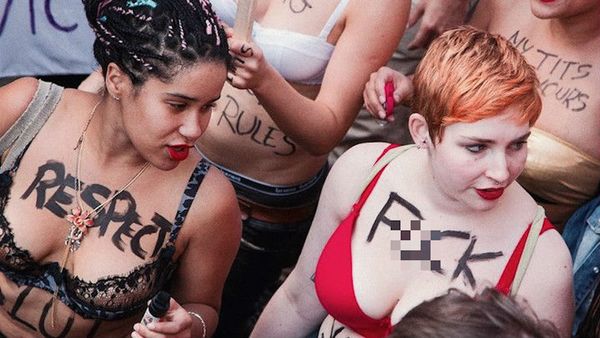


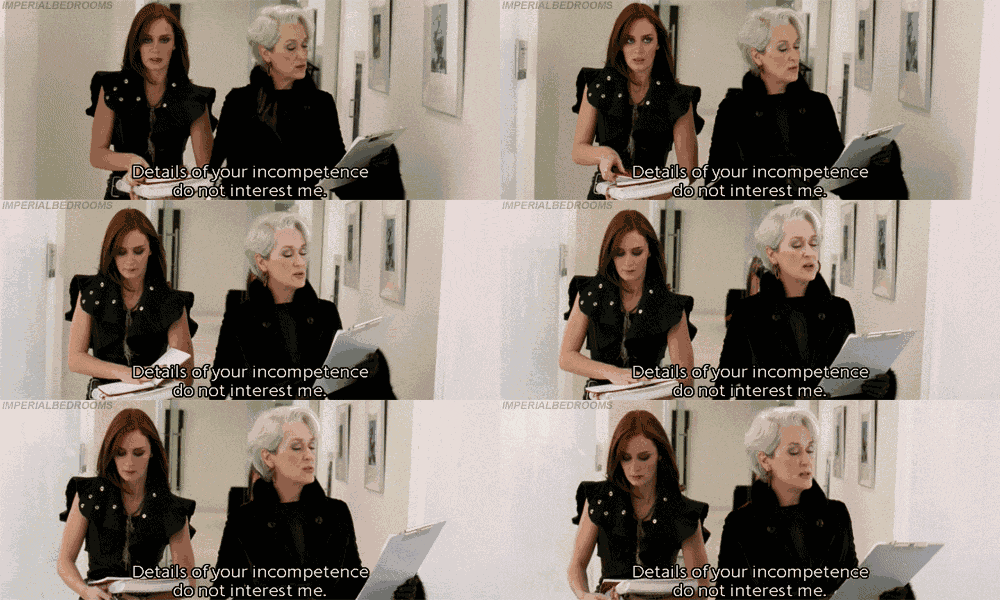
Powerful women have always challenged the status of our patriarchal society. Women must push the boundaries in order to get a seat at the professional table. When successful, this threatens the balance of the patriarchy we so eagerly trust. Women must use assertiveness in order to be effective leaders, which has ultimately led to stereotypes focused on the fact their their behavior goes against the traditional "lady-likeness" of our past. "The Devil Wears Prada," starring Anne Hathaway, Meryl Streep and Emily Blunt, depicts the power of being a blunt and honest woman in the workforce, and presents the many misconceptions that people have of such incredibly powerful and persuasive women.
For those who have deprived themselves of seeing the film, Meryl Streep plays Miranda Priestly, the editor-in-chief of the esteemed fashion magazine "Runway." Commonly viewed as b**** for her harsh words and edgy demeanor, Miranda Priestly lets nothing and no one get in the way of her work, even if that means being "ruthlessly" directive in the process. While her strong efforts and abilities have led her to success, these qualities are often seen in a more negative light than if they were applied to a male counterpart. Not to make any generalizations, but the following are some frequent misconceptions about powerful women as told by "The Devil Wears Prada:"
Confident women are narcissistic.
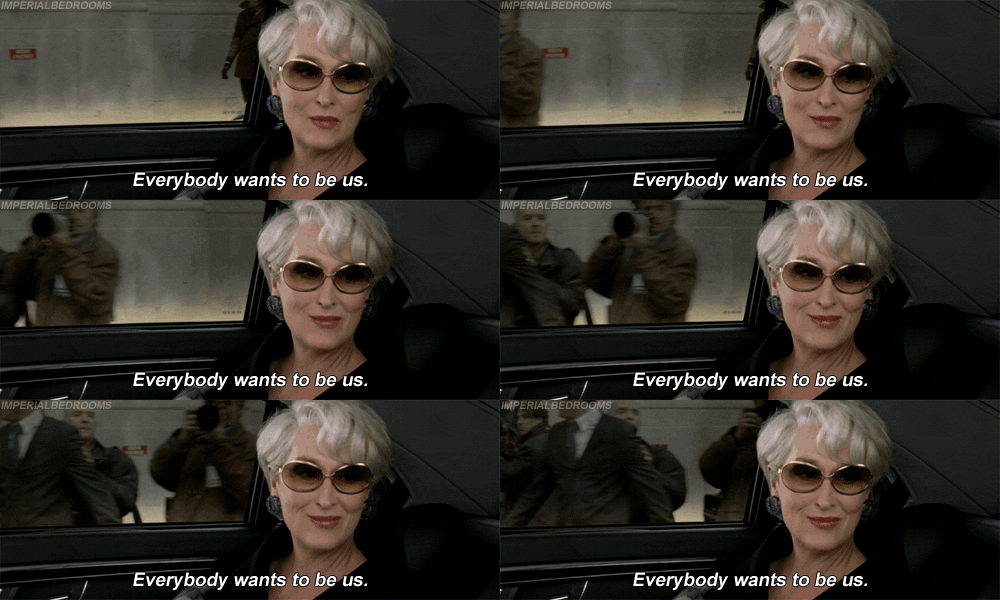
When a woman is confident about herself, she is depicted as being too "self-involved" and "self-obsessed." Her confidence is derived from a selfishness unmatched, and this characteristic is often considered unattractive and undesirable as a result. In a patriarchal society, it is necessary for women to have a sense of confidence in order to be effective leaders. A woman's self confidence and her work is absolutely crucial for success; yet this still is viewed negatively, since women are supposed to be submissive followers. On the other hand, men who are confident are seen as more powerful, inspiring, and effective leaders than their female counterparts. Their confidence is a result of self-awareness rather than selfishness, which is considered charming and effective.
Opinionated women are judgmental.
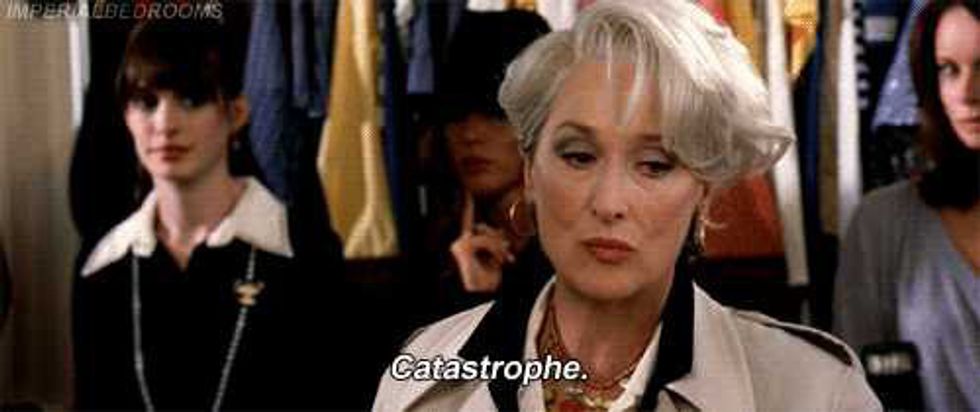
When it comes to decision-making in any leadership role, it is crucial to have a set of standards to gage the measure of success. Unfortunately, women who are in a place of making decisions are characterized as judgmental and/or emotional. More often than not, a woman's decision-making skills are often associated with her "time of the month" rather than her level of expertise or education. Demeaning and belittling a woman's skill-set as a tool to bring her down is simply narrow-minded and ridiculous, and it is a tactic that many use to justify not having women in leadership roles. Contrary to how opinionated women are viewed, opinionated men are smart and educated leaders whose ability to prioritize and make tough decisions is admirable. Men are praised, women are judged.
Honest women are "b****y."
When a woman is assertive, she is often seen as dictatorial and, therefore, bossy. This "attitude" is often associated with the common assumption that women's emotions come into play, which make them rash and argumentative. On the contrary, men who are "bossy" really aren't considered bossy at all (at least in a negative way). Instead, these men are great and powerful leaders who are able to effectively direct a group to success. This double-standard is probably the most obvious and unsettling of them all, as no one can be an effective leader without being directive.
Though we have made many strides to change the pattern of gender equality in the workplace, we still have a long way to go. Women should not have to prove themselves anymore to justify their position or their skills, and they should be equally compensated for the work they do that is equivalent to men. Take for example the U.S. Women's National Team who were paid $33 million dollars less than the 2014 German Men's Team. Both teams have essentially the same training, same hours, same dedication, and they achieved the same feat; but their success is measured by a $33 million dollar wage gap. Gender inequality is everywhere, whether we are focusing on a single leader or a group of leaders. It is time we weigh the consequences of backtracking into gender inequality and it starts with how we view powerful women.
Screw the misconceptions; go be fabulous.