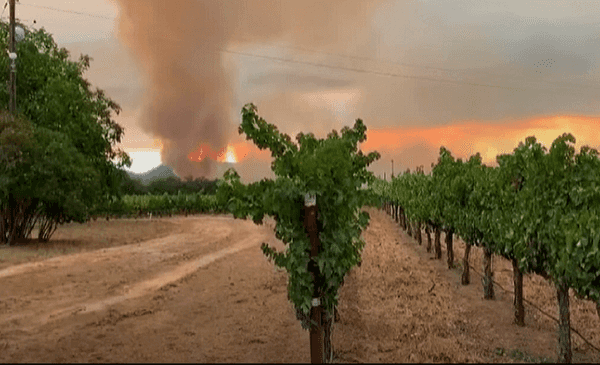

On Friday, August 26), as I sit at my desk, I am seven miles away from the second largest fire in Idaho, and the third-largest fire in the country. Spanning 52,511 acres, the Henry’s Creek fire is the largest in Eastern Idaho in recent memory. Growing up in Nampa, large fires were simply a part of my life. It seems almost every year the Boise National Forest had one of the largest fires in the nation. Here, in Ammon and surrounding areas, wildfires this massive are very rare. Most of the land around here is grass and brush, which are relatively dry plants to begin with. It doesn’t help that we haven’t had a large rainstorm in the past month or so. The average rainfall for the month of August is typically 0.43 inches; Idaho Falls has gotten 0 inches of rain in the past 30 days.
This fire is affecting a large part of Eastern Idaho’s recreational areas. Blacktail Park, for example, is the prime boat launching area on Ririe Reservoir. While this park has so far been left untouched, the fire has scorched the foothills just across the water. It has spread through much of the area around the Ririe Reservoir, leaving devastation in it's wake.
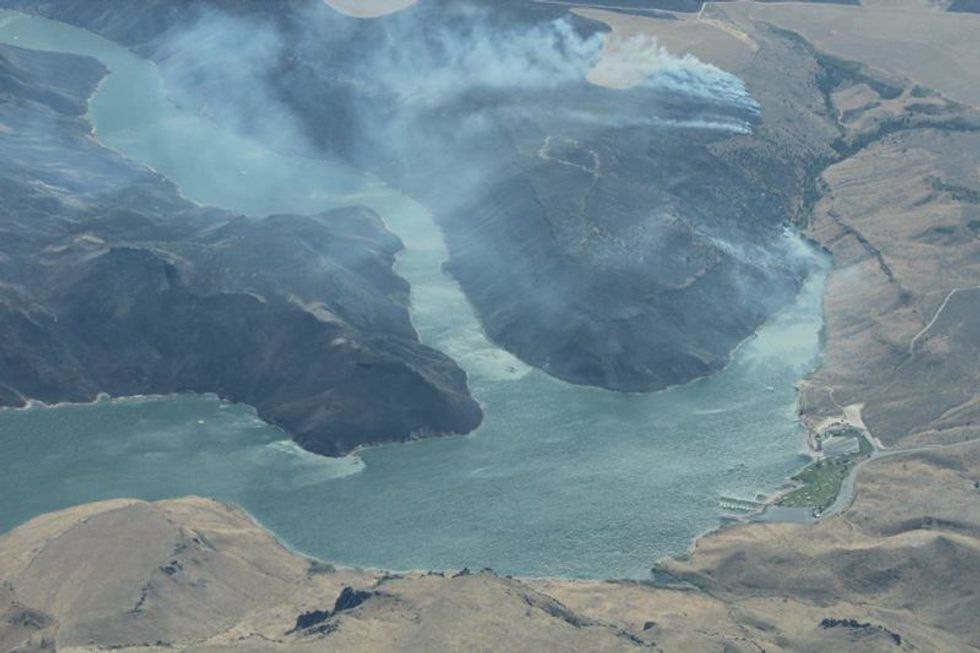
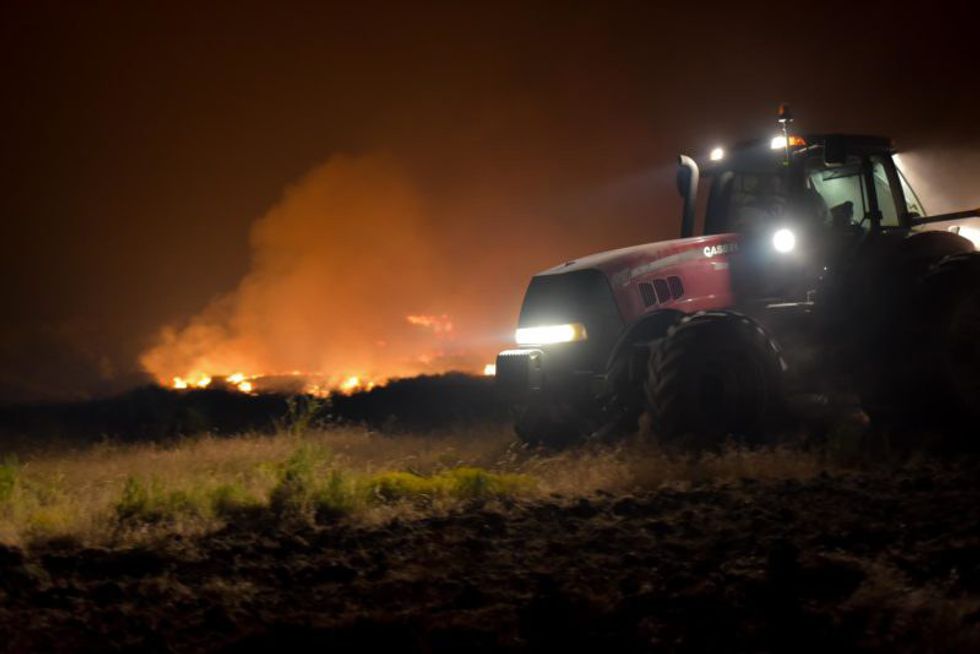
The people of this area are very community oriented. Even people who work in my office building went out to Bone, Idaho (a tiny community of farmers and ranchers just east of Idaho Falls) to try to stop the fire from reaching their homes and land. They were hoping to dig large fire lines around their land, breaking the fire’s path by removing its “fuel.” However, these farmers were turned away by the Bureau of Land Management (BLM); they were told that it was under control, and that they had a group getting ready to head out to create fire lines using large farming equipment.
The BLM didn’t start their efforts for nearly four hours after the fact.
Many people in the area are understandably angry with the BLM at the moment. With good reason, it seems. At the beginning of the fire, local fire crews were prepped and ready to start working on controlling the spread of the flames. However, there was a power struggle between what land the fire was on, Bonneville County or BLM land, which wasted precious time; time in which the fire could have been more contained, and not left to morph into the monster that it is now. Local fire crews were just recently permitted to begin assisting with containment efforts.
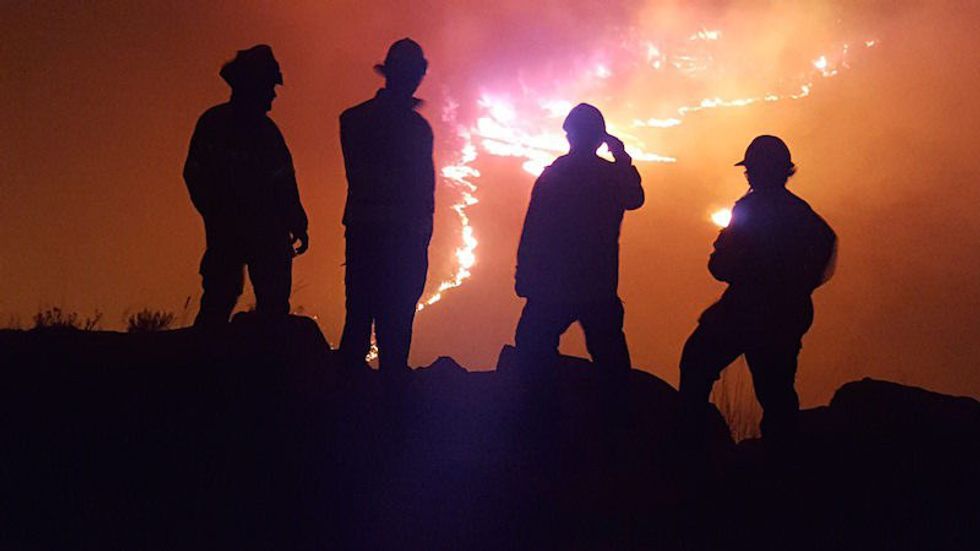
There is a reason for this. The more acreage that is destroyed by this fire, the more acreage the Bureau of Land management can claim unusable. This means cattle will not be able to graze on this land. Local farmers lose access to land they have paid for, through different kinds of permits. Land they need to feed their herds, land they used to grow food on. Simply because the Bureau of Land Management wants to save a few pennies and has no legal way to take away those lands.
This fire is yet another instance of politics taking precedence over the real issues that face communities and our country at large. Instead of simply working together to affect change, two separate groups decided to argue instead. In this instance, it lead to families losing homes, people losing livelihoods, and this area becoming marred by fire. There will be very little good to come of this, and it will affect this area for years to come.
However, through this tragedy I have seen hope. I've seen volunteers in the parking lot of a nearby church feeding the masses of displaced farmers. I've heard stories of men staying on their lands so they can move their cattle and other herds to safe land, regardless of their own personal safety. I've seen stories of homes that have been left untouched, the fire coming close to 10 yards away from the front door. I've seen swarms of volunteer firefighters putting their lives on the line to try to save this land, regardless of the politics involved. I've seen what this kind of devastation does to this community, and still they persevere. Still they do what they've done for generations; march on.