


What do you do when you're consistently put down as if you are the dirt beneath the feet you walk on? How does one overcome such profound hatred projected on them simply by the texture of their hair, or what continent which they derived from, or even worse, by the color of their skin. What about when you are made to feel as though your level of competence is merely nonexistent? These questions are frequently asked, but seldom answered. Although this issue has lingered through history for centuries, people have the audacity to overlook the copious occurrence of self-hatred amongst the African American youth. This particular topic is quite familiar to me having endured similar issues in my childhood and adolescence.
From as early as I can remember, being of African descent and having an abundance of melanin in my skin labeled me as less than or in simpler terms, “ugly.” It never occurred to me that being a shade darker than those around me was something to be ashamed of. It never occurred to me that I could be considered beneath the children whose skin were noticeably lighter than mine. It never occurred to me until the day a young Caucasian boy felt it necessary to move two seats down from me on the first day of preschool just by taking one glance at me. It never occurred to me until the day I walked through my classroom doors and heard the giggling of my peers when they saw my two afro-puffs which differed from their straight, long blonde hair. It never occurred to me how much my background, where I come from, and what I look like were so blatantly different. My solution to this ostracized feeling resulted in me altering myself to fit the mold of what is deemed more appealing, or in other words as “beautiful.” I never asked myself why it mattered what I looked like. Additionally, I took it upon myself to “whitewash” my image to achieve the so-called attractive attributes found on females of lighter complexions.
At the age of five, I began begging my mother for perms and other forms of hair straightening methods to look the way my friends did. This mindset and behavior had yet to cease and continued throughout middle school and well into my years of high school. My ongoing comparison to a multitude of females was only enhanced by the portrayal of what beauty is held up to be through various television advertisements, as well as television programs I grew up watching. Persistent viewership only diminished my self-image, because it seemed as if every magazine cover or commercial displayed young girls who looked nothing remotely like me. In addition to media influences, I only made my circumstances worse by comparing the way I looked to my non-black friends. My subconscious insecurity led me to begin telling my acquaintances that I was of multiple ethnicities that in no way correlated with my own, to appear as “less-black” since that seemed to be what deciphered how attractive I was. In a case like mine, I refer to this misguided teenage thought process as an identity crisis. The sad part is that I got so used to this lie that I even began believing it. It was a delusion I didn’t let go of until a friend of mine introduced me into a movement called “Black Out Day” that took place on a social media platform called Tumblr that was orchestrated for black people to essentially celebrate their blackness.
It was eye opening for me to see so many participants uplifting one another and appreciating the skin many had in common. I had never witnessed something like that growing up or in close proximity to me. That day sparked something in me to change the way I felt about myself. I learned from then on that regardless of how I look or where I come from, I do not have the ability to change that of which I was born with, however, I am in complete control of how I choose to feel about myself. Therefore, instead of looking at my differences as a punishment, I began appreciating all of the things that made me who I was including my beautiful, naturally, curly-textured hair that I was once so ashamed of. Now as a young adult, I tend to reflect upon the journey I never thought I would venture on, and have noticed that all of those trying years of self-acceptance has come into full view. I believe a real solution to this persistent problem is to encourage children at the earliest of ages and so forth to be comfortable and accepting of who they are. Constant acknowledgment of their self-worth is crucial to how they will perceive themselves as they grow older. It is imperative to eliminate any possibility of them pursuing a life of delusion eluding them to believe they are not good enough for being on the opposite end of a color spectrum. They do not deserve to be denigrated for what they cannot control. Our youth is our future and we must build them up to be confident, self-assuring, and undeniably happy with who they are.
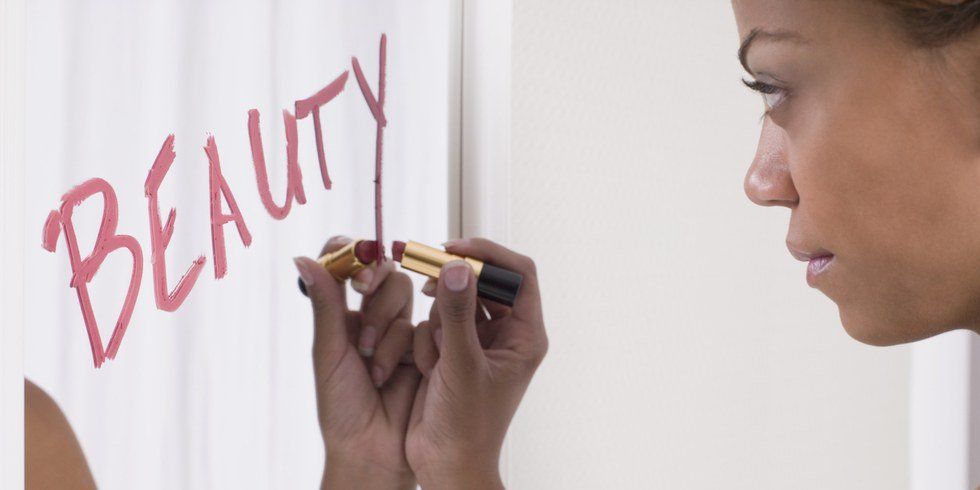
In regards to my beautiful race full of outstanding individuals, remember your purpose and your right to be completely and utterly satisfied with the color of your skin. You were created this way and nothing or no one should make you feel as if you are anything less than deserving of respect and dignity. Every once in awhile, stop to look in the mirror and appreciate the beauty that is displayed in front of you. It all starts within self to make a change. Your mindset and attitude is an important factor in how you perceive yourself. Never forget your roots, and learn to treasure your history. Furthermore, we should all make it a mission to encourage someone, whenever we can, to love who they are. You never know who you will inspire to be a better version of themselves. It can all start with a simple compliment. Don’t hesitate to show admiration for those who leave you in awe, and take in consideration that they may not see it for themselves. Let’s start today by creating better images of ourselves by not only loving what we look like, but loving who we are as a people.

















