
It was nearly, or felt like nearly, ninety degrees outside — I usually walk the mile from my car to my class and rely on my makeup setting-spray to convince everyone I wasn’t miserable when I arrived — and I could not bear the heat for I had made a damning decision to wear a long-sleeved shirt that morning. We are two weeks into the semester. Everyone around campus is catching up with friends they had not seen all summer, avoiding the weird guy that you sat next to in finite last semester hoping your schedules would allow for you to never see him in passing, and just getting back into the swing of things. I had forgotten the convenience of the shuttles that run all-over and around campus. I had also forgotten they were air-conditioned.
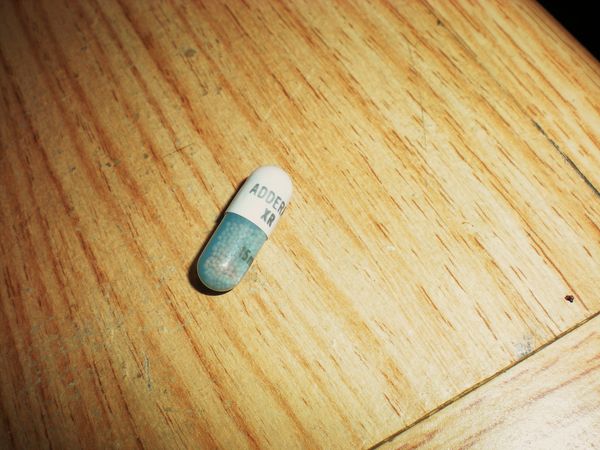
The bus was crowded, everyone has not dropped out yet. I had forgotten how much more my $30 Apple EarPods were worth to me when I left them at home in hopes of being social. I overhead a conversation between two strangers. It went how most normal college small talk went. They first of course asked each others’ majors, who is your professor for *insert class the other has already taken*, whether or not they were in a fraternity, if they lived on or around campus, the usual. I was becoming bored of it, but the conversation was not private, and neither of the boys were soft-spoken. I tuned it out mostly until I heard one say “yeah, my classes are kind of tough this semester but I just convinced my doctor to write me a prescription for Adderall so it is about to get a whole lot easier.” The other replied, chuckling, “Adderall is definitely a game changer. I wish I’d figured it out sooner than my junior year.” This was unsettling to me. But I could not tell you why.
Maybe it was because a few nights before as I was mindlessly scrolling through the “news” on Snapchat provided by Cosmopolitan, I had read an article about the “Ivy League Addiction” which detailed how Harvard and Yale and Colombia students and professors admitted to abusing the ADHD medicine as a study aid. Maybe it was because I recalled my friends that attended other state universities mentioning they had given and even sold their prescription pills to students during finals week — and that it was easy; that students asked them for it, offered to pay them for it — but I thought nothing of it at the time, maybe that it was even a joke. Maybe it was because I had just assumed that the only way to juggle your essays and studying and homework and lectures was to live in a continual state of sleep deprivation. Maybe it shouldn't be unsettling at all.
Maybe it shouldn't be unsettling because after sorting through every issue I could have with it, they would all be relatively hypocritical. Maybe I think it is wrong to take medication that was not prescribed to you. But I take what ever my mom pulls out of her magical cabinet of drugs whenever I am sick. Maybe I think you shouldn't need any drug to help you with your studies. But I drink a 6-shot venti latte before every paper that I write at 10pm that has a midnight due date. Maybe I think you shouldn't take medicine you don't need. But I took diuretics when I was anorexic and those pills were the last thing I needed.
There are arguments for and against drugs, mostly Adderall, that can provide “cognitive enhancement.” The arguments for are, of course if something so seemingly simple and harmless can make you perform better at school, then by all means, take it. Having better educated people in society makes society better, as a whole, right? But there are arguments against people who do not need ADHD medicine repurposing it for all-night crash courses before exams or daily so they are more aware and therefore do better in classes. People that subscribe to this argument sort of look at academics as a sport. They believe that people who suffer from ADHD need Adderall to be on the same “level” as those who do not have attention disorders. Therefore, people who do not suffer from ADHD who take Adderall are again at an advantage to those who do, and therefore “performing” academically on Adderall is “cheating.” They view “cognitive enhancement” drugs like Adderall as mental steroids. In sports, taking steroids is cheating.
Can the same principles be applied to academics as they are sports? I don't think so. Athletic games have rules. They are black and white. The strongest and fastest athletes are the best athletes. Plain and simple. Academics are very subjective. Different universities have different requirements for degrees, different classes have different weights, grading scales. Students are measured not by physical capabilities but rather subjective means. There is no universal “best student” trait. Are good students punctual students? Are good students good writers? Are good students good readers? Are good students the highest scoring students on standardized tests? The answer changes depending on whom you ask.
So is abusing Adderall for “cognitive enhancement” wrong? The answer changes depending on whom you ask. For now, legally, the answer is “yes.” But if a big enough case was made, we could see “no.” And besides, the pharmaceutical industry would not be against a drug with multiple purposes. This goes beyond “a pill for every ill” which some would argue is why Adderall even exists in the first place. I think it is an idea that would really sell. And plenty of the “smartest” consumers (Harvard grads) have already bought it.