The simple story of Rapture alone is not enough to make it a great story. BioShock did not invent the twist, nor did it create mind control with trigger phrases or super science gone awry. So what, then, makes BioShock rated among the greatest games of all time? While it’s combat is fun and it’s setting is unique (albeit incredibly unique), like in all stories, the content is only a small part of what makes a story great: Execution is everything, and BioShock has it in spades.
The first thing that caught my eye with the story was the opening, as the airplane crashes a light shines on a metallic emblem that says BioShock. The light catches it nicely and plays well with its shining facade, as the screams crescendo the light perspective moves downwards and the shining gleams becomes rusty and corroded. It is foreshadowing both the physical and emotional climate that is to come throughout the rest of the story.
Looking at symbolism, the name Rapture is, itself, a stroke of genius. For those who aren’t up to date on your biblical references, Rapture is the name of the ending of the world where all true Christians ascend to heaven. Rapture is much like the Rapture; to Andrew Ryan the world, the world as he sees it, is over, nothing belongs to its creators. A plague of altruism has swept the world, his answer is to create a new world under the sea, where the faithful to capitalism and industry can descend and live in a utopia.
The irony of having a society based around independence with the moto: No Gods No Kings. Only Man, and yet to have the entrance of said society with a bust looming over all new citizens, God-like, shows the opinion of Ryan himself, even though he counters such thoughts with trivialities, such as putting his office in a part of the city named Hephaestus, named after the Greek God of the forge. For those who don’t know, Hephaestus was thrown off of Mt. Olympus because Hera thought him so ugly she didn’t want him with the other Gods, tainting their beauty. However, Ryan wears the name as a badge of honor, if not also with a sense of self-pity, thinking because he rejects the ideals of the world above him he is the ugly forgotten child, rather than the rebel choosing to run away.
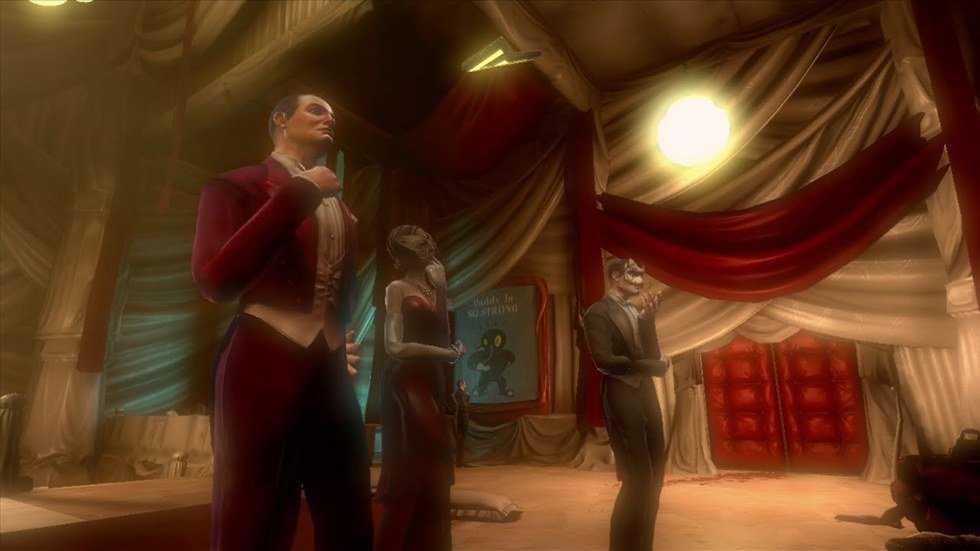
He names other parts of Rapture after Greek Gods and ideologies as well: Apollo Square, Arcadia, Neptune’s Bounty, the luxury apartments Olympus Heights, and Point Prometheus, to name a few. The idea of naming all of these places after the Greek Gods is an extratextual concept relating to their relationships as well as Ryan’s own ideology of the “Great Chain of Industry”, each coming together to make greater parts of a whole, yet if one fails they come unraveled. The irony is again, Ryan is too quick to turn his back on his followers when they begin to break. This adds a level of complexity to the character which is reflected in the environment and social climate of the piece, where enemies will rush you with little apparent regard for personal safety.
However, the most interesting character of the entire game is, hands down, Diane McClintock, not because of anything she does particularly, but rather because of what she represents. Diane is an allegory for the citizens of Rapture (in my explanation I shall call her and the citizens “they”). They begin loving Ryan, adoring him and all that he represented, even eschewing Fontaine and his attempts at usurping control, but that changed when he struck, catching everyone in the crossfire. Her trip to Steinman represents their collective addiction to ADAM with the side effects and mutilations that come with the two. With his rejection they felt hopeless until Atlas came along and gave them hope, inspiring them as he manipulated them, leading them (as we see in the corpse of Diane) to their deaths for his gain. What is best about Diane, however, is that she is so well crafted and such a well rounded character that you don’t realize that she represents the masses, when you realize it you gain such a deeper appreciation of her and the masses and the writers, who found a way to take a clever shortcut.
Among all the dynamic pieces of Rapture, the symbolism of Atlas is intriguing. The man who held up the world, in this story tried to destroy it, and much like in mythology, he tried to pass his burden (the burden of killing Ryan/Holding up the world) on to Hercules (Jack) though Hercules found the means of outsmarting Atlas. Even though his intents were filled with malice, much like yin and yang, his role is necessary, to balance the ecosystem of Rapture.
The writing team of BioShock really hit a homerun with this masterpiece of writing and interface and unique ingenuity. The sweet subtleties littered throughout Rapture make the observant eye pop open—a kid on a treasure hunt where candy is replaced with literary bombs that explode satisfaction across your brain in extratextual bliss.