


Just last week, I read the now viral letter written by twenty-three-year-old assault victim “Emily Doe” (her pseudonym), a Stanford University scholar. The letter had been read in court directly to the man that assaulted her — twenty-year-old Brock Turner. Turner was a beloved and famed Stanford swimmer, believed to have been on a steady and sure track to the Olympics. After a night of heavy drinking, two heroic bicyclists discovered the rape scene taking place behind a dumpster. The victim was unconscious with Turner on top of her.
In the trial, the woman defended herself through powerful words of fear, anger, and disappointment. She descriptively recounted the embarrassing and violating experience; all the while, Turner continued to defend himself, changing his story from one describing a drunken night of unmemorable moments to one that described an encounter in which the woman unarguably gave consent. This disgusted me.
We live in a world that camouflages itself as incredibly progressive: constantly conscious of correctness and awareness, overflowing with strong-willed and opinionated minds attempting to make a change. We like to see the minuscule window of improvement we’ve made without bothering to look at the bigger picture, avoiding the smaller actions and voices that prevent us from truly and wholeheartedly moving forward. In today’s society, consent is taught but not practiced; it is encouraged, but not enforced. Women are taught to progress with caution, always expect the worst, and sacrifice parts of our lives, bodies, and minds “for our own good”. Recently, a friend of mine saw me after one of her annual doctor’s appointments. She was, quite honestly, outraged at one of the questions the doctor posed.
“How often do you drink? Do you drink until you black out? Because you know you shouldn’t do that — you have to protect yourself from being assaulted.”
There are many frightening realities to these statements. Why should anyone have to give up his or her freedom as a precautionary measure? Why should anyone have to be scared that, despite not being able to give consent, someone would take advantage of him or her regardless? What is it about a society that teaches some to take caution, but leaves others seemingly free to experiment with their bodies and actions? I understand that this doctor was facing the unfortunate realities of today’s society; she was simply trying to do her job by attempting to keep her patients as safe as possible. The harsh reality is that both men and women are constantly victims of assault, however, this doctor unarguably would not have said this to a man.
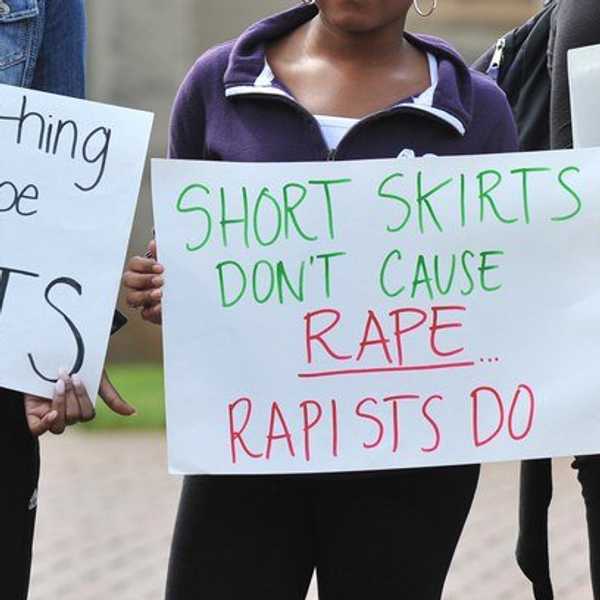
I speak on this topic as someone who has been followed home on more than one occasion while completely sober and accompanied by friends; as someone who has seen the aftermath of her female friends get followed home, if not physically assaulted, even when the sun is brightly shining; as someone who has overheard unnecessary catcalls to women in sweatpants and sweatshirts who simply wanted to get to their destinations. It is not a matter of being drunk, walking alone, going out at night, or wearing revealing clothing. As the victim said, “assault is not an accident”, and it can, therefore, happen anywhere and anytime. There is no formula, algorithm, or a sequential set of things that people do to invite or entice assault. Simply put, there is no excuse for these kinds of actions, and it is sickening that they occur so often. Why should we be afraid to live our lives? Why should we feel constant anxiety regarding our safety, in situations where we should ordinarily feel comfortable?
We have not yet achieved the changes necessary to keep our society safe. However, what would display change would be being able to walk home from my house at school without the fear of constantly being followed. What would display change would be being able to forget about the anxiety and fear that plagues me when I walk alone — the consequence of being followed. What would display change would be being able to freely and passionately enjoy my actions without fearing my safety and privacy. Assault can happen to anyone, and it is important to not only educate, but to enforce the information given to young men and women on the subject. To the millions of women who are assaulted, we are all with you. To the millions of men who are assaulted, and who often get overlooked, we are all with you. While the realities of this situation are alarming in so many ways, it provides a lesson to the public that has to be learned sooner rather than later, so that we can all regardless of sex — live freely and happily.

















