

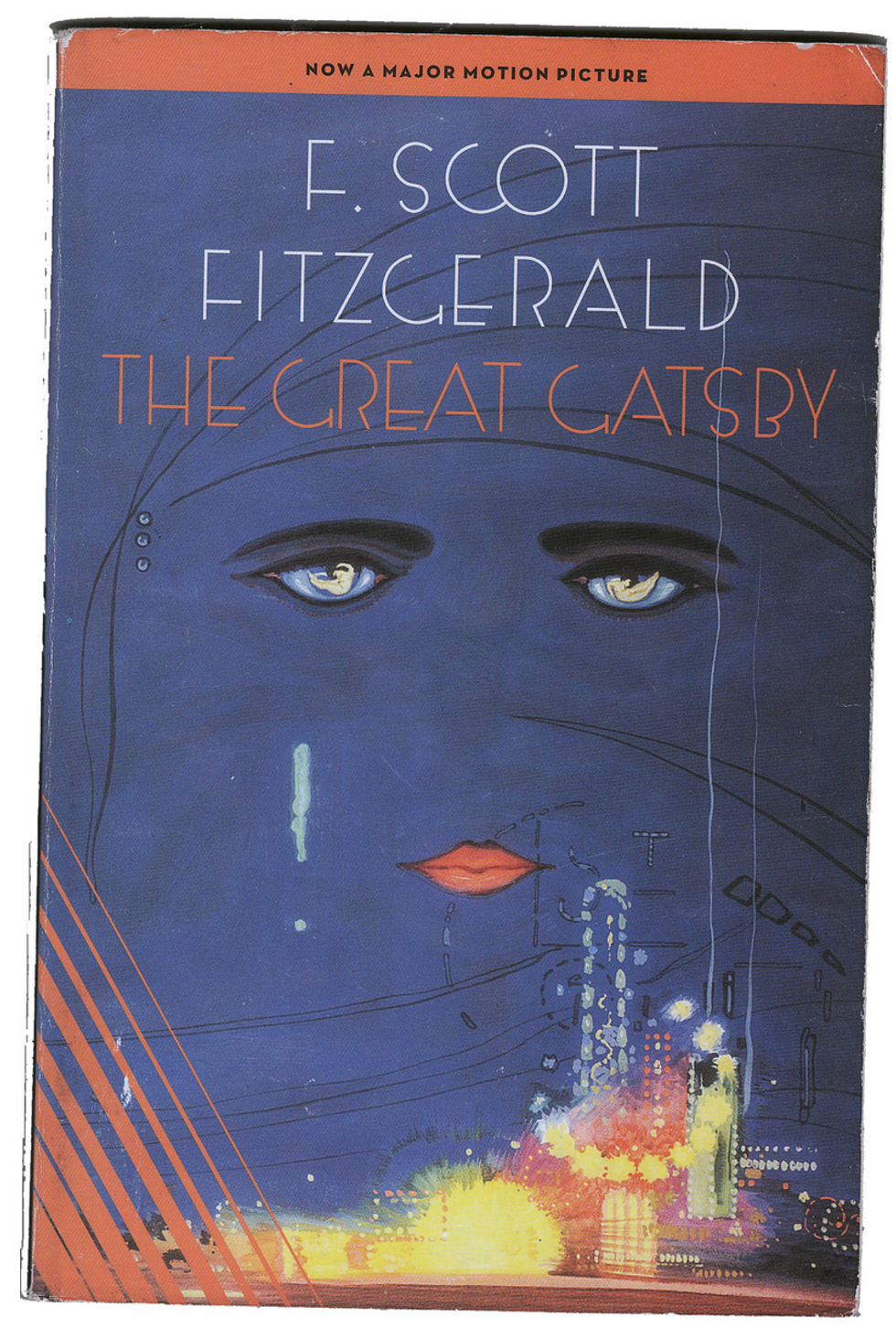
Fast forward to 20th century, the events of World War I and the Great Depression helped to create a much more cynical generation. Writers were no longer possessed of Alger’s blind optimism of social advancement. Rather, they portrayed life as it as even if that meant destroying dreams by breaking down popularly held beliefs. In particular, the American Dream was one of their favorite proverbial punching bags, a relic of a society from which they had been disillusioned. Two of the most famous “Lost Generation” writers are F. Scott Fitzgerald and John Steinbeck. Despite writing fiction, both were not afraid to tackle serious themes and dismantle the American Dream within their novels of "The Great Gatsby" and "Of Mice and Men" respectively.
In 1925, the United States was enjoying a time of growth and prosperity. Fitzgerald effortlessly captured the carefree attitude of the decade within “Gatsby.” In it, the destitute James Gatz assumes the persona of Jay Gatsby and accrues vast wealth via illegal prohibition bootlegging all to win back the love of his life, Daisy Buchanan after five years of fighting in World War I. His pursuit of Daisy serves as an allegory for the pursuit of the American Dream. This is exemplified when the story’s narrator Nick observes, “[Gatsby] stretched his arms toward the dark water in a curious way, and, far a I was from him, I could have sworn he was trembling. I looked seaward and distinguished a single green light that might have been the end of a dock” (Fitzgerald, 1925). The light that Gatsby admires from afar is located at the end of Daisy’s dock. In this case, the green light serves as a symbol for the Statue of Liberty, the first structure that immigrants witnessed as they arrived at Ellis Island. Its rhetoric, “give me your tired, your poor, your huddled masses,” served as a beacon of hope and the chance to start life anew in America.
Daisy, however, still remains out of Gatsby’s reach, rendering the American Dream a goal that can never be reached. This can be seen when Daisy first tours Gatsby’s mansion and Nick says, “He had been full of the idea so long and was now running down like an overwound clock ... Daisy tumbled short of his dreams ... he had thrown himself into it with a creative passion ...He wanted nothing less of Daisy than that she should go to Tom and say: ‘I never loved you’ ” (Fitzgerald, 1925). During the five years he was away from Daisy, Gatsby compensates by creating a shrine to her inside of his mind, building it up constantly. Therefore, the genuine Daisy cannot live up to the divine entity that she represents within Jay’s mind. Furthermore, he is possessed by the idea that she will simply leave her husband and marry him. Similarly, many newcomers to America were disillusioned by the fact that the country did not live up to their wildest expectations. Although they had hoped for instant prosperity, many found it hard to adjust due to such factors as the language barrier, social tensions, and mistreatment by employers.
More importantly, this helps serve as support for Weber and Franklin’s “Spirit of Capitalism” concept. Gatsby’s aspiration toward a specific goal cannot be achieved because capitalism does not believe in an end goal, a comfortable life being one of them. He is only meant to acquire as much money as he can. Wanting anything else shows a lack of commitment to the duty of hard work. Lastly, his awkward interactions with the wealthy individuals of Long Island (e.g. Daisy and her husband Tom) show his incompatibility with those of means who have already proven their “hard work” with their fortunes, allowing them to live lives of leisure and apathy.
Steinbeck’s novel (published in 1937) came when the country had fallen on hard times during the Great Depression. It follows two migrant workers, George Milton and Lennie Small, who have a lofty dream of buying their own farm and living off the “fat of the land.” When discussing their plan, George says, “All kin's a vegetables in the garden, and if we want a little whisky we can sell a few eggs or something, or some milk. We'd jus' live there. We'd belong there. There wouldn't be no more runnin' round the country and gettin' fed by a Jap cook. No, sir, we'd have our own place where we belonged and not sleep in no bunk house” (Steinbeck, 1937). Like Gatsby, George and Lennie have ulterior motives other than working from job to job. Their delusions of the American Dream also gets in the way of their duty to capitalism. This proves to be their undoing when Lennie, a man of limited mentl faculties, accidentally kills a woman, and George is forced to shoot him. The murder is symbolic of the fact that the duo’s little slice of paradise (John Milton allusions intended) was never more than an unattainable pipe dream that was never meant to be. It only served as a distraction to their virtuous and dutiful hard work.