


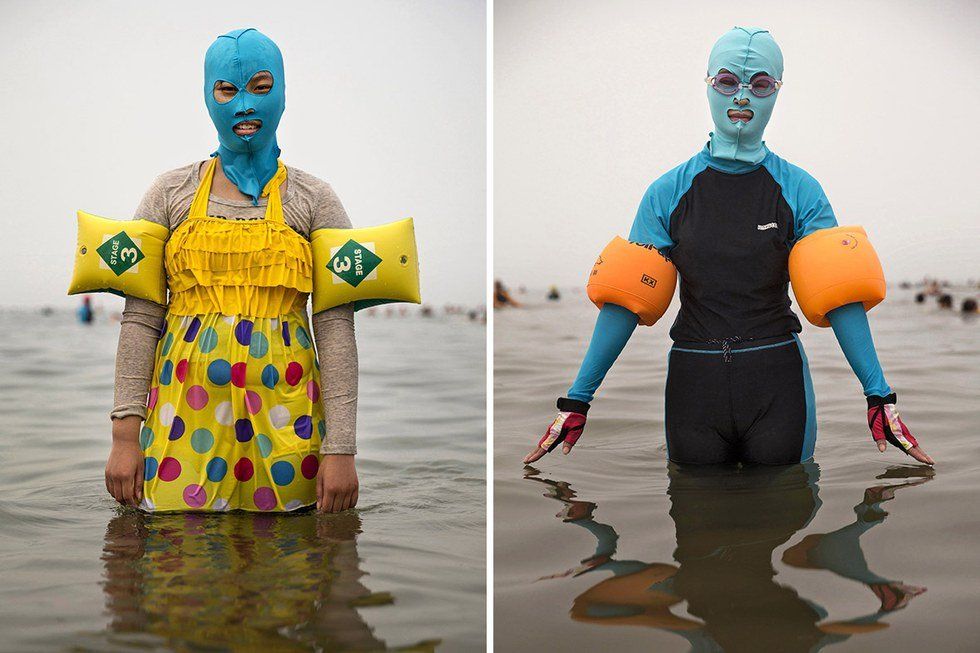
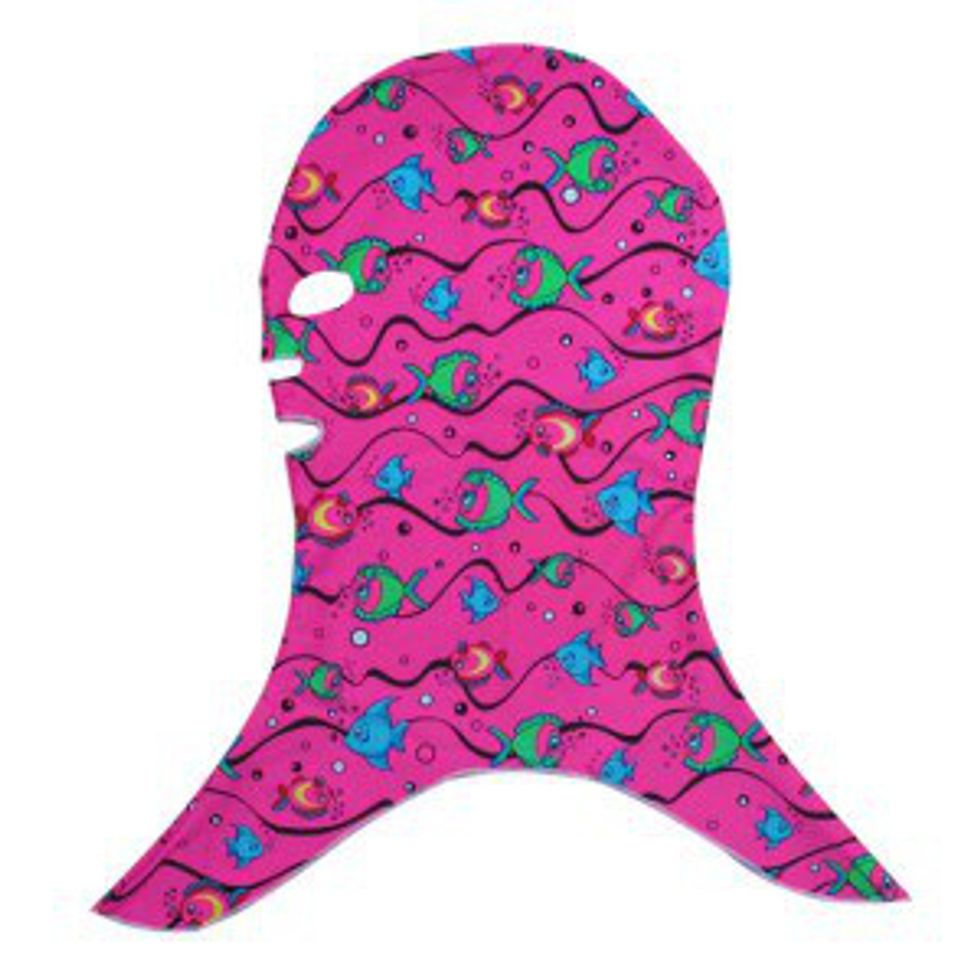
There's a new trend for Chinese beach-goers, and it's called the Facekini. The addition to this year's splashin' fashion is just another in a series of sun protection products targeted towards those who wish to keep their skin as pale as possible.

The face mask, made from swimsuit material, was invented by Zhang Shifan, a woman from Qingdao, China.
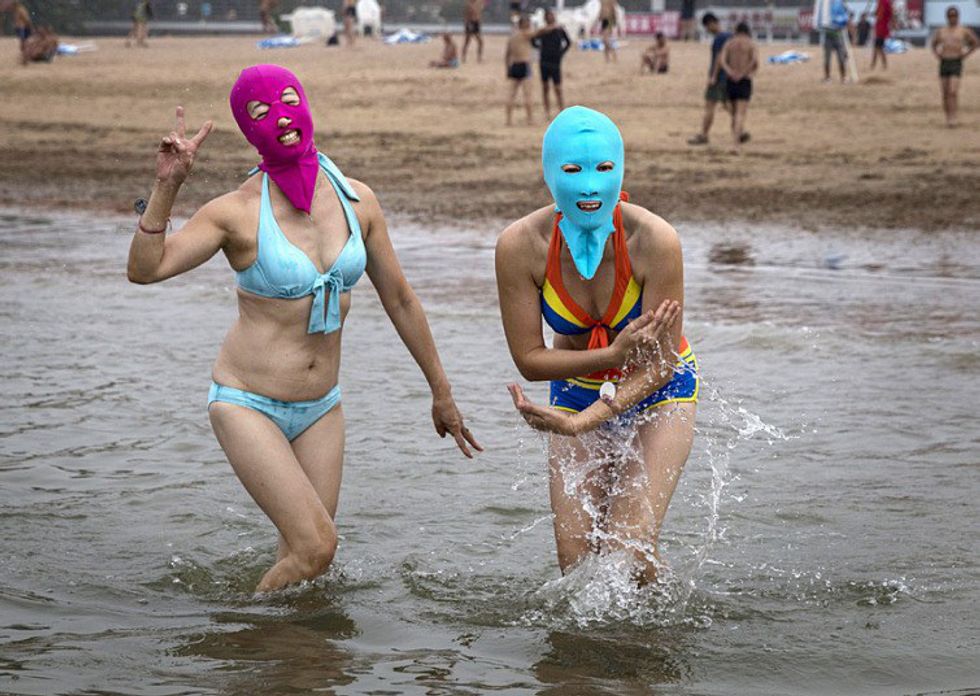
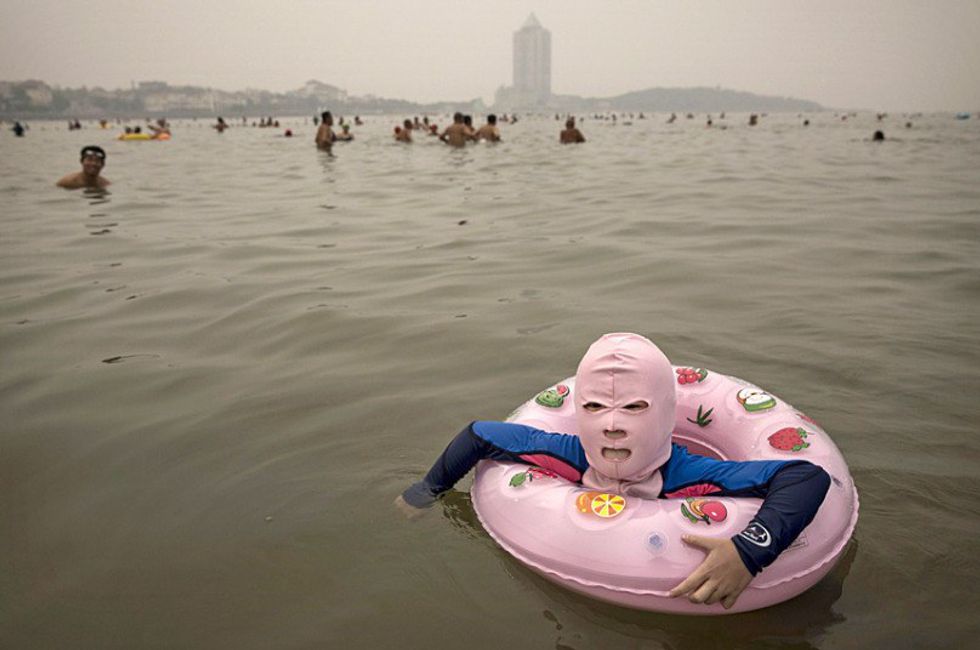
In his gallery "The face-kini: China's craziest summer beach fashion trend" for "The Telegraph," Kevin Frayer photgraphed women and children of all ages enjoying their time at the beach while wearing the mask:
Although many millennials prefer tanning beds to skin masks, a long history of Chinese beauty standards dictate that pale skin is the most "attractive." A slew of beauty products promise whiter, blemish-free skin:

In past centuries, Eastern Asian cultures (and many European cultures, too) equated pale skin with the upper class. Because they spent most of their time indoors instead of laboring in the field, the aristocracy maintained a generally paler complexion.
To any horrified reader quick to condemn Asian beauty standards, take a moment to reflect on North American practices. After all, is the above picture really all that different from this one?

Although once associated with manual labor, today white Americans spend months (and dollars) cultivating that bronze glow. A tan signifies tropical vacations, backyard swimming pools, and country club memberships. In light of continued discrimination against people of color in the United States, the tanning phenomenon is another painfully ironic manifestation of white privilege. Darker skin is "hot" and trendy on white Americans, but prevailing stereotypes insist that people of color are dangerous or undesirable.
As we roll in to spring break season, let's all remember to treat our skin with the respect it deserves and appreciate every shade, hue, freckle, and birthmark that makes our skin uniquely our own.

















