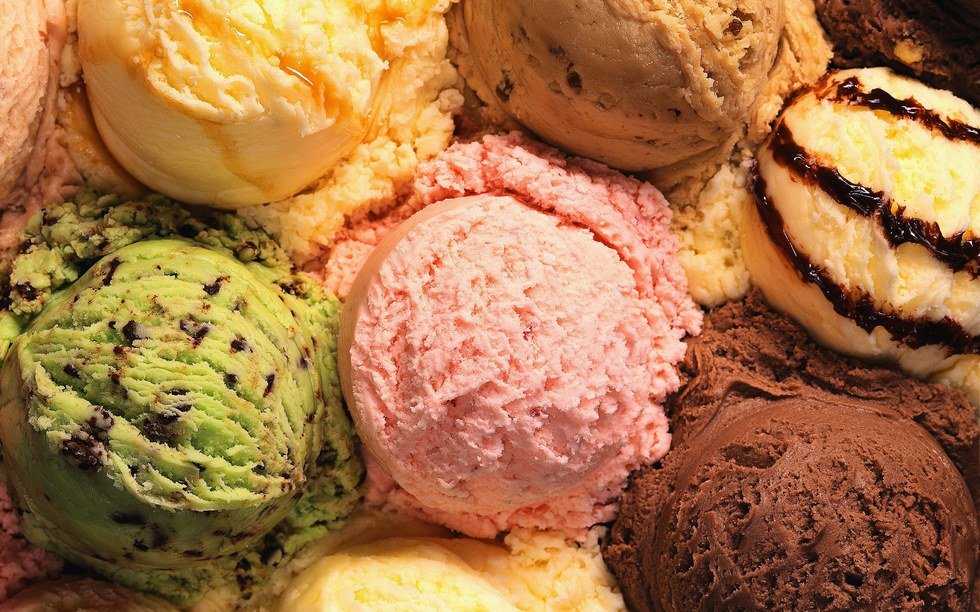
The term ‘ice cream’ is actually a deceptive label for the desert, since ice cream itself is much more than just frozen cream. In fact, if ice cream were merely cream brought to a frozen temperature, it would have the consistency of an icicle and would certainly not be consumed out of a cone. The ice cream we know and love is actually a sweet frozen emulsion, the properties of which are responsible for its unique evolution throughout history. After becoming an industrialized sweet treat, ice cream underwent a lot of notable changes in texture and consistency. Understanding why these changes occurred has a lot to do with the chemistry and interaction between ice creams key ingredients. Consistency is key when creating the perfect batch of ice cream.
In Harold McGee’s “On Food and Cooking: The Science and Lore of the Kitchen,” he explained that sugar is responsible for softening the frozen cream, adding a smooth “glue” and body to the mixture. Salt is responsible for an adjustment of the mixture’s freezing point, allowing it to reach a temperature low enough to properly freeze the sugared cream. Salt ions successfully interrupt the formation of intermolecular bonds between cooling molecules, requiring a loss of more heat for the molecules to set into a stable solid state.
Consistency is key when creating the perfect batch of ice cream. McGee further explained that sugar is responsible for softening the frozen cream while salt is responsible for allowing the temperature to properly freeze the sugared cream. The consistency of ice cream has a lot to do with the combination of ice crystals, concentrated cream, and air.
The speed that ice cream freezes, along with the speed that the ice crystals form, ultimately determines the consistency of the sugary emulsion. Ice cream manufacturers know that smooth ice cream is what consumer’s desire, so over time they have perfected the craft of producing the ideal consistency for their customers. Faster freezing methods result in finer the ice crystals and smoother ice cream. Slower freezing methods result in a grainier and less palatable texture.
“Smoothness of texture became the hallmark of industrial ice cream and manufactures accentuated it by replacing traditional ingredients with gelatin and concentrated milk solids. After World War II, they dosed ice cream with greater amounts of stabilizers to preserve its smoothness in the new and unpredictable home freezers,” McGee said.
But ice crystals aren’t the only things responsible for ice cream’s distinctive attributes. Air cells that get trapped in the emulsion during the mixing process also influence ice cream’s texture and volume, ultimately determining it’s ‘fluffiness.’ This is because air crystals interact with the ice crystallization during the freezing process.
“They [air bubbles] interrupt and weaken the matrix of ice crystals and cream making the matrix lighter and easier to scoop and bite into,” McGee explained when discussing air’s ability to increase the volume of the emulsion. “The increase [in volume] is called overrun, and in a fluffy ice cream can be as much as 100 percent: that is, the final ice cream volume is half mix and half air.”
Flash freezing ice cream with liquid nitrogen is one of the most effective ways to create a smooth, fluffy, and creamy emulsion. Before the industrialization of ice cream, the dessert was made by hand instead of a machine. But not all modern day ice cream shop owners have switched over to the idea of solely producing their product with machinery.
SubZero Ice Cream & Yogurt, a company with two locations in Utah, uses liquid nitrogen and hand mixing to create a denser and higher quality product. Liquid nitrogen creates super fine ice crystals while hand mixing prevents too much air from getting into the emulsion, unlike mechanically whipped ice cream where air can take up 50 percent of the emulsion’s volume.
“By mixing each serving by hand, Sub Zero Ice Cream provides an extremely dense product, adding to the creaminess and quality of the final product, as well as giving the customer extra value for their purchase. After all, you paid for ice cream, not air! Other advantages include the length of time your ice cream will stay ice cream. Without the pockets of extra air whipped in, Sub Zero Ice Cream also doesn’t melt as quickly,” the company boasted on it's website.
Ice cream is a sweet emulsion that requires a balance of three major constituents, and the right combination and ratio of ingredients is a delicately controlled process that must be done correctly in order to create a dessert worth mentioning.