
When I applied to be a Resident Assistant at Emerson College, I emphasized with extreme weight the importance of diversity and inclusion. Growing up, my race was often the butt of a joke, making me insecure about my identity as a Mexican-American. I was the victim of a hate crime when the hood of my car was graffitied with the words "f**k Mexicans". Until this day, I hear many microagressive comments from my professors and peers. I became sick with my ethnicity, literally avoiding it by refusing to visit Mexico—despite having traveled there annually. I felt ashamed of my upbringing and my culture. Needless to say, it is horrible to criticize others for their diversity, and that is what moved me to apply to be a Resident Assistant: to promote diversity and acceptance in a campus setting.
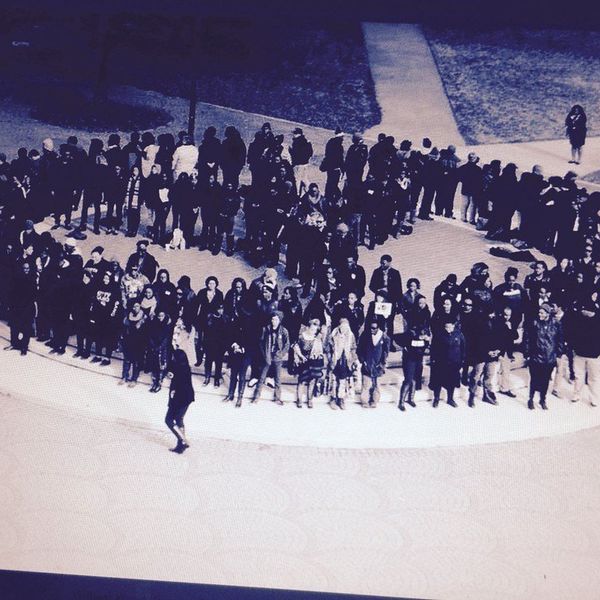
As part of our training to become Resident Assistants, we had a session on diversity and inclusion, but it was very different from the lecture set-up of other parts of our training. As we walked into the room, Sylvia Spears, the vice president of diversity and inclusion at Emerson, along with Robert Amelio, the director of diversity education and human relations, handed out purple and yellow stickers at random. I got purple and was politely told to take a seat on one side of the room. When everyone was inside, I noticed we were segregated by the color of our sticker; purples made up a big group who sat on chairs, while yellows were a smaller group that sat on the floor and were confined to a box made of tape. Immediately, a few of us realized the differences of privilege.

(Thisexercise was modeled after Jane Elliott's Blue Eyes--Brown Eyes experiment)
But for those who were not cognizant of the fabricated power structure, it became very clear within a few minutes when Spears passed around a bowl of chocolates to only the purple group and talked to us with a smile that made me uncomfortable. Amelio talked down to the yellow group, berating someone for getting water, calling someone the "exception" when they answered a simple question. Throughout the session, most of the purple population attempted to break the division by either crossing the line into the yellow square or stealing the yellow stickers and placing them next to the purple ones on our chests. The yellow group never asked for our help, but we threw them our chocolates in solidarity. Tensions continued to rise as Spears and Amelio completely degraded the members of the yellow group until the climactic rebellion of a few yellows that removed the tape from the ground. It was an emotional experience and I was getting to the point of tears, trying to control my breathing as I reflected on the disgusting divisiveness of the structures of power and privilege. Spears and Amelio broke from their authoritative roles and we discussed as a group how these events made us feel.
Everyone felt angry—the yellows because they were treated unfairly, the purples because we did not do anything to deserve the privileges we were granted with in the exercise. The ethics of social movements and structures of power were discussed as RAs opined on their strategies to combat sociocultural inequality, especially with their residents. Yet, the most harrowing aspect of this exercise, to me, was that although there was no longer a physical barrier between the yellows and the purples, a division still existed; a division that exists in reality amidst the Black Lives Matter movement and other crusades that are combatting injustice.
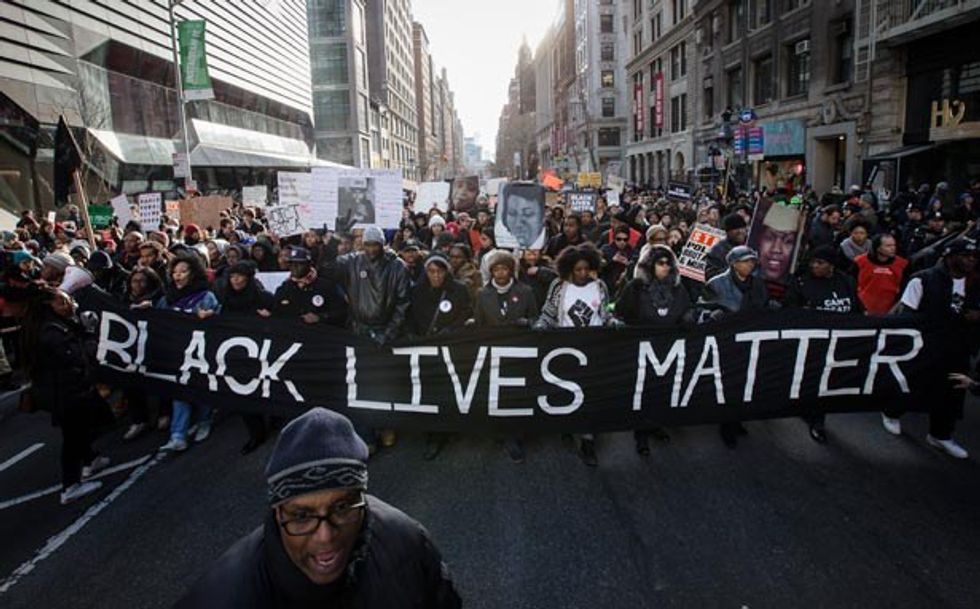
In order to incite change, these movements need to employ a nuanced strategy to overcome those structures of power. What I have seen in the Black Lives Matter movement is courageous and inspiring, but too often I see individuals adopt a combative attitude. These people look for anything to call out to create a spectacle of public shaming. For example, a protest that was organized by Emerson students used the slogan “You are with us, or against us”. Shaming people for being silent is antagonizing. Silence does not always mean compliance—it can mean reflection and deep-thought, it can mean uncertainty, it can mean disillusionment. Other instances of shaming are equally polarizing, and instead of gaining people’s solidarity, it creates more of a divide. Words and actions that perpetuate the current structures of power should be dealt with finesse by pointing out the wrong and imploring the perpetrator to change. As Sylvia Spears said in another training session with Resident Assistants, “Shame does not move people”.
Facing structures of power and privilege and trying to break down sociocultural inequalities is daunting. There is without a doubt an institution of racism in our nation that still affects millions of Americans. It is important to listen to the voices of the oppressed, but it is also important for the oppressed to be open to the support from the privileged. Although it is frustrating, I believe the best way to shift the structure of power in our country is to get as many people on our side, those with a number of privileges and those without. This will spread the values of diversity and inclusion among the current hierarchy of power, funneling into the generations to come. Everyone should do their part.
Mine will be promoting those values among my residents at Emerson College. What’s yours?