Recently I found out that a childhood family friend of mine, who I haven't been in contact with for many years, left her college to return home. I didn’t understand why and was very confused when I heard the news.
Although we don’t talk regularly, I follow her on many different social media platforms (Snapchat, Facebook, Instagram, etc.). She looked like she was having the perfect college experience, and I often craved her happiness. She seemed to have many friends, attended a beautiful top college, and appeared to really be peaking.
As I learned this week, this was not the case. She was unhappy, depressed, and decided to return home, plagued with anxiety and depression that rendered her unable to finish the semester.
Needless to say, we live in a completely digital world, controlled and manipulated by the powers of technology. Right now, you are most likely reading this article because it was shared on your Facebook newsfeed. You also most likely have your phone within reach. And, it’s most likely been less than two hours since you sent your last Snapchat or checked your Instagram feed. We are millennials and we mask our true identity in our omnipresent social media usage. It’s not our fault.
We are socialized into a culture where the powers of social media trump the powers of face-to-face interaction and interpersonal expression.
The distorted identity that we create on our social media platforms glorify the good and completely aim to ignore the bad. In face-to-face interactions we cannot completely control others' perceptions of ourselves. However, via our online identities, we can manipulate and completely construct how we want others to view us.
The majority of it is fake.
We only post pictures of ourselves smiling; we never post the pictures of us crying. We only post pictures of us with friends; we never post pictures of the lonely moments that are completely natural. We only post statuses reporting the good in our lives; we often choose not to share the tough moments. But this is expected and it is not our fault. It is the culture and power of online social media usage that has created these norms.
It’s time to break the norms.
Display your real self on your preferred social media platforms. It will be tough, and it will require you to be vulnerable, but it is important. It is important to build relationships (whether those are online relationships or not) that are founded upon complete honesty and realness.
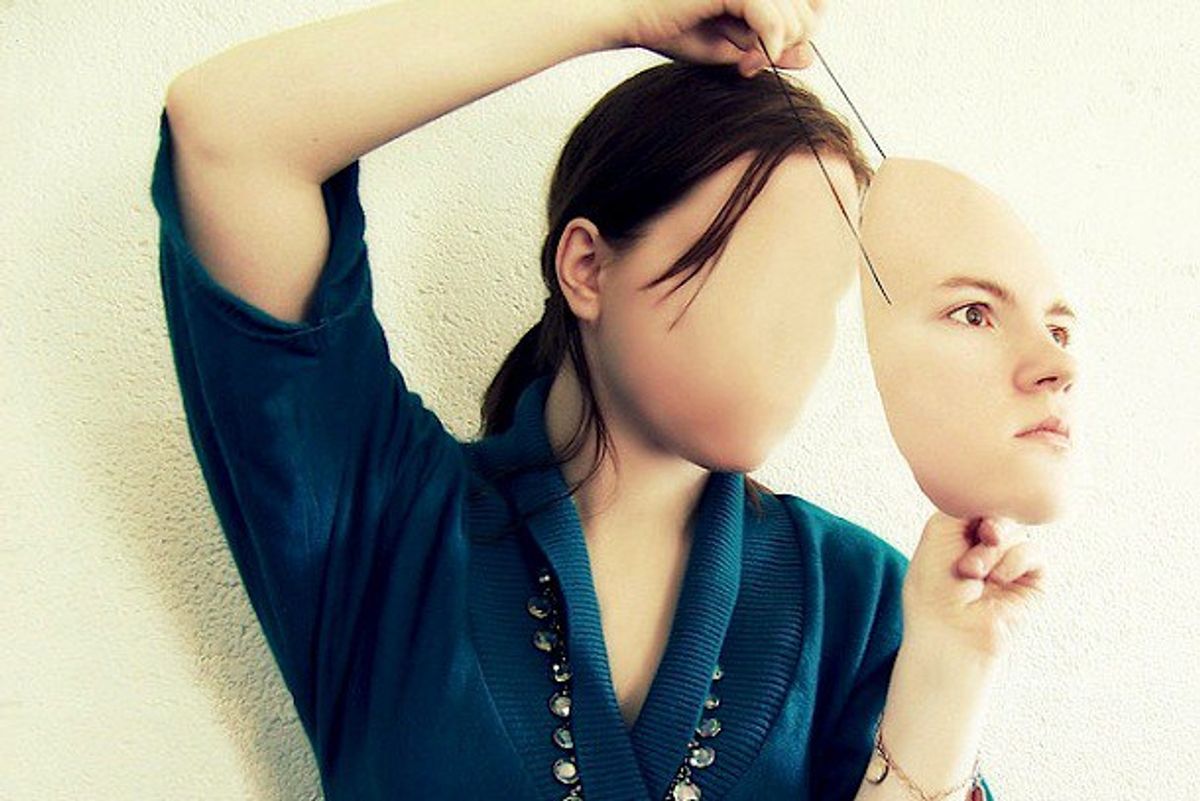
Unpeel the mask and choose to create an online identity that is reflective of your true self, and not just an ideal version of yourself.
The concept of self has changed, and I encourage you to dare to be true to yourself when forming your online identity.