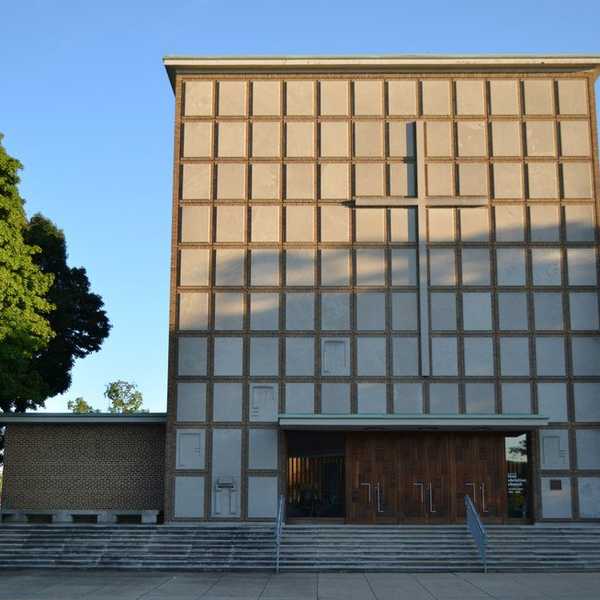

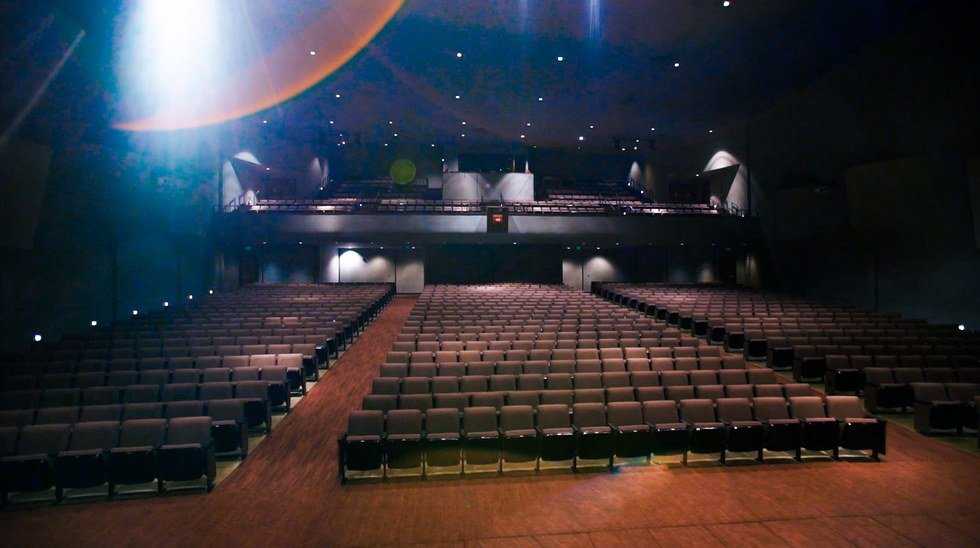
College chapel. One of the more oddly divisive elements of the Christian college campus, chapel is usually either hated or loved, with very little room in between.
Now, I am not here to form a defense of chapel, nor will I attack it. As far as I am concerned, chapel does serve a purpose, though that purpose must be carefully scrutinized. And, more importantly, this purpose must be separated from the purpose of the church.
As much as chapel is a place of worship, its purpose is not to be a church.
Chapel is not church.
It does not serve as a replacement, nor does it deserve the same kind of participation as does your local church body (note that I qualify participation by kind; I will come back to this).
The chapel may seem, in many respects, to be like a church. We are led in fellowship and worship by ordained ministers, fulfilling, as it seems, the chief end of man: to glorify God and enjoy him forever.
Okay, that last part might be a debatable, Presbyterian quirk of mine, but the point still holds. In many respects, chapel acts like a church. So if it walks like a duck and talks like a duck, is it a duck?
A few key, crucial differences present themselves for inspection. I am sure that I will not hit all the differences, but if you can discern for yourselves where chapel and church differ, then you don't really need this article, do you?
The greatest difference lies in the distribution of the sacraments. I am aware that many different denominations define the sacraments differently, but chapel does not have the authority to distribute any. You cannot partake in the Lord's Supper, nor can you be married at chapel. As far as I know, no child has been baptized at any chapel function.
The list could go on, but suffice to say that these intrinsic tenants of Christianity are still held by the church, and not by your college chapel service. This is why I qualified the participation by kind: you can participate in worship without participating in the sacraments.
This is not to say that there is no point to chapel; on the contrary, chapel provides an element of Christian community otherwise lacking on campuses. But our brothers and sisters in Christ are not limited to those of our general age group.
This leads me into the second difference: the artificial separation by age. What I mean by this is that, as college students, we are generally all the same age. Therefore in chapel we really only find ourselves among our peers, cut off from the rest of the human race.
The church body has no such separation, and is in fact a comprehensive community of all ages, from the wailing infant in the pew a few rows behind you to the elderly couple nodding off in their seats. This is the church body, a family spread across time, open to the wisdom of the ages and the energy of the youth. Chapel has little room for this expanse.
I may or may not return to this subject, but suffice to say that even if you are filling your chapel credits (assuming you go to a Christian university) it will not replace the community you have in the church.
Partake in the sacraments, listen to your elders, love your peers and the youth of the church.
And in the spirit of Lent, from the Book of Common Prayer:
Almighty God, you have created us out of the dust of the
earth: Grant that these ashes may be to us a sign of our
mortality and penitence, that we may remember that it is
only by your gracious gift that we are given everlasting life;
through Jesus Christ our Savior.
Amen.