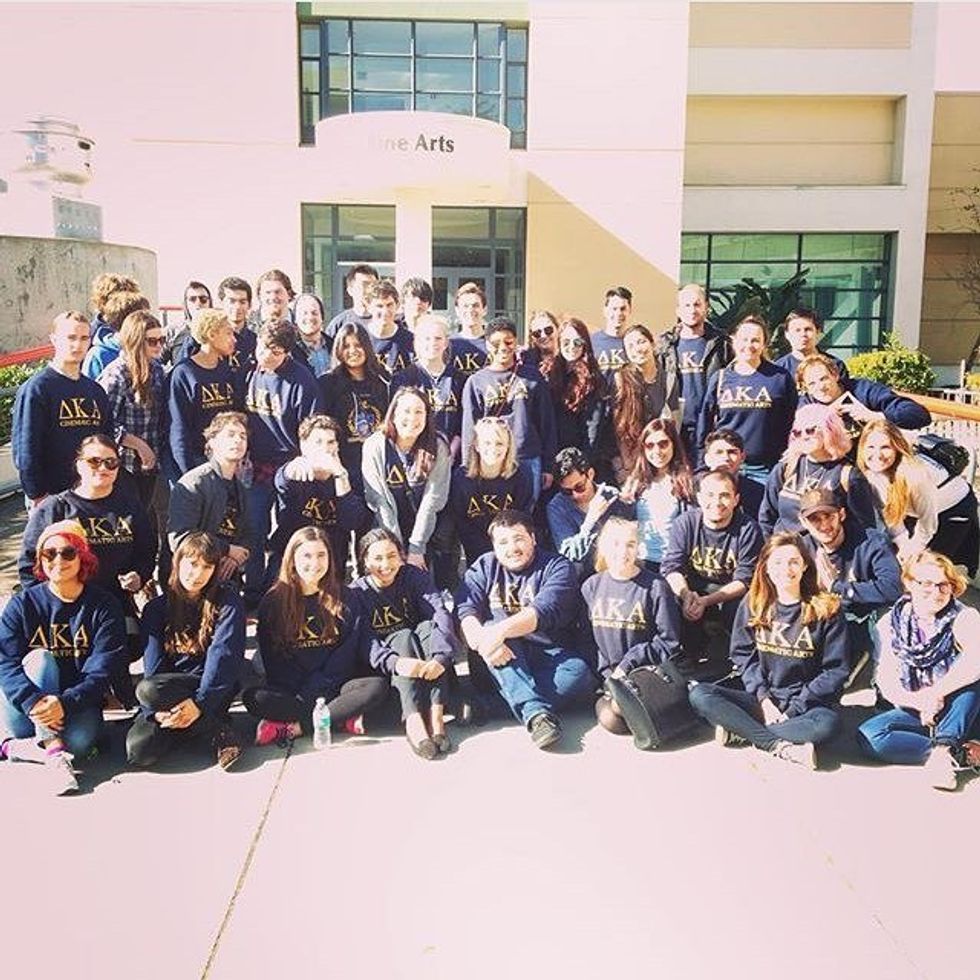
Let me preface this by saying that, as I was growing up, one of my most compelling reasons for joining a Greek organization when I got to college was that I’ve always felt like I missed out on having a sister. Now I can happily say I have close to 30, and quite the fistful of brothers -- in addition to my biological big brother that is. The intent of this article is not to exclaim that one type of organization is better than the other, but rather that there are certain strengths in being a part of an organization that isn’t meant for “boys/girls only.”
1. We don’t resemble the cookie-cutter image one may expect of Greek life.
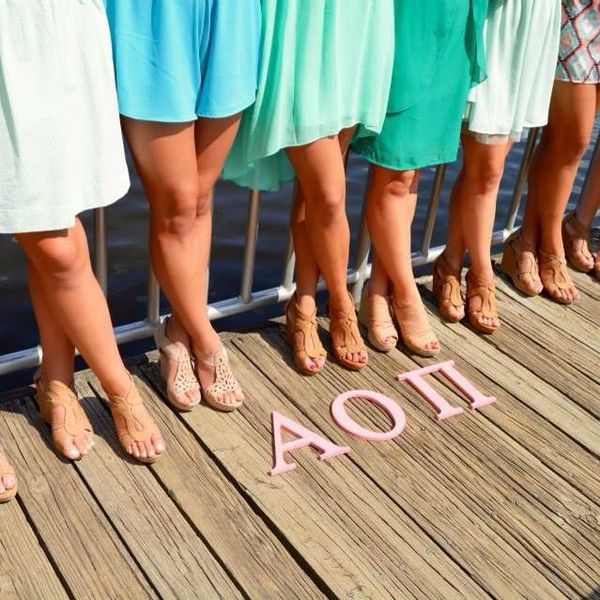
When I told my friends I was rushing a fraternity, they (A) were just as perplexed as I was upon discovering the idea that a fraternity could be co-ed and (B) didn’t really imagine me as being one to “Go Greek.” There is a certain presumption when it comes to Greek organizations, and whether or not they buy into particular stereotypes may vary. Like my friends, I didn’t quite see myself fitting this mold of a "typical Sorority girl," in spite of how intrigued as I was by the notion of sisterhood.
However, I have come to see that representations of sororities as Starbucks-obsessing, yoga-pant-wearing and "sorority-squatting" and fraternities as muscle-tee wearing, beer-chugging and machismo are really just generalizations. This isn’t to say that there is something particularly abhorrent about these conventional representations; but for some, they can also be overwhelming.
These generalizations didn’t match with what I was looking for in joining an organization, but what is important to know is that there is more to all of these organizations and the people in them than what may appear on the surface. Some people, however, are drawn to certain representations and there’s nothing wrong with that; but from my own experience, I have found these assumptions to also be narrow, which is partly why I enjoy being in a co-ed fraternity as a way of dispelling them.
Additionally, being a part of a less conventional, co-educational Greek org has taught me that there is something about every organization that makes it unique. It is ultimately all about finding your people. As for myself, when I was seeking to be a part of an organization, I was drawn to the idea of being around a greater variety of peers and extending my ideas of family outside of the notions of sisterhood.
And in case you were wondering, yes, yoga pants are actually comfortable as all hell, and no, they don’t make me feel basic.
2. Being in a co-ed Greek organization provides the opportunity to practice eliminating gender norms.
This is pretty self-explanatory. From my experience, I can proudly say that there is no aspect of my fraternity that is particularly gender-divided. By this, I mean women and men do not stick to performing certain tasks according to conventional gender norms. In fact, I think we do a pretty great job treating and seeing each other as equals.
For example, just the other day I was helping transport heavy equipment (OK, fine, I was carrying a sandbag) to another member’s truck. He didn’t ask for just the guys to help, although it is a commonality, but some of us gals also brought out the big guns and lent a hand. This is just one tiny example of how we work: everyone helps out, as we ought to.
3. We don’t discriminate based on gender identity.
This one speaks very loudly to me. I feel really lucky to be a part of an organization that allows everyone an equal opportunity to participate in Greek life so that no one struggles with the issue of exclusion, regardless of where they fall on the gender spectrum. Before writing this article, I had a discussion with one of my siblings who identifies as non-binary, and they remarked that rushing a "conventional" fraternity or sorority could be problematic for someone who doesn’t identify as male or female.
They described the potential discomfort of being constantly surrounded by only one gender and facing pressure to perform or conform to conventional gender roles. Additionally, they expressed concern over their true gender being ignored or trampled on by statements such as “sisterhood/brotherhood” or “we’re all girls/guys here” mentality. They admitted that these circumstances are the reason why they didn’t rush a traditionally or exclusively cisgendered organization. I think we can both say we are appreciative of being in an all gender inclusive organization because there was never any debate about whether or not they ought to be allowed to join.
I have always considered myself an ally, but talking to my sibling made me realize that there are things I do not always take into my daily considerations, and I still have much to learn. Our inclusion of all individuals on the gender spectrum stresses the importance of working harder to dismantle gender norms and stereotypes, and I see this in a positive light. I am now in the middle of my first semester as a new member and have already noticed how my organization has taken steps to utilize gender-neutral terms regarding chapter business. We still have a way to go, but these are all very important lessons and steps toward a future in which we can ensure a safe space for any prospective member of any gender identity to feel welcome.
In conclusion...
I can vividly remember my first day in college when I approached the table of my now-organization; I called my mom later that evening and told her that I had found my family. If it were not for my siblings, my transition to college may not have been nearly as impactful or eclectic; I may have entirely missed out on getting to know my best friends or my Big, whom I have been so fortunate to meet.
If you are thinking about “Going Greek,” whether you are enticed by the idea of sisterhood/brotherhood, meeting people with common goals or community involvement, I hope that you will consider the various strengths of diversity that can be great assets for any organization.
Oh, and let me fill you in on one last thing: perhaps my absolute favorite part of being in an unconventional Greek organization is when I tell my non-Greek friends something weird about one of my brothers…they never know which one I’m talking about.