
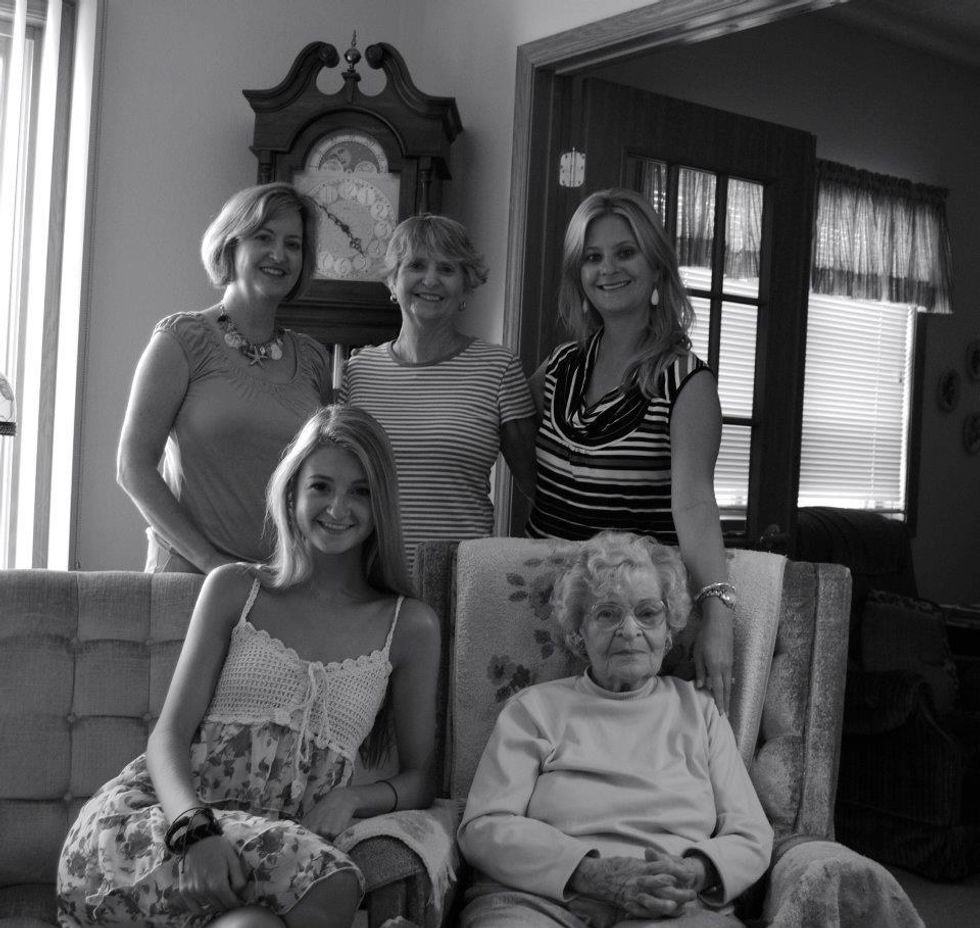
My great grandmother is about to turn 100. Yes, 100 years old. She is an amazing woman who, when I last visited, was still doing daily crosswords and was sharper than me sans morning iced coffee. She currently resides in a nursing home in Ottumwa, Iowa, a place one would never go on vacation or for any grand attraction. It is a simple Midwestern town of 25,000 people that looks like it was left behind in terms of any sort of modernization by a few decades. It’s a place made special to me because of my family history.
My great grandparents raised my grandmother in Ottumwa, where she went on to meet my papa in high school, and well, the rest is history. When I last visited, they took my family and me back to a place they spent a good chunk of their teenage years, a place you’d never find if you didn’t have the inside scoop.
The Canteen in the Alley is a charming little piece of Ottumwa full of history and nostalgia, for my family and many Iowans. If not for this visit, I, a Connecticut girl, would never have gotten to experience the Canteen in the Alley, and that’s exactly what it is: an experience.
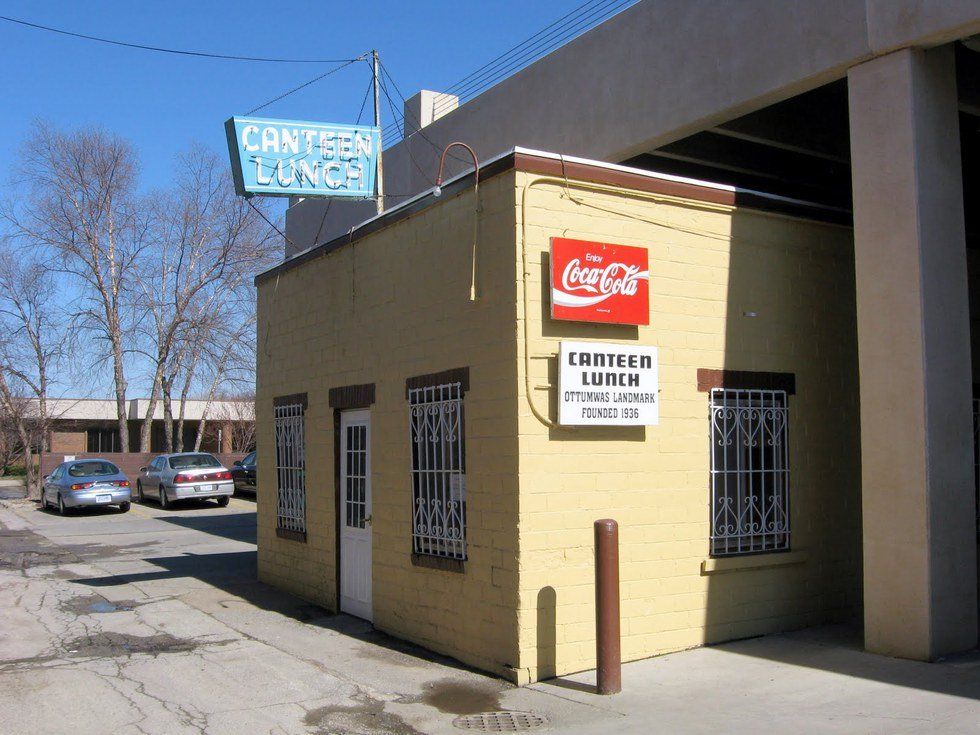
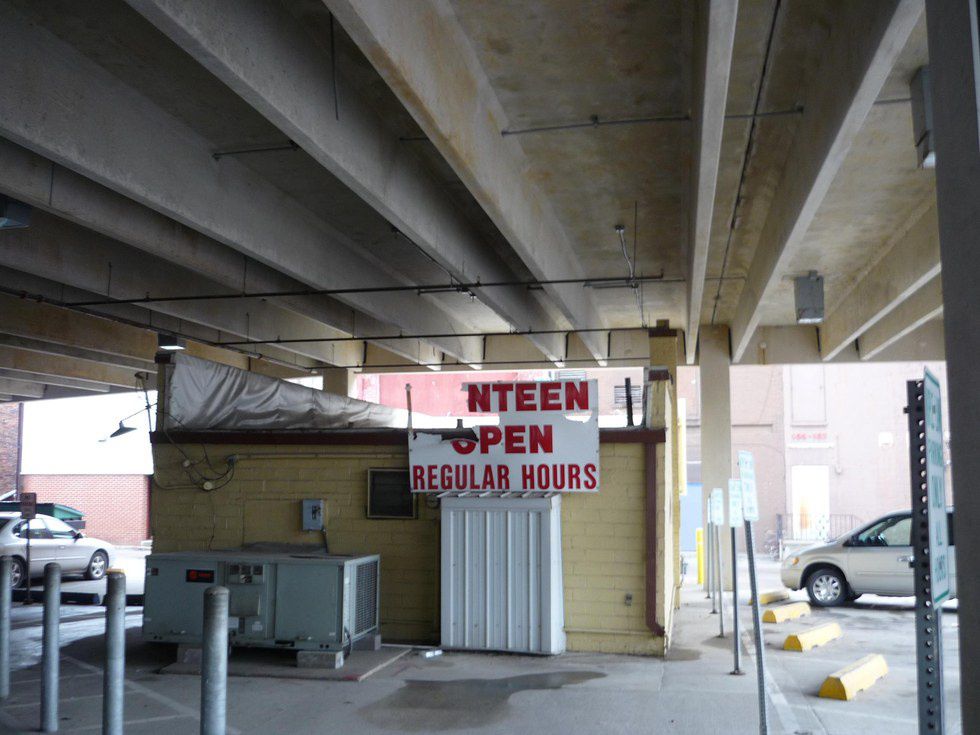
We parked in a deserted lot in town. There were a few other cars — an old, red, rusted Toyota and a green 1970s Volvo wagon. It was a steaming Iowa summer; heat waves rolled off the dry, cracked pavement into the thick air. The air was so thick, it seemed to add weight to your back. It slowed everything down. In Ottumwa, the people spoke slower, moved slower. Seeking refuge from the heat and something to satisfy our growling bellies, we entered a small building with a sky blue sign that claimed it was “The Canteen”.
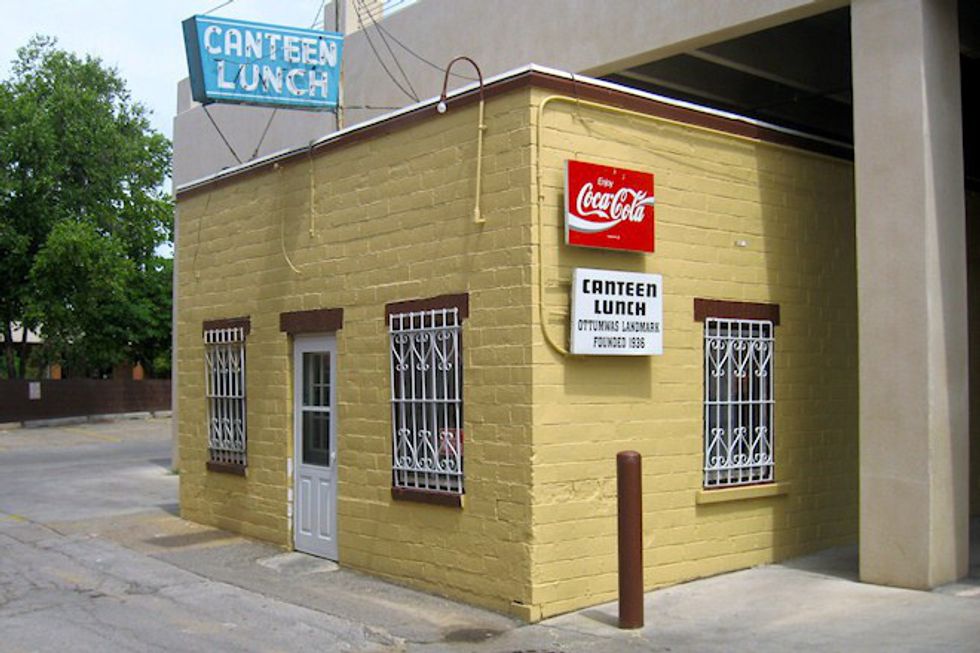
It was an ostensibly divey place. The yellow painted brick building was nestled in between the bulky, concrete pillars of a parking garage. The small, white front door opened up to a lonely alleyway. The yellow facade was plain aside from a red, rectangular “Enjoy Coca-Cola” sign hanging directly above a simple white sign with blocky black words that read: “Canteen Lunch. Ottumwa’s landmark. Founded 1936.” Inside, I could finally breathe again. The burden of the heat had been lifted by a fan humming in the corner, and the salty aroma of steaming hamburger meat wafting through the air filled my nose. There were a dozen silver swivel stools with fire-engine red plastic seats around a horseshoe shaped bar counter. At least five on one side were occupied by patrons. I was not sure where they came from. The town was so quiet you could hear the heat radiating off the tar and the wind whistling through the thirsty, dry stalks of Iowa corn in the fields miles away, but he Canteen was abuzz with life.
A pound of ground beef sizzled in the steamers located in the middle of the one-room establishment. The grease popped and hissed, licking the sides of metal vats. The occupied stools creaked as the customers swiveled to place their order for seconds and thirds, or just make friendly conversation with the waitresses. A grunt of laughter escaped from a man in a worn black biker jacket. There were three women behind the counter; they did not wear hair nets, but they slapped on clear, plastic gloves before assembling the loose meat sandwiches. I could even hear the constant sprinkle of salt into the pot of meat, the only seasoning the women running the restaurant used. The inside of the restaurant mimicked the outside in the sense that it was just as bare bones. A combination of white paint and wood paneling, the walls were unornamented aside from framed pictures of Franklin Roosevelt and John F. Kennedy and a simple, no-nonsense calendar. A large map of the United States on the west wall was the highlight of the decor. It was congested with red, yellow and blue push pins placed on different locations by patrons, marking where they had journeyed from. There was a refrigerator against the back wall, its racks filled with pieces of tastebud tantalizing, golden-crusted pies of every flavor.
“Whaddya want?” one of the women from behind the counter asked me. I realized the solitary menu was hanging above the door next to a sign written in black Sharpie: “CASH OR CHECK ONLY." It contained five items: Canteen, hot dog, egg sandwich, pie and ice cream malt, and everything was under $5. I ordered a Canteen, or the “loose meat sandwich” and watched as the ladies prepared my famished family’s sandwiches. The first woman tended to the steamers, seasoning the sizzling meat with pinches of table salt; the second prepared each sandwich once the meat was cooked thoroughly, smearing on thick American cheese with a spatula, spreading globs of yellow mustard onto the sesame seed hamburger buns, throwing uneven amounts of raw onions and dill pickles on top of everything. There were no plates, instead she wrapped each sandwich tightly in wax paper, leaving an open end. The third woman handed each of us a small plastic cup of water, no ice. Ice was too swanky for this place.
Even an outsider like me could tell that it was a restaurant thriving on tradition and nostalgia. It was not the run-of-the-mill lunch stop my family would have usually made when traveling, but we sought it out for my grandma and grandpa, who grew up together in the small town and used The Canteen as a place to congregate with their friends. Everyone ate there; everyone that once inhabited the small midwestern town knew its quirks and its traditions. As we ate, the meat, mustard, pickles and bun combination melting like butter in our mouths, my grandmother explained the idiosyncrasies of the Canteen. One of the girls, as she referred to them, would ask what you wanted. You gave her your order; you could only order one canteen at a time, but they would cook for you as many as you could eat. I finished three. You told the server you wanted your sandwich “moist” if you didn’t want the extra grease to be drained from the steamer before your meat was cooked. If you were more conservative with your cholesterol, asking for “dry” was also an option.
Since its opening in 1927, the Canteen has never been known as an attraction for the health conscious. They used to prepare every sandwich the same, without removing the saucepan of liquid fat from the steamer. It was when America became more health conscious and began to tighten the rules and regulations for the food industry that they were required to ask how each customer wanted their meat before cooking it. My grandmother claimed that you had to order your burger moist; it was the secret of the locals. She also claimed that even the “moist” isn’t as good and greasy as it used to be, and sometimes she asks for “extra-moist.” When there was nothing left but your empty wax paper, your oily fingers and the mess you’ve made on the countertop, you called out, “Reorder!” or, “Reorder with extra pickles this time!” The gruff charm of the place was that nothing was formal. There were no graces and rarely any pleases and thank yous. The most pleasant words from our server were “you got it” when my brother yelled out that he wanted a reorder with mustard. This was a no-nonsense establishment, and that is the only way the locals would have it.
If you ever happen to find yourself in Ottumwa, Iowa, a trip to The Canteen is a necessity. Happy early birthday, Grammy.