
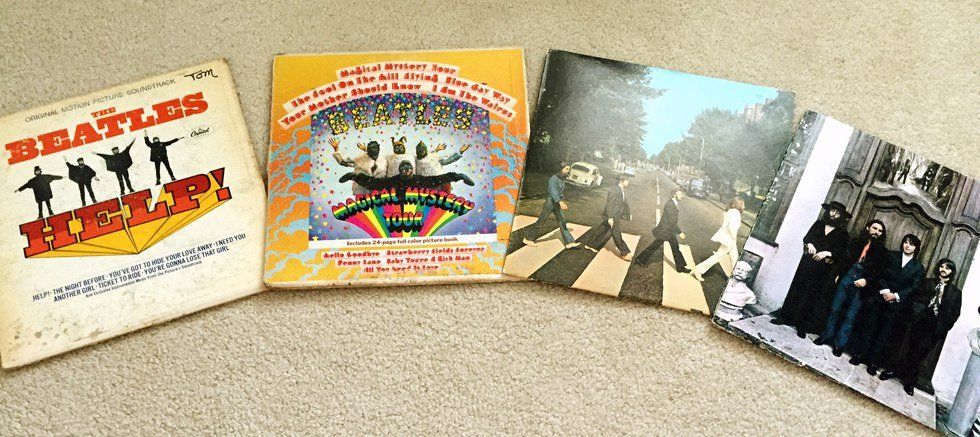
Throughout the past fifty years, the Beatles have gone through several waves of popularity. During the 1960s and even the 1970s, to like the Beatles was to be “mainstream.” As time went on and their commercial success dwindled, it became more countercultural to enjoy the Beatles. Now, though, it seems that liking the Beatles has returned to being mainstream and that the hipster mindset is to believe that the Beatles are overrated. The idea that the Beatles are the best band in the history of the world comes down to personal opinion and taste, but one cannot dismiss the profound impact they had on both the world of music as well as society’s social norms.
Even if we leave out the tremendous advancements that the Beatles made in music itself, the way that the commercial music industry operates has been deeply shaped by the course of the Beatles' road to success. In the 1950s and early 1960s, artists would have one or two good singles that they would release and then have an album comprised of those few good singles and then bad filler songs. The Beatles first challenged this idea by creating album music that was as good as the singles they released. They then further encouraged album sales by no longer putting any of their singles on their albums. The song “Here Comes the Sun” was never released as a single after appearing on the B-Side of the album Abbey Road, however it has become one of the band’s most popular and beloved songs. The anticipation for album releases that we experience today can be traced back to the Beatle’s popularization of the album.
The Beatles also set a precedent for how the big musical groups of today tour. In 1965, the Beatles played Shea Stadium. It was the first major stadium concert performance. The technology of the time period only allowed the Beatles to broadcast their sound through the stadium's PA system. But the concert at Shea Stadium was not the only time they played a sports venue, and the inadequate amplification devices combined with the new tradition of girls screaming throughout the entire show made it difficult for both the fans and the band to hear the music playing. Obviously this dilemma encouraged the further development of better speakers and microphones. This paved the way for more popular artists to tour stadiums as well.
Finally, regardless of for worse or for better, the Beatles had a great deal of influence over the youth culture of the 1960s — a generation of young people that would go down in history as one of the most socially active. The Beatles blatant disregard for the traditional views of society encouraged the teenagers and young adults who looked up to the band. The Beatles were always open about the drugs they had used, their thoughts on religion and their opinion on the war in Vietnam. In the United States, they refused to play for segregated audiences. While they may not have been the biggest political influencers of the time, their popularity and willingness to share their beliefs encouraged many young people to do the same.
The Beatles will continue to be shrouded in controversy over whether or not they were the greatest band of all time. People will always argue over the merits of their musical talent both as individual members and as a collective group. However, it cannot be discounted that no matter your taste in music, the Beatles rose to unprecedented levels of commercial success and had lasting impacts that can be seen today.