

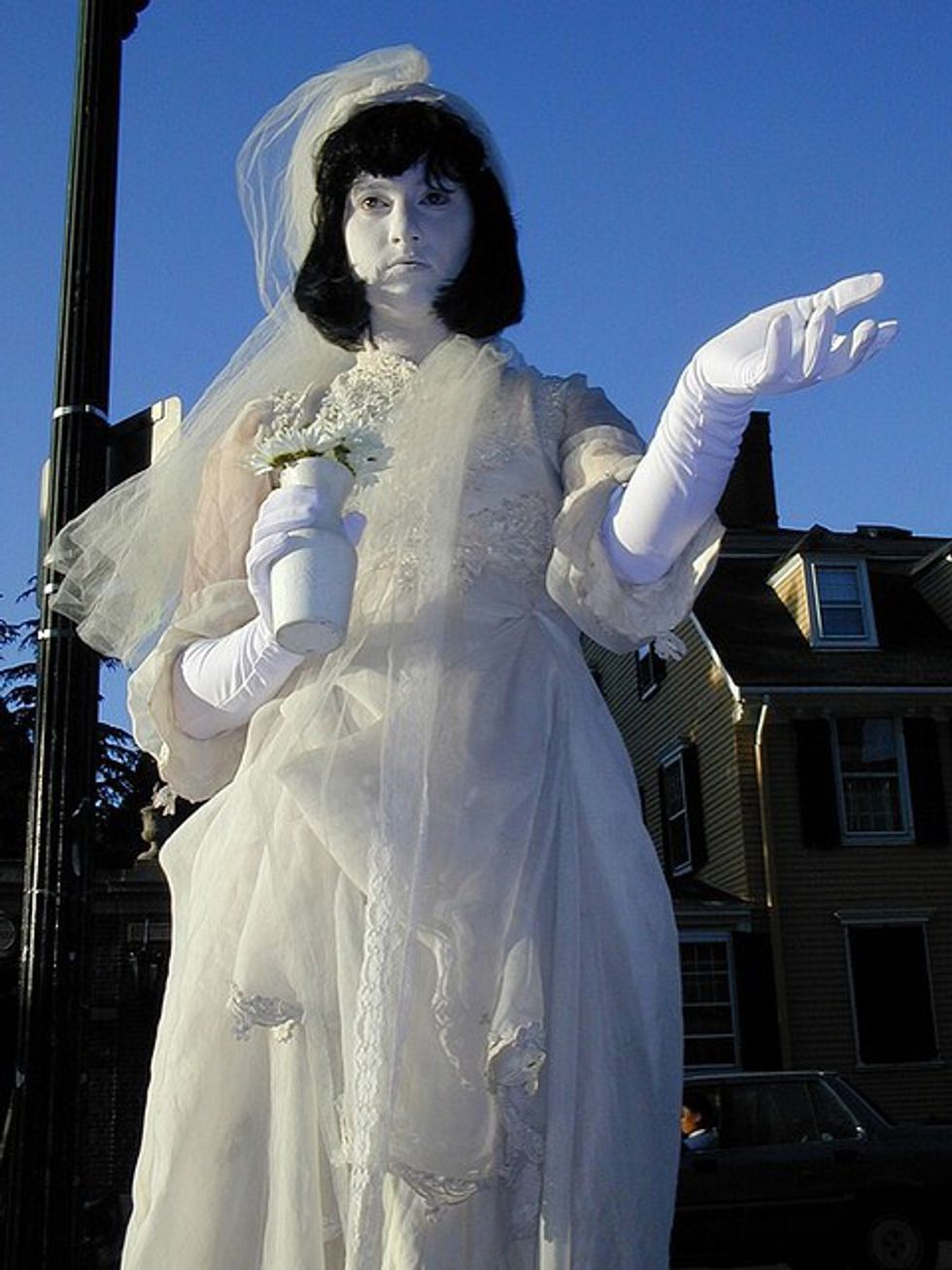
Musician Amanda Palmer's 2013 TED Talk opens with silence, as Palmer herself pushes a crate onto center stage, places a hat on the floor, and steps up, holding a flower in one hand, draped in tulle. For a brief moment, she stands, elegantly poised and almost a little stern. "So I didn't always make my living from music," she says, before launching into her tale.
After grad school, Palmer tells the TED audience, she made her living as an eight-foot bride, offering flowers to passersby who stopped to drop money in her hat. Her mission, in some sense, was to tell lonely people, "Thank you. I see you." She saw that people wanted connection, and did what she could to create that connection.
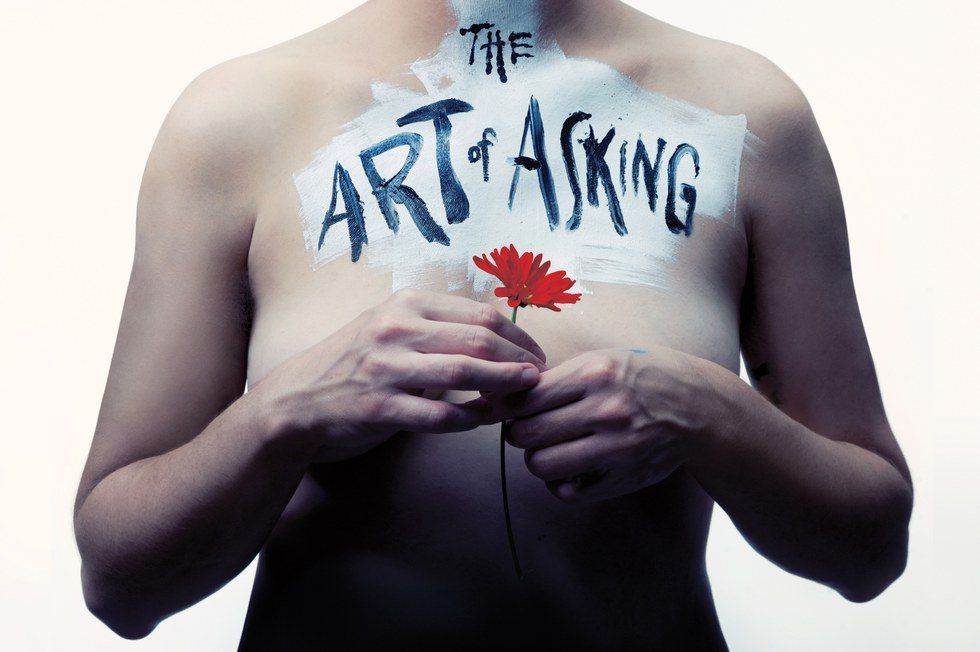
Palmer details this in her recent novel "The Art of Asking." I haven't finished it - I've been savoring every word and periodically sobbing my eyes out, because there is something in the way Palmer writes that makes you, the reader, feel seen and understood.
There is a section, early in "The Art of Asking," in which Palmer sums up the reason for everything that she'd been doing in her life, including the eight-foot bride: "PLEASE. BELIEVE ME. I'M REAL." That resonates. That rings so unbelievably true with what so many people struggle to understand about themselves and why they do what they do.
What intrigues me, then, is that the general public tends to focus on the controversies that surround Palmer, and not everything else about her: Her Kickstarter campaign that funded her album "Theatre Is Evil." Her shameless, unapologetic behavior. Even, perplexingly enough, her marriage to author Neil Gaiman.
So why doesn't the public want to see the poetic, remarkably profound side of Palmer?

The thing is, you don't even have to like her art to like what she stands for. For people who see the world in black and white and prefer to keep it that way, Palmer is loud and brash and says and does uncomfortable things. She's got artistically drawn-on eyebrows and breastfeeds her son at book signings.
But is that really enough to overshadow everything else she's done? Is her personality and her lifestyle enough to make us forget that in the end, Palmer has a deep understanding of how people relate to each other?
Sady Doyle, a writer for "In These Times," found that an interesting question arose after listening to the audiobook version of "The Art of Asking." Doyle asked, "When we hated Amanda Palmer, were we even reacting to Amanda Palmer at all? Was it really her that was the issue? Or was it just a matter of picking on that year’s girl?"
It's a fascinating point, because how many of us, when shoved into the spotlight, would be able to maintain a sparkling, unsullied public image? How many men have acted the same way as Palmer, with little to no reaction?















