As television has grown in the last 60 or so years to become a staple in the lives of many Americans, so have cartoons. Children and adults of the last few generations have delighted in the colorful characters and the memorable adventures animators have introduced to the general population. Cartoons have also opened up a wide variety of new jobs for thousands all over the world. Animators and writers flock to schools across the country, learning what it takes to create what has become their art. They study various forms such as writing techniques, drawing, storyboarding, computer generation, and Claymation; the list goes on until finally the finished product is sent to TV screens across the nation, and if really popular, the world.
Many cartoons, from "Family Guy" to "Courage the Cowardly Dog," to "Kim Possible," often reflect what's going on in society at any given time. The question is, does this hold any significance as to what is going on in the present? Can we dissect shows like "Inuyasha" for its religious purposes or its satire? Can cartoons really be studied in a scholarly sense? The answer is yes, they can. Cartoons can be studied for their ability to reference the past, to keep viewers updated on current events, and to install a sense of community in others.
For example, the show "Liberties Kids’" is a historical fiction cartoon. The show was intended as a 40-part miniseries designed as a way to teach 7-14-year-olds about The Revolutionary War. It centers on the lives of three teenagers James, Sarah, and Henri. James is a 14-year-old orphan boy apprenticed to Benjamin Franklin in his print shop just before the events of the war. Sarah is a 15-year-old girl from England, staying as a guest in Franklin’s workshop. Henri is a trouble causing 8-year-old French immigrant who, after his parents die on the voyage to America, comes to stay with Franklin. Together the three travels through the colonies, along with an African-American man named Moses, reporting for Franklin newspaper, The Pennsylvania Gazette.
Despite the show being off the air for the last 12 years, it still continues to be used by people today. This show presents teachers and parents with a unique opportunity. It provides them with the ability to educate children about a topic that could be potentially scarring or boring. During the time the show aired, from September 2, 2002 to April 4, 2003, it was used in numerous classrooms as teaching aids and shown on children’s networks such as The Wonderful World of Dic and PBS. There have even been instances where the show was brought to the classroom not by the teachers, but the students.
As stated earlier, cartoons also possess the ability to keep viewers informed on the current events of society or popular culture. One cartoon that does a good job of embodying this quality is the popular prime-time cartoon "Family Guy." "Family Guy" (1999 – today) is a slightly adult comedy/sit-com portraying the lives of a Rhode Island middle–class family. Peter, his wife, Lois, their kids Meg, Chris, and Stewie and their dog, Brian go through crazy adventures while trying to live out the rest of their lives. The show generates perhaps 90 percent of its comedy from pop culture references and the other 10 percent from current events happening all over the world. The sometimes offensive and vulgar comedy tends to offend many people, but the references are never forgotten. Seth McFarland, the creator of the show said that “Family Guy has this weird thing: People either hate it or can't get enough of it. There's really no in between. There doesn't seem to be any group that can take it or leave it.” Yet, despite the show's cancellation on the Fox Network in 2002, the popularity of the show grew enough for it to be brought back in 2005 and has been going strong sense.
So what can we glean from this show if the humor is so offensive? There is, in fact a method in the crude humor contained in the program. One positive factor that the show contains is the frequent pop culture references. In order to understand the humor of the show, one must be somewhat aware of what is going on in society at any given time; not just in a national sense, but also foreign affairs. This forces the viewer to think and become more knowledgeable about the world around them.
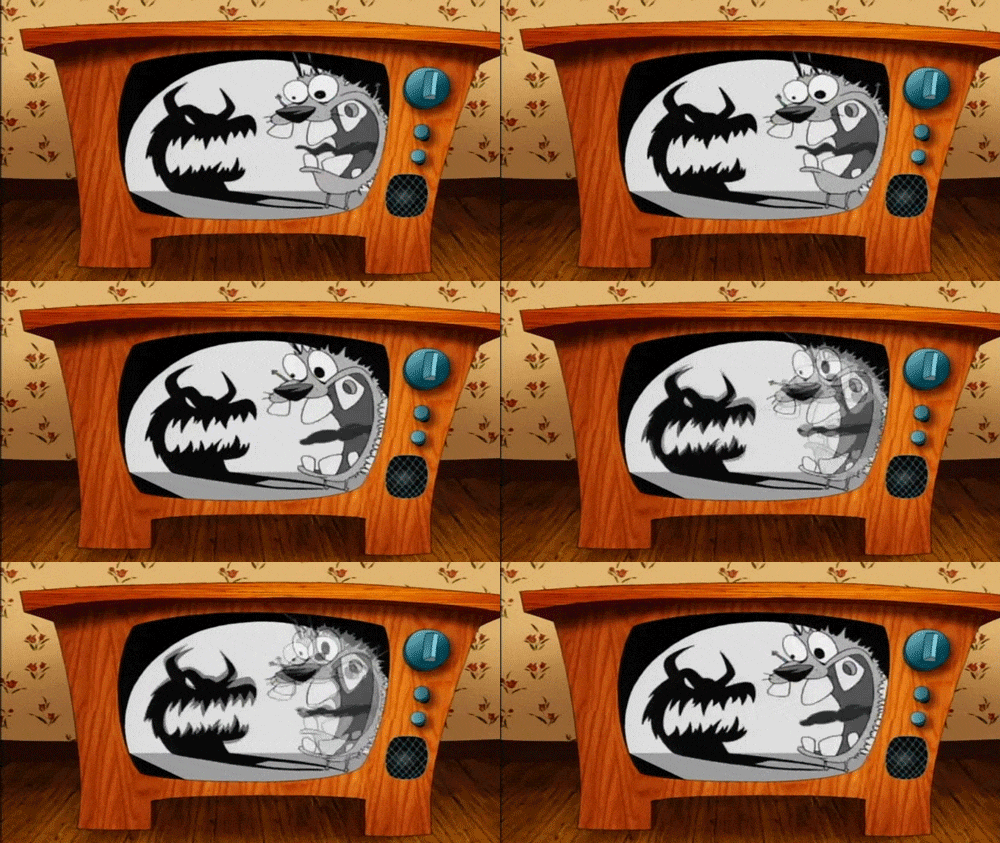
The third show is probably the most unusual, given that it has the ability to install a sense of community in others; an unheard of concept for a cartoon, whose main purpose is to drag people’s attention away from each other and to the TV screen. Courage the "Cowardly Dog" (1999-2002) is a slightly creepy children’s show about a dog constantly trying to save his owners Muriel and Ustice from the danger in nowhere land. It’s a fairly simple plot line and easy for most children to follow, yet it’s the complex nature and themes of each episode that allow children to often seek out others, if only to quell their curiosity. Years later, I have often heard others come together and talk about the nature of the show. They laugh at Courage and all his faults, scream at the nerve-racking episodes like Return the Slab, and try and deny that they were ever scared in the first place. Even in the lunch room of the cafeteria here at Arcadia, references are often made to the kids show as people naturally gravitate together to share their experiences with it.https://www.youtube.com/watch?v=P-busojcI7Y
Many cartoons reflect what's going on in society at any given time as we have proven. Can cartoons really be studied in a scholarly sense? The answer is yes they can. Cartoons can be studied for their ability to reference the past, to keep viewers updated on current events, and to install a sense of community in other. These three shows may have given you examples, but don’t take my word for it. The next time you sit down to watch a TV show, be sure really study the show. Well, as for me that’s all folks.