

"What does it mean to be educated?" asked a friend who was enrolled in the Education Philosophy program. My instinct was to say, "Going to school, and learning academic stuff?" But when I thought about it long and hard, I knew that was not the answer. Because going to school and learning academic stuff could pass off as "being trained" and not "being educated". So I continued to think about it (and still continue to think about it because my ideas about what it means to be educated continues to evolve) but have still not been able to to come up with a concrete response. What does it mean to be educated?
I have some opinions and I believe that there are no right or wrong answers to this question since “being educated” can mean different things to different people. But in my opinion, being educated means having the ability to question what the world stands for and not accepting what society gives us at face value. Being educated means to respect and value the differences in the society as well as take into consideration multiple perspectives. And finally, being educated means to always want to continue to learn and grow. Trying to understand what being educated means to me has helped influence my philosophy of education, which I would like to share briefly.
Young children in their early childhood years gain their experiences from their everyday lives. On a regular basis, they interact with families, friends, teachers and other school administrators, the general public, and the media, to name a few. These are the factors that guide children when they are trying to make meaning of the world and what they learn from these factors contributes to their understanding of how the world functions. Therefore, in my opinion, it is important that children are exposed to a diverse range of resources that reflect different perspectives from their early years and are also pushed to think critically about the information they gather. This will allow them to question things that they see around them without accepting them at face value.
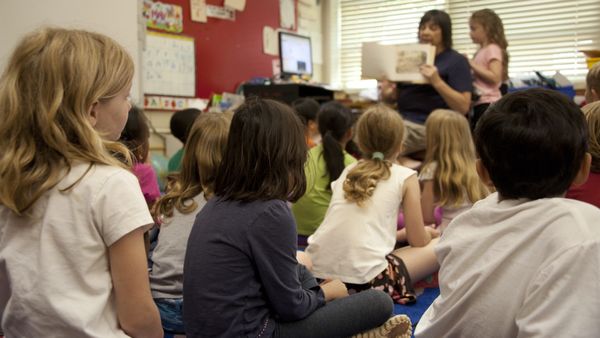
Children spend a major part of their day during the week at school. Therefore as teachers, we can provide them with various opportunities to raise issues that they face in their everyday lives and approach it from a critical perspective. It is important for us to not simplify the world for the children but present it to them in its true form and then have discussions with them about their different views and opinions. Such discussions give rise to different opinions being voiced by the children and educate them on how to value and respect the different view-points of their peers.
A teacher can also be a mediator and give them examples of how differences exist in the society and that there is no “right” way of looking at things. For example, in a classroom that I was observing, four children (1 of whom was receiving additional support for his social and emotional needs) were playing with magnet-tiles. When the child receiving the support was trying to help the other children build their structure, they told him that he would break the structure and that the construction was too difficult for him. At this point, I interjected and asked them to give him a chance and to show him how they wanted the structure to be built. I also pointed out that it was possible for anyone to break the structure and that everyone should have a chance to play. Similar incidents occur throughout the day in most classrooms and as teachers it is important for us to discuss these issues with the children so that they can learn to be more accepting of everyone and be more tolerant of differences.
Every child is different from the other and each one is good at different things. Therefore, I believe that as a teacher, one must look at all that the child is capable of doing instead of focusing on what he or she cannot do. Every child needs to be respected and shown that his or her work matters. For example, in one of my classrooms, one of the children, J, is very knowledgeable about trains, trucks, and planes. So each time another child has a question about any of these vehicles, the teacher guides that child to J, who is considered to be the "expert" in the field. J enjoys sharing his knowledge with his peers and they love learning from him.
I believe that it is important for a teacher to observe each child and understand his or her areas of interest. When teachers go that extra mile to learn more about a child's interest, they are able to form a deeper, more meaningful relationship with him or her. And when a child is able to share a meaningful relationship with the teacher, he or she is more invested and engaged in the learning process. While it is essential that children are exposed to the different fields of academics and non-academics, it is also important to nurture and develop their fields of interest.
For example, during “choice time” all the boys wanted to go to the block center or to dramatic play except for one of them. This child who generally keeps to himself, sat at the table drawing on a piece of paper and sticking tape on it. I had been using a hole-puncher and he asked me if he could borrow it from me. I passed it on to him and he went on to make a series of holes in his paper. After that he tried to use the tape and make a mask of out the paper but it kept getting “messed up”. So I suggested that to make it less messy, he could bring some thread which we could tie around the paper to make the mask. After making his mask, he proudly put it on and walked around the classroom to show it to everyone. All the children engaged in an impromptu role play where this little boy was supposed to be the monster and the others were running to save themselves. This incident gave the child an opportunity to feel like he belonged in the class and that his work was recognized and appreciated by his peers and his teachers.
Finally, in my opinion, it is also important to instill in children that failure is subjective and that as long as they try their best in a particular situation, the outcome does not really matter. If this is something that the children understand from their early years, they will be more comfortable with taking risks and experimenting in the future. It is important for teachers to not provide children with a wealth of information but allow them to construct certain meanings on their own and then come to conclusions by themselves. For this to happen, it is important for teachers to not look down upon failures but encourage them so that children feel confident in exploring, failing, learning from their mistakes and then trying again.
A classroom is a space for children to explore, make meaning of the world, and understand where they belong. While it is important for them to learn their ABC's, it is also important for them to learn to care for one another and collaborate, to be persistent and flexible and to be accepting of everyone around them regardless of the differences they see. And as educators who educate, it is our responsibility to provide them with that space and facilitate their learning.

















