


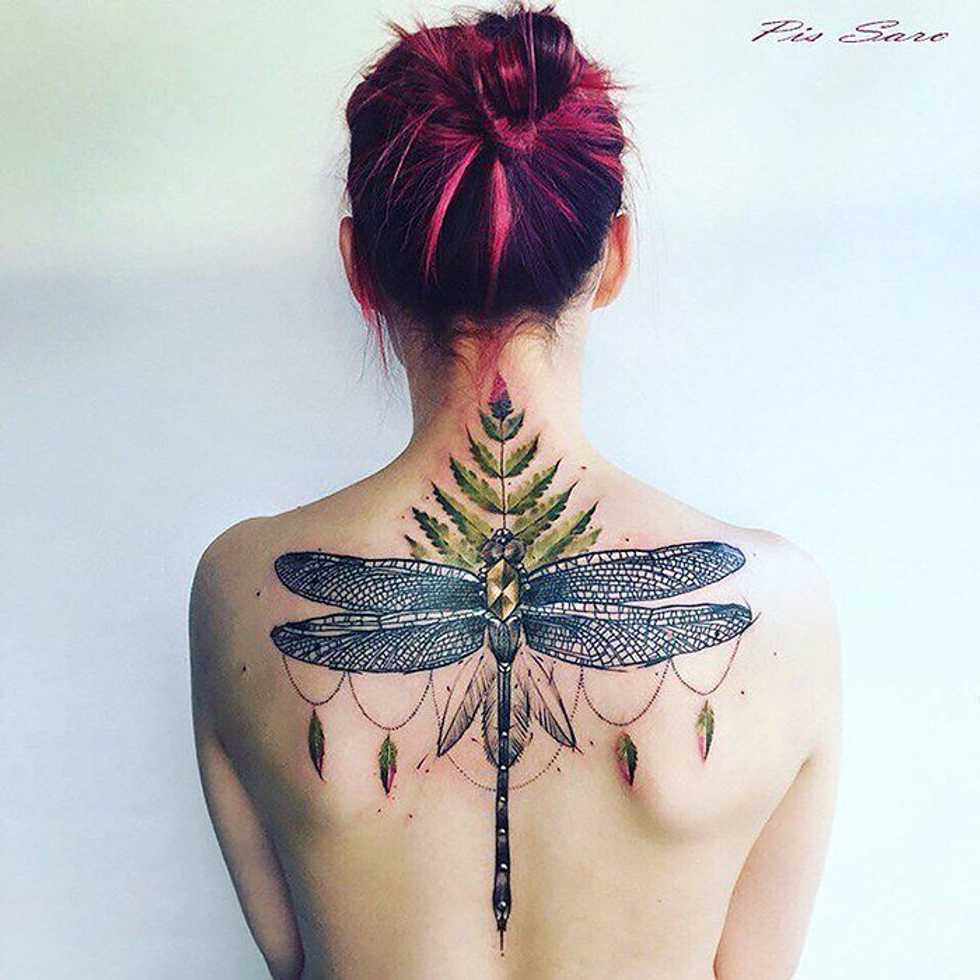
Almost anywhere you look, whether in the white collar industry, nursing or modeling, tattoos are becoming more and more normal. Artists, especially make their skin their canvas. They proudly display what they create.
Why, if tattoos are so common in so many parts of the world, do they have a negative connotation? Tattoos have been valued by many cultures over time. These include many indigenous cultures that display body modifications with pride. In some areas of the world, the more mods you have, the more respect you earn.
In the United States, tattoos have a wide history. Many men in the military got ink to celebrate their time in the service or remember their loved ones. Teenagers sometimes give themselves tattoos at home and show them to their friends.
Having tattoos, for many, is a rite of passage. They include you into not only the bigger group of those with ink, but in the smaller group of the type you have. Some people show their body art willingly as you can see just walking around. Others still, though, have to hide them.
In professional fields, it is unacceptable to have tattoos. I, myself, have four and plan on having more. They are all in areas you can easily cover up, however. This is not uncommon. Remember that popular picture of a doctor with a sleeve of tattoos? The question I pose: Why should people have to hide them? If they are widely accepted, why do some tattoos disqualify certain job applicants? Why do they feel ashamed of something beautiful?
One group, in particular, I want to mention are women. So many stereotypes circulate about women with tattoos. One very common myth is that women with tattoos are more likely to sleep around. First off, a woman has a right to use her body in the way she wishes. However, she is not more or less likely to be sexually active because of her love of ink. There is a harmful rhetoric in society about tattooed women being sluts, even though this holds no truth. A woman who gets a “tramp stamp” is particularly vulnerable to this judgment. This placement may be out of necessity or desire and definitely does not hold meaning. Some tattoos do, like the teardrop which signifies many things such as being in prison or killing someone. But not most.
Another stereotype is that these women are not successful. Kat Von D is just one example I can offer that defies this stereotype. She has her own show, is a successful tattoo artist and I happen to own one of her books. Other women, women with little ink or women covered in designs, struggle with this all the time. An older family member of mine asked me how I planned to get a job with the tattoo on my wrist. The cultural divide between she and I prevented us from coming to a reasonable conclusion, which is not unlike many people. There are too many negative sayings or misjudgments about women with tattoos to mention here, but I’ll name a few: unladylike, skanky, too much of a free spirit, and a general problem to society.
The process of social change is a slow and tedious one. We, as a society, may never get to the point that tattoos are readily accepted by most people (including employers). My only hope, and the hope many other people with tattoos have, is that you will stop judging a book by its cover. We are people, too, and so are the other men and women that are misconstrued in the world. Beauty is only skin deep, they say. I think more people should remember that.

















