
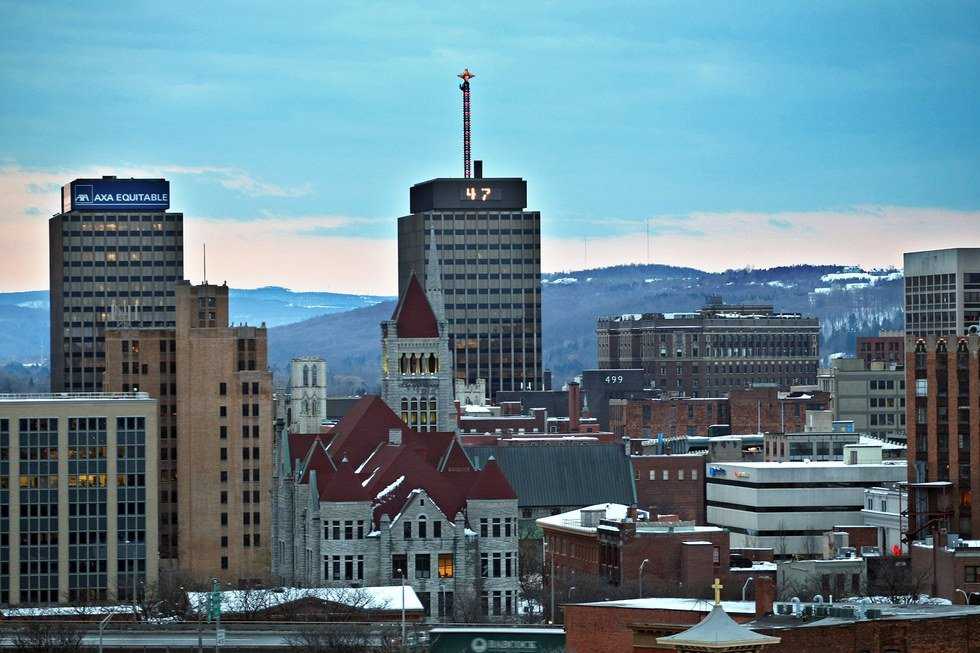
Today I took a ride on the Connective Corridor bus. I was headed to a restaurant in Armory Square, Syracuse’s small downtown hubbub. I got sad on the way there.
It was a nice day, bitterly cold, but sunny and breezy. Nothing too special. I was wearing a cotton skirt and a knit sweater, oxford shoes and knee-highs. The kind of classy casual you wear to a restaurant.
I boarded the bus at 12:10 from College Place and watched out the windows as we drove through the University, past Sadler Hall and onto Irving Avenue.
According to this syracuse.com article, the project cost $47 million. Forty-seven million dollars was spent in an attempt to get SU students off campus and “pump[ing] orange blood into the resuscitated heart of downtown Syracuse.” Downtown itself is nice, but getting there is not.
Much of the money from the project was used to fund major infrastructure improvements, including bike lanes, sidewalks, street lights, benches, and more. Yet, when I was travelling in the comfort of the 443 Centro bus, I found it hard to see where all that money went.
The roads were still lined with a decrepit chainlink fence. The sidewalks still looked grubby and old. The city still looked like the victim of post-industrialization it is today.
In the early 1800s some pioneers came to Syracuse and built up a village around it, mainly because of its proximity to salt supplies. It was built up further in the 1820’s, and by the mid-century, Syracuse became an established and distinguished city in New York. The city peaked during the World War II era, when the limestone mining trade and other war efforts dominated the economy and helped it thrive.
However, suburbanization and the rise of the personal automobile in the 1950’s drove the city’s population to suburbs, and the city entered a decline that it hasn’t been able to exit for 60 years.
Syracuse is actually known nationally as an impoverished city. Even a syracuse.com journalist admits that this city has “the highest rate of extreme poverty concentrated among blacks and Hispanics out of the nation’s 100 largest metropolitan areas.” Stepping even a few blocks off campus reveals a world of minority races dragging carts, peddling for change, and walking miles to avoid getting too cold.
This Connective Corridor initiative was to help revitalize the downtown area, but how can this city be revitalized under the present conditions? Syracuse’s residents with the most purchasing power are University students who are a) already strapped for cash in many cases and b) part-time residents in most cases. There is no way to rebuild the city into a prosperous one if we don’t help the residents that live here full-time.
That $47 million dollars should have gone to charities that help impoverished individuals and families find food, find shelter, find work, find culture, find happiness, find whatever can help elevate their standard of living. I’m sure the Connective Corridor has done a lot to help Syracuse students explore the city they call home for the majority of the year, but in every other regard, that $47 million has gone to waste.