
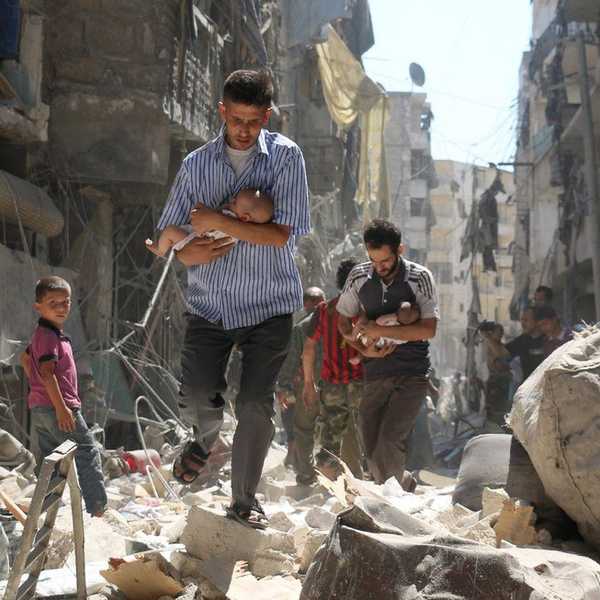
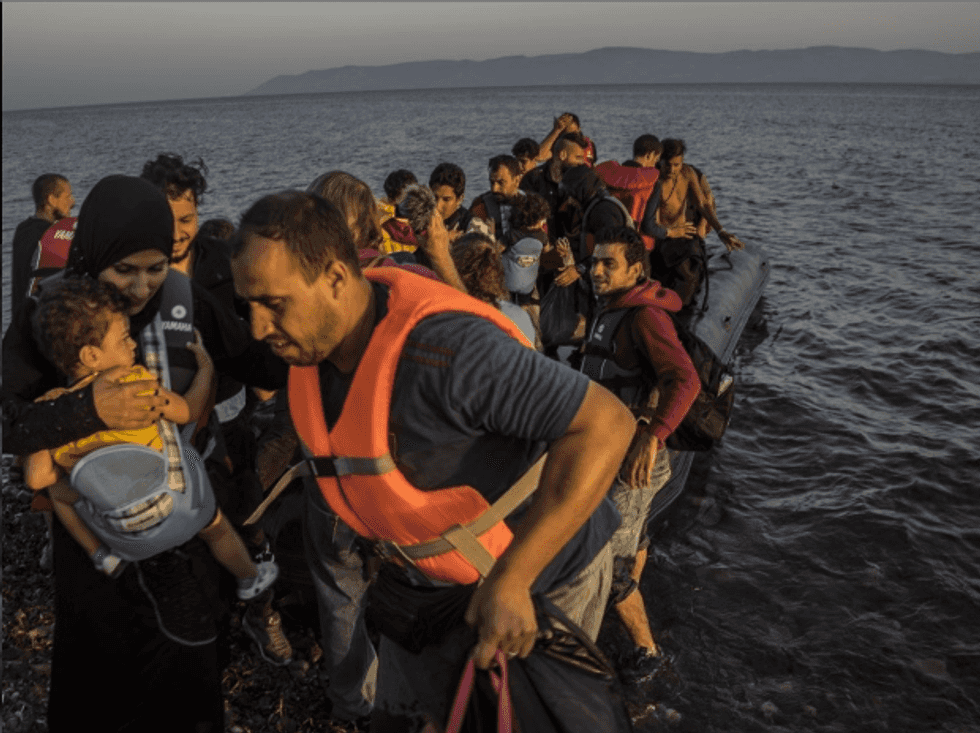
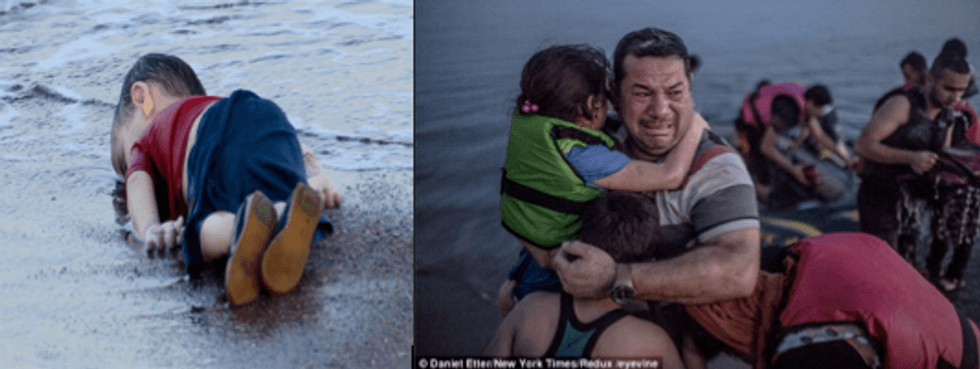
We have all seen the heartbreaking photos of the child washed ashore in Turkey and the father crying as he clutches his children on a boat. Most of us feel sympathy for the individuals fleeing Syria due to its Civil War, but many of us are ignorant to the ongoing struggle and conflict. We may tear up seeing a sad picture, but we wouldn't dare try to investigate why the situation has escalated
We feel sympathy, but not empathy. We care just enough to feel bad, but not enough to want to burden ourselves with their troubles.
In order to understand the current terrorism by ISIS, you must have a general understand of the Syrian climate. Starting around 2010, multiple Arab nations began having protests and civil wars known as "The Arab Spring." Syria was one of the countries that erupted in civil war to overthrow their leader Bashar al Assad.
Starting in March of 2011, anti-government protesters began rallying. The "Day of Dignity" was a protest in Damascus for the release of political prisoners. That same day a protest known as "Day of Rage" was held in Daraa, security forces killed protesters leading to increased unrest. The main opposition against the Assad regime was that it was oppressive and was committing human rights violations, which are documented by the UN and WorldVision.

Following these protests, a released politician Suhair Atassi became an unofficial leader for the revolution. The next few days saw more protests and some martyrs, but there is no official death count. The government responding by having a military crackdown. The Free Syrian Army, the revolution, responded by launching full-scale attacks and was able to take over multiple key cities.
Many were displaced or killed due to constant war between the government and rebels. In late April 2012, a ceasefire was declared, there was still sporadic fighting, but peace agreements were never negotiated. On June 12, 2012, a UN peacekeeper officially declared a state of civil war, leaving the country susceptible to further attacks.
In 2013, a new jihadist, militant group became a major force in Syria and the rest of the Middle East. That group is formally known as the Islamic State of Iraq and the Levant, or ISIL/ISIS. ISIL made quick gains controlling roughly a third of Syrian territory as well as oil and gas reserves by July 2014.
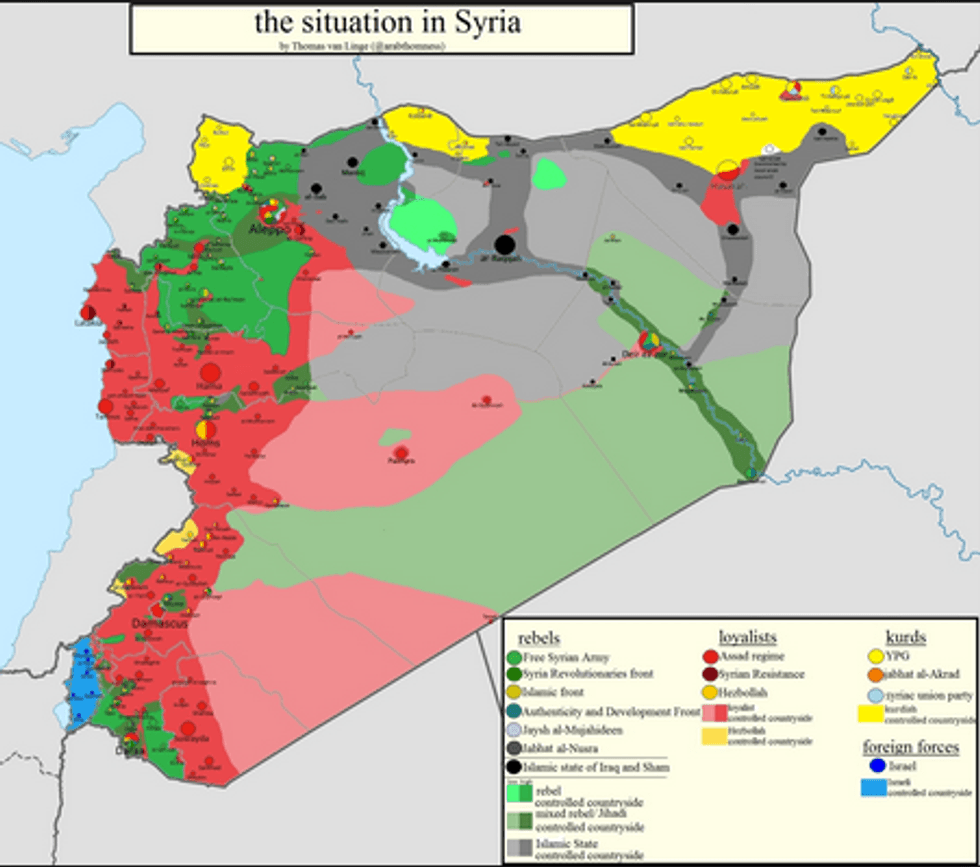
The war continues to become bloodier with the UN estimating there have been 220,000 deaths and WorldVision saying 12 million Syrians have been displaced either internally or regionally. WorldVision also estimates that half of those displaced are children.
ISIL continues to gain power throughout the Middle East. They are now in control of about half of Syria, which is the reason for the current crisis.
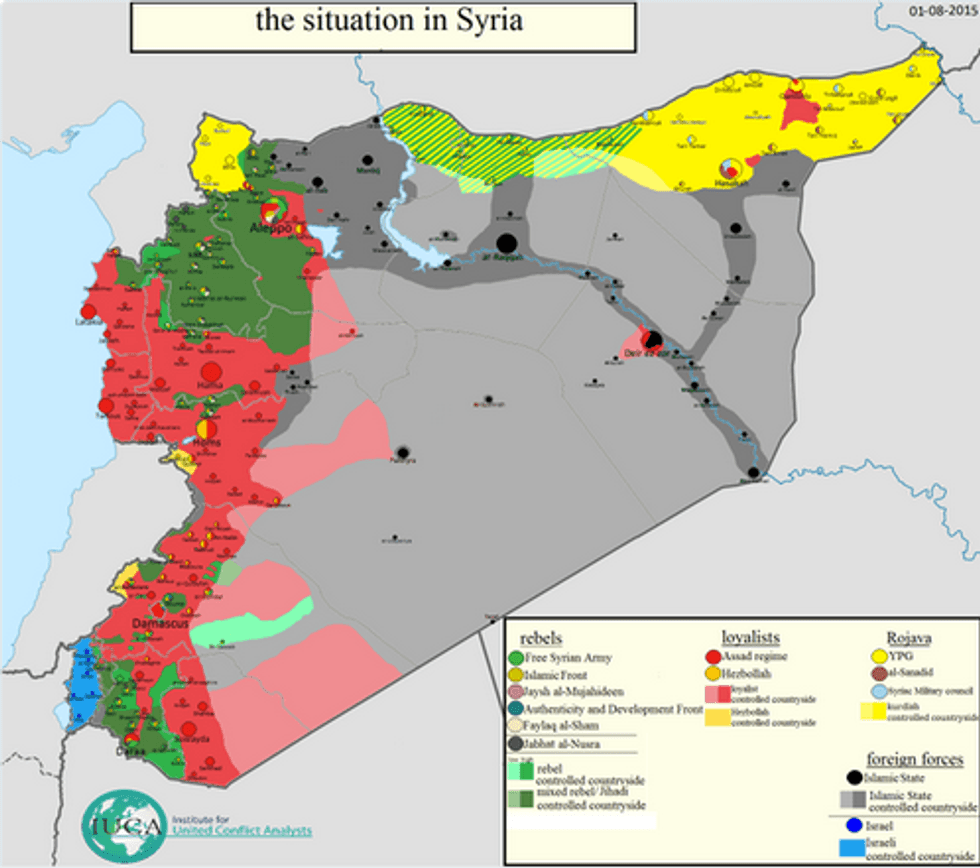
ISIL's objective is to create its own Islamic state bordering between Syria and Iraq. ISIL has become infamous for their brutality often posting videos of their torture. Despite being repeatedly warned by the UN, ISIL continues to make gains. ISIL has been funding their regime through wealthy donors and selling oil, some of which the Syrian government buys. Professor Peter Naumann of King's College estimates the group's net worth at approximately $2 billion.
In addition to the atrocities being committed by ISIS, Assad's regime has also been under a lot of fire for using chemical warfare against citizens. Due to this dangerous climate, Syrian citizens have been fleeing the country in record numbers.
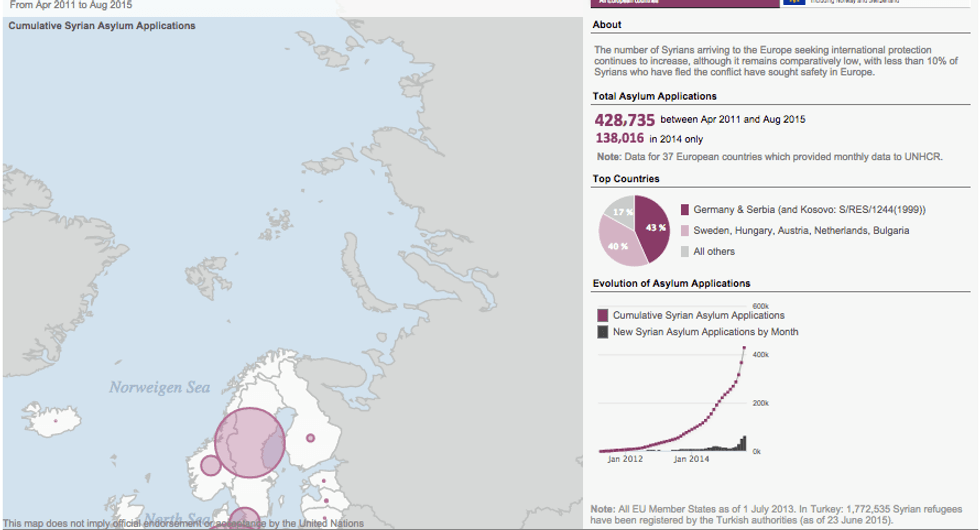
Refugees have been primarily seeking asylum in Germany, Serbia, Sweden, Hungary, Austria, Netherlands and Bulgaria. However, due to the large quantity of refugees many European nations are having a hard time being able to provide refuge.
There has yet to be an organized method for evacuating Syrians into European countries, which means that Syrians have taken matters into their own hands. If you recall the photos of the man crying while clutching his children off the coast of the Mediterranean or the boy who washed ashore, these are the results of the chaos of war. The man on the boat was lucky to able to reach safety after fleeing on a raft designed for four people, but carrying three times that many. The photos of the child washed ashore was on a similar raft ride, but their boat capsized.
Recently, the European Union has discussed a plan for better organizing the refugees seeking asylum. European ministers, meeting in Brussels, are in talks to redistribute 100,000 people among 23 EU states, however, this law excludes the United Kingdom, Ireland and Denmark. Although, many member states are closing their borders because they have reached capacity.
Due to the escalating scale of the Syrian Civil War, countries worldwide have started pledging either money of refuge. However, many refugees are becoming discouraged or do not have the means to travel for asylum. Many refugees feel like they are in an eternal state of displacement. They were forced to leave their homes, most likely have lost loved ones, and now they are having difficulty finding life after war.
Many people confuse sympathy and empathy. Hopefully, after reading this and conducting your own research about the Syrian Refugee Crisis you will be able to empathize with the refugees. Hopefully the next time you see an image of the cost of war you realize, we all as a human race are paying the price.
Refugees are not nameless. The father, Laith Majid, could teach us a parent's undying love. The young boy, Aylan Kurdi, could teach us the innocent hopes of a child. We all have something to learn from these refugees and perhaps by learning their stories we will finally learn empathy.

















