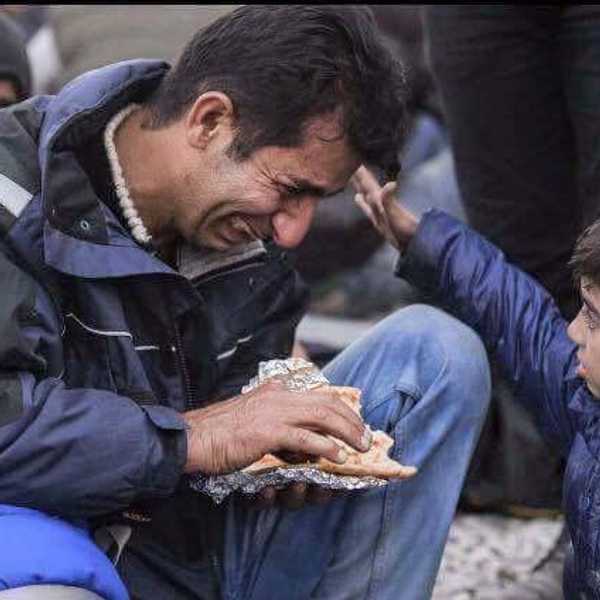

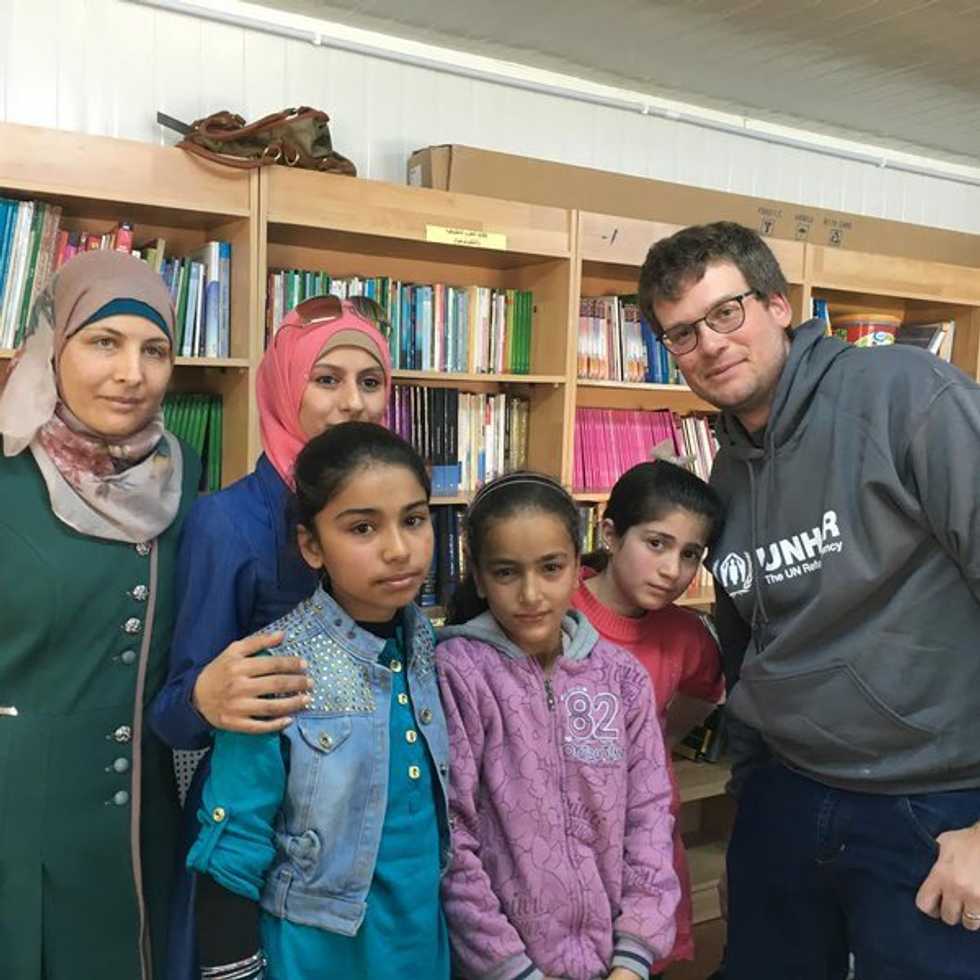
Empathy, in my opinion, is the most important human emotion, yet this vital human condition appears to be dissipating more and more in American society. The most recent and widespread example of a lack of empathy is the Syrian refugee crisis.
The Syrian refugee crisis started back in March 2012 with the start of the civil war. More than 9 million Syrians were forced to flee their homes, with over 4 million of those Syrians becoming refugees while the others were internally displaced. Despite being a large tragedy, it did not become commonly known among Americans until about a year ago, and even more increasingly after the Paris attacks. Whether or not the U.S. should take in refugees at all, and, if so, how many, was and still is a highly talked about debate among U.S. citizens. Whether it be during political debates, on Facebook, or just in everyday conversation, I am sure that everyone has heard arguments supporting both sides of the issue.
At least half, if not more, of Americans are against taking in any Syrian refugees. I have found the main argument this group uses to support its opinion is that taking in refugees has the possibility of bringing harm to them or other Americans. Out of all of the statements that this group has made regarding the refugee crisis, none express any use of empathy. Yes some will admit that they feel bad for the people of Syria, however they never make the effort to try and understand the situation that the refugees have been forced into. Seeing all of this happen made me wonder why Americans are becoming increasingly less able to empathize with others.
A major impact on America’s lack of empathy is the fact that the problems people face in other countries are so foreign to us. Almost no Americans alive today have ever been forced to suddenly flee their homes, or know what it feels like to go to bed every night and wake up every morning wondering whether they and their loved ones will make it to the next day. This reason has an impact on American’s empathy; however, I believe that the most prominent reason for this sudden empathy gap is the way that information is presented to us here in America.
Whether it be at school, on the news or over some form of social media, we are constantly bombarded with information. This information is often presented as data and numbers; short and to the point. But just as prisoners are assigned numbers to dehumanize them, it is just as dehumanizing to resign the victims of tragedies to a number. I am by no means claiming that the media is intentionally trying to dehumanize victims, it is simply the result of presenting this kind of information in the quickest and simplest way possible. When we hear that over 9 million people were forced to flee their homes or that 5,000 people were killed in a bombing, it is impossible to immediately understand what that means.
If just one person was affected, then yes, that would be much easier to empathize with. After all, imagining just one person is no impressive feat. But the larger the number gets, the harder it is to imagine and empathize with the people in that situation. As a person very familiar with tragedy and death once said “The death of one man is a tragedy. The death of millions is a statistic.” As much as it pains me to say this, I actually agree with Joseph Stalin on this point.
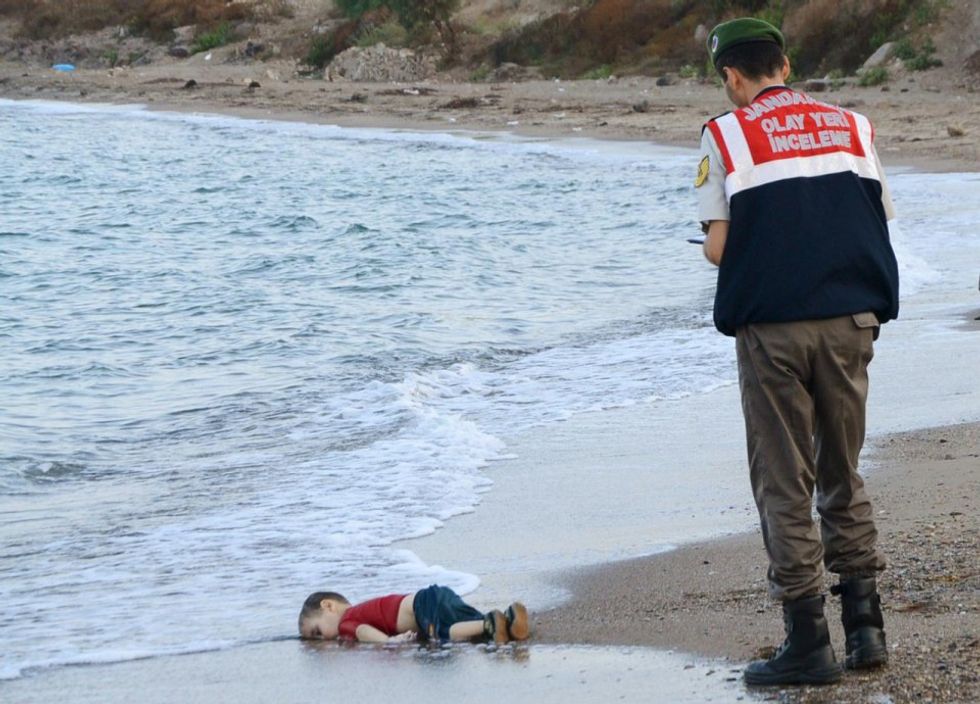
So how can we as a society better empathize with the victims of mass tragedies? It is a difficult question to answer and one that will require more than just one action to fix, but every little step forward counts.
I am sure most of you are wondering how John Green fits into this discussion. John Green is a well-known author of several young adult books; he created and is part of several YouTube channels and other forms of media. Even though I love Green’s books and his highly comedic YouTube videos and podcast, I feel that his most impressive quality is his constant yearning and effort to make the world a better place. He has already done this in several ways, from helping to create a two-day long livestream with the purpose of raising money for charity, to traveling to different places in Africa with Bill Gates. However, his most recent attempt at making a positive change in the world is the one that affected me the most.
Two weeks ago, Green went on a trip to northern Jordan with the help of the UNHCR (the UN refugee agency) to visit the Azraq and Zaatari refugee camps. While he was there he talked to the refugees, took photos and videos of them and their surroundings, visited them in their temporary “homes” where he accepted their food and drinks, and overall participated in their everyday lives. Some people do not see anything extraordinary in this; in fact they see just the opposite. Why did he not give them money or help them with their daily chores? Why not bring them gifts such as new clothes, toys or books? While yes these would be kind acts, they would do nothing to help fix the problem. The real reason John Green’s trip to northern Jordan was so important is because he was able to document and share the unique experiences of individual refugees to a wide and diverse audience of people.
I personally was never against the idea of Syrian refugees seeking asylum in America, even after the Paris attacks. I was never afraid that letting these people into our country would endanger myself or any other Americans; and I never feared terrorists hiding themselves among the refugees to carry out attacks here in America. First and foremost I saw massive groups of innocent people hurting, who just want to live a peaceful life in their home country. This sounds like empathy, and in a way it was, but I know that what I was feeling was not truly empathy. It was nothing more than the reaction that I felt was appropriate for the situation. Just like the other millions of Americans, I too was not able to grasp the occurrence of such a widespread and terrible phenomenon. To me, the Syrian refugees were the numbers I heard on the news or the heartbreaking photos I saw of small children injured and crying on the covers of magazines. I did not understand these people’s situation, nor was I attempting to. I knew they were people, but I saw them only as one manifestation of the human experience, and that was heartbreak.
It was not until Green began to share the pictures and stories of the refugees that I was able to truly empathize with them. His posts were able to humanize a group of people that, to many, couldn't be humanized. He never reduced their stories and experiences to describe the people of the camp as a whole. Rather he would talk about each refugee and family by using their names instead of simplifying them to a number or using the umbrella term “refugee." He showed a strength and lightheartedness of the individuals that is never seen on the news. He shared goals, interests and experiences that were solely theirs. The more I read about these refugees, the more I realized and understood that they are very similar to the people living here in America, they simply lived in a place that brought more hardship and tragedy than we experience.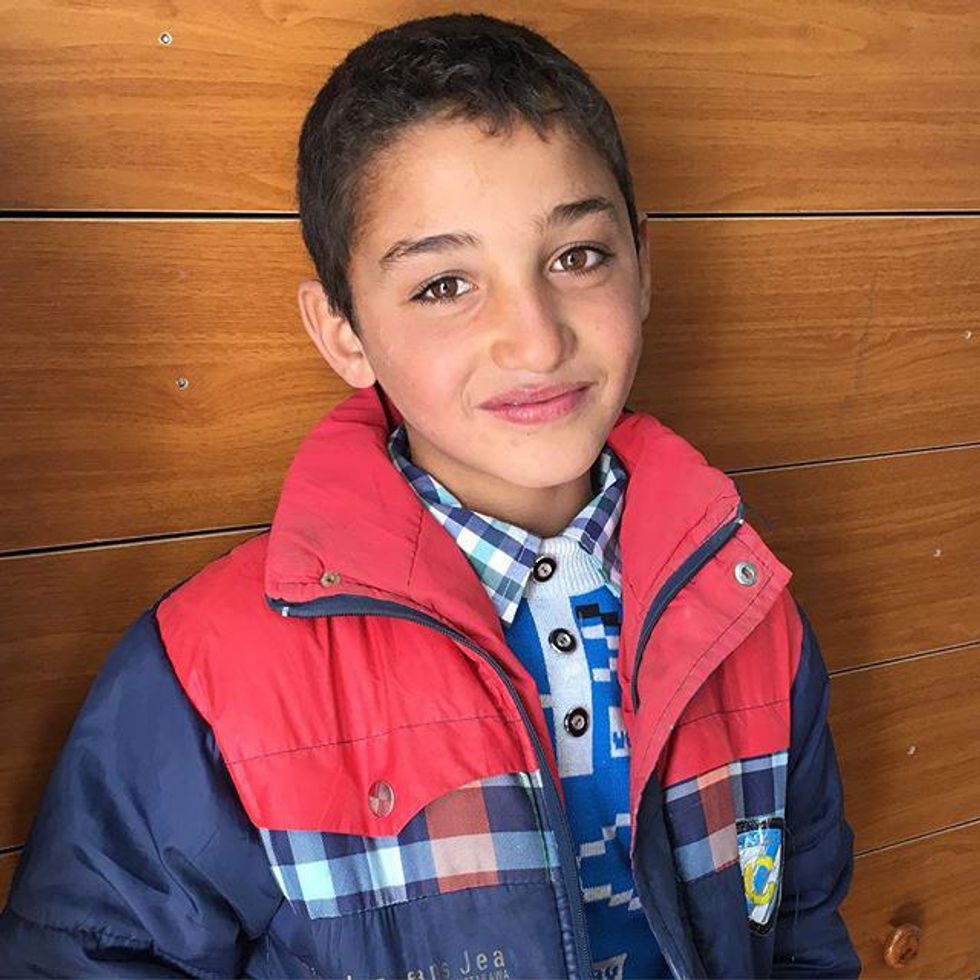
The little boy shown above is named Saddam. He, like most of the other Syrian refugees, is most concerned about being able to go to school and learn. That does not sound too different from the wishes of us in America, does it?
So maybe gaining more empathy comes down to this: simply taking the time to learn and understand just one individual whose situation you are not in. To realize that when the news talks about 9 million people, they are talking about human beings who have hopes and dreams, likes and dislikes, and feelings the same as we do. Maybe empathy is about understanding that each and every person you ever see or hear about, even if you only hear about them through the form of data, is just as real and important as anybody else on this planet.
I would like to thank John Green for opening my eyes, and, I am sure, several others, to the holes in our empathy. I would also like to thank him for documenting the unique stories of people who would otherwise not be able to tell their stories.
I did not write this article with the hope of changing the minds of people who are against the resettlement of Syrian refugees in America. I simply want others to know what I was unaware of before, and, if at all possible, to try and understand the people affected by this tragedy a little more than they did before.
Here are links to Green's Instagram, Twitter, Tumblr, and UNHCR page where you can read more about his trip to Jordan and the people of Syria. Also, here is a link to the UNHCR Instagram where there are more stories about refugees from all over the world.