


A narrative is a story. It contains something telling. It speaks to our sense of morality, duty, and justice. This process of taking narratives and impressing them upon consciousness starts early. The protagonist is the hero of the story; they are usually down on their luck, and facing obstacles. The protagonist makes themselves better by overcoming these obstacles. In this way, our concept of justice is formed. The portrayal of the forces that govern the protagonist's life is instilled into our concept of how the world functions. After this concept is built up, that is to say that your environmental/culture determines the definition of a valid narrative, the person will reject narratives that contradict what they have already established as correct, or moral.
The prevalent narrative in this society is that fairness means equitably; it means an eye for an eye. If someone bullies the protagonist, it is justice if the bully is humiliated or harmed, and it is the denial of justice if there is no comeuppance. An easy example of this is from the movie, "Back to the Future." Marty McFly stands up to Biff, the bully, who is harassing a damsel in distress. Marty, naturally, gets harassed by Biff for the subsequent events of the film. But in the end, Biff crashes into a truck full of manure and it rains down all over him and his car.
Now, I love this movie and its two sequels, but this is going to sound like I don't. I am merely using it to demonstrate the impact of narratives, and media on our perceptions. It is a symptom of a societal issue, not the cause. In "Back to the Future," we encounter the patriarchal trope of women being in need of a savior. Do people and couples exist that would naturally have a dominant man and submissive woman relationship? Yes, of course, but the number that is coerced into this pattern of behavior are several times more prevalent.
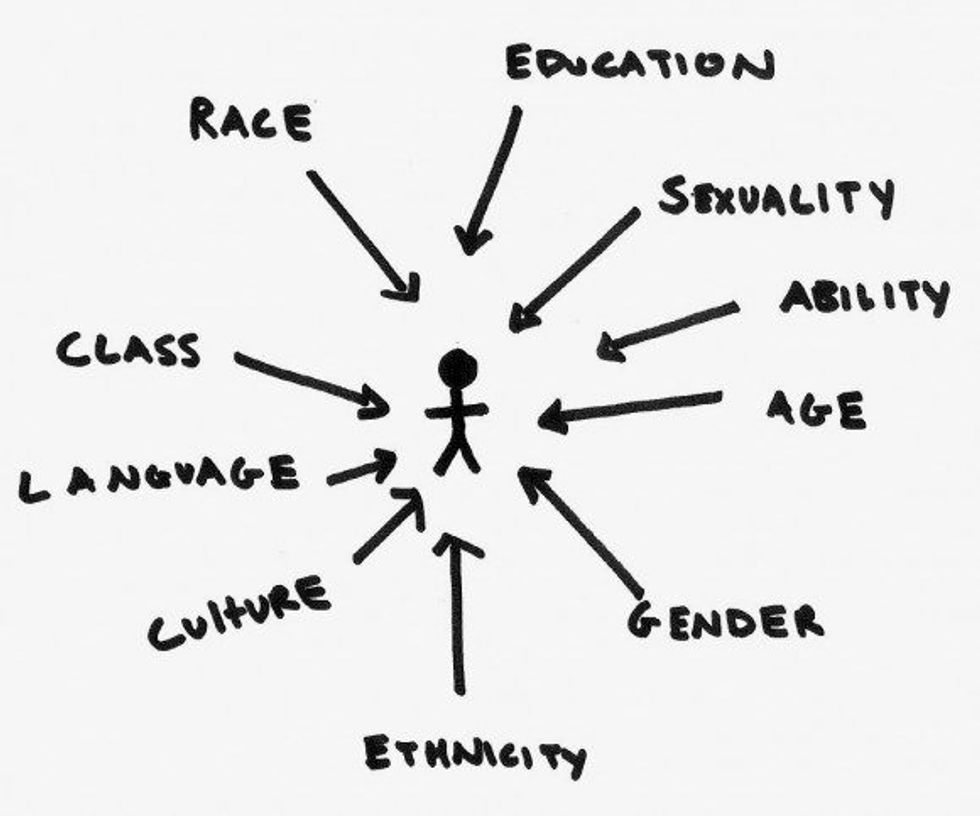
The protagonist is heroic and, thus, we try to emulate them. The protagonist is usually a cis, straight, white, able-bodied, good-looking, dominant male. There a million different combinations of these identities, but this one, the most privileged combination, belongs to the protagonists of our stories. We want to be, and act like them. When a movie has anything other than this trope, it is automatically a social justice film, despite the fact that there are millions of people who identify as something other than the perceived norm.
This over-representation and glorification of the self-made man permeate our society's psyche. There is a dominant narrative, the narrative of those with power. A narrative that says the whole of a humans existence is determined by will power, and character. It says that the present society rewards those with strong will power and great character, and punishes those that are lazy and/or of poor character. They believe in the narrative that most people have the privilege to work hard and get compensated equitably or even in excess. We talk about the plight of the young entrepreneur, spunky, inventive, and hardworking. They make it big and the music swells, and they have a spouse and children and they live happily ever after.
This narrative is told so often you would think every other person you meet is a successful entrepreneur. This particularly unlikely story is the justification for all sorts of policies. What is good for this theoretical entrepreneur is good for everyone else, so why talk about anyone else? Thus, the narrative that isn't readily understood or accepted is of the working class, LGBTQ+, people of color, and/or any number of other identities. A minimum wage worker, who works forty to fifty hours a week, and barely has enough for their family isn't accepted. It is believed that one doesn't simply happen in that situation, it is indicative of decisions you have made. This is the logical conclusion to come to if you believe that our society gives to people based on merit. It is thus acceptable to think the lower living standards are the incentive(punishment) for the worst of our society.
A narrative from an alternative point of view has to be proven while the dominant narrative is true because of so-called common sense. For example women who come forward about instances of rape or sexual assault are met with skepticism. The dominant narrative says that women are manipulative and that there should be a higher presumption of innocence for people accused of rape. The hypocrisy can be seen in the presumption of innocence for black men. Tamir Rice, a 12-year-old black boy is shot and killed for holding a toy gun without an orange tip. To summarize, people are reluctant to believe sworn testimony incriminating rape, but someone will bet that a 12-year-old kid is intent on killing a police officer; that the victims are somehow more culpable for their death than the person who shot the gun.
The dominant narrative creates a cautionary tale for those among the middle ranks of society. It is comfortable, but not luxurious. You see your parents work and get rewarded for it. If you try hard enough you can be whatever you want to be. Those who don't have the best lives merely didn't try hard enough or weren't smart enough to overcome the obstacle in front of them. Society is ideally structured because someone personally doesn't feel oppressed. Whoever controls the narrative, controls society. When alternative narratives start making themselves heard, they are called biased. This is a logical fallacy.
An alternative narrative is no more biased than the dominant one. They both occur in society, but one is seen as more correct. "We can't raise the minimum wage because it will hurt the business owners." Why is that a more valid argument than, "You can't keep the wages low because that is hurting the workers." A person that has no knowledge of economics will firmly claim that one option is clearly better than the other. People espousing the dominant narrative aren't met with skepticism because it is common sense. This common sense is founded on a bed of assumptions, and biases that benefit the powerful.
















