

It takes minimal time and effort to share a mugshot. Don't get me wrong -- it's great that the public has stepped in to say, "This is unacceptable," when Judge Persky did not, but the fact of the matter is, we've turned Turner into a celebrity of sorts. Everybody knows his name. But the victim? We'll forget about her. Sure, we're sharing her heartbreaking letter on Facebook, but a month from now, she won't be news anymore. We won't talk about her, or what happened to her, even though it'll be on her mind for the rest of her life. Brock Turner is only one piece of the problem, but it's easier to make him the poster child for rape (until someone else comes along and replaces him) and ignore the larger problem of rape culture.
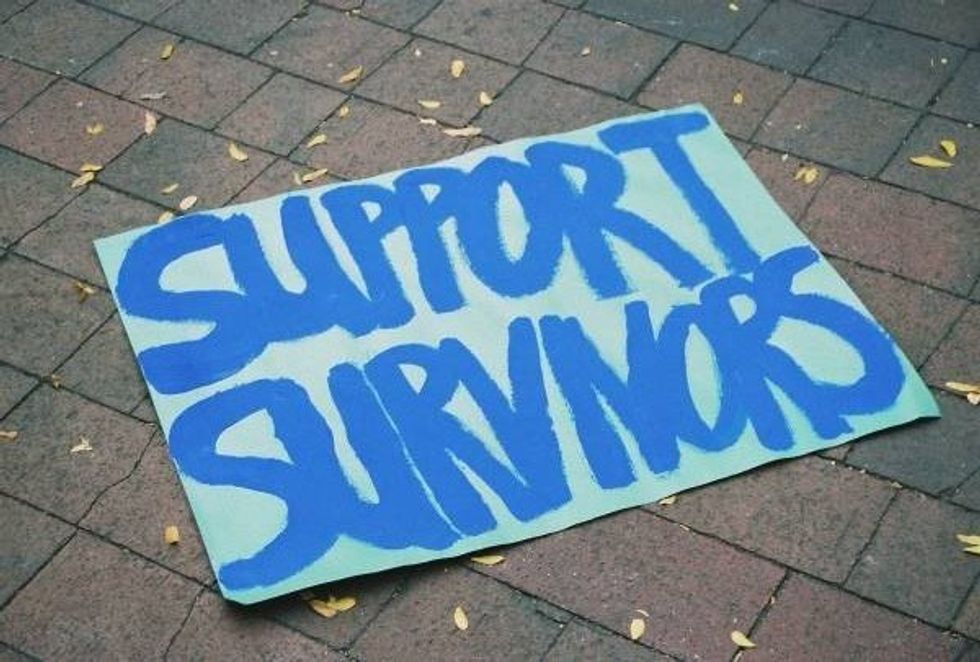
We need to do a better job of supporting survivors of sexual assault. We need to make sure that we, as a society, share the burden of what happened to her, as well as to the one in five American women who experience sexual violence. How do we go about doing that?
Survivors are not "broken."
Don't treat them like they are. Every social media post, every article I've seen paints Turner's victim as if she is now irreparably damaged. There's an underlying implication in the way we talk about sexual assault: you've been tainted by that experience and there's no coming back from that. Yes, what Turner did will undoubtedly stay with her forever, but it does not define her. She is so much more than that, and she can overcome this horrible event. It takes time. It takes support. It takes strength. But there is a journey ahead of her. Brock Turner is not the end of her story.
Don't make rape jokes.
They're not funny. Ever. There's nothing amusing about one of the most painful experiences a person can have. It's commentary such as this that pushes survivors into silence. By laughing about sexual assault, you're minimizing the effect it can have on someone. You're not taking survivors or their experiences seriously.
Believe them.
Whether or not they were drunk, fully clothed, or flirty, and regardless of their previous sexual experience or lack thereof, nothing excuses rape or sexual assault. Just because the assailant was a trusted friend, a straight-A student, a pillar of the community, a friendly person, it does not mean they didn't commit a crime. We need to stop treating rape like a negative sexual experience because it's not sex. It's assault. Sex is always consensual; if it's not, it's rape. There is no in-between.
And to the woman who wrote a letter on Turner's behalf: there's no such thing as "college rape." It's just rape. Rape is committed exclusively by rapists, because that's what "rapist" means. There's no gray area.
Make sure emotional and mental help are available and readily accessible.
Survivors should have access to counseling if they so choose to use that resource. They should have supportive members of the community to turn to, whether those community members are friends, family, or otherwise. It will be uncomfortable to hear their story, to know that there is nothing you can do to change what happened and you might not know how to help them move forward. That's OK. You don't need to have answers; you need to have compassion. A survivor will carry the burden of their assault for the rest of their life. We should be able to spare some time to help them carry the weight.
Be an active bystander.
This is especially important in close community settings like college campuses. It's not always as obvious as it was to the two men who found Brock Turner on top of an unconscious woman. We don't all come across a rape in progression, but we may see red flags and we may be able to step in. Here's how.
Let them call the shots.
Don't tell them what they should do. There's no right course of action after an assault. Whether they choose to report the incident, go to counseling, etc., it's their decision. Just let them know they have options and they will be supported no matter what they decide to do.
There are other ways to support survivors that aren't discussed here. The kind of support each survivor needs may be different. Our job, as members of a society that does not tolerate sexual assault, and as human beings, is to show up and say, "I see you. I did not forget about you. You are important, and should you seek my help or support, I'll be here."

















