

Just in case you’ve been sleeping under a rock for a while, somebody should pass the message on: The old adage that “Hip-Hop is dead” no longer applies. In accordance with a theme pointed out by Marceline the Vampire Queen in Adventure Time, history moves in cycles for those old enough to experience them, and music is no different. That being said, in the past few years the hip-hop scene in particular has seen its share of fresh new names that have been able to bring new sounds, while still delivering lyrics and flows reminiscent of the Golden Era of the nineties, especially in this new era of the Internet, where artists no longer have to make radio-friendly pop-rap in order to gain exposure.
With so many triumphant debuts, the new challenge for artists has become that of maintaining the same fire that put them on the map for follow-up projects, and in recent days, the hip-hop scene has celebrated the long-awaited return of an artist who first stumbled onto the scene as an underdog, but quickly proved why he deserved to be heard among the new wave of greats.
And no, not Frank Ocean.
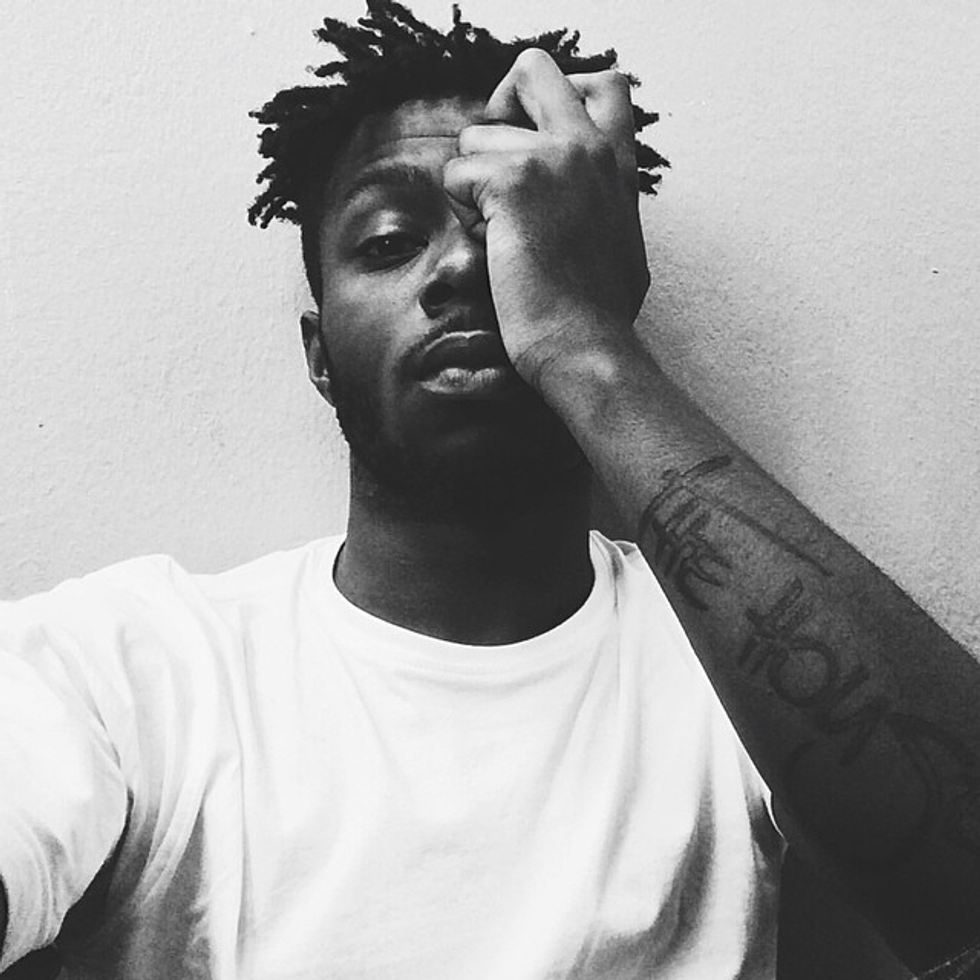
Frank’s album was fire, but in all honesty, the album for which I’ve been I’ve been waiting for what seems like an eternity, is Isaiah Rashad’s follow up to his 2014 project "Cilvia Demo".
Isaiah Rashad was among the first artists outside of California to be signed to the rap label TDE, and being that he’s attached to the label responsible for Kendrick Lamar, Ab-Soul, Schoolboy Q, and Jay Rock, it’s natural for one to wonder why some kid from Chattanooga, Tennessee deserves a spot among some of the best artists in the game. And then "Cilvia Demo" dropped.
It was an instant classic. From the very first song, “Hereditary,” in which 'Zay sang, “My daddy taught me how to drink my pain away,” in a raspy, intoxicated voice, it was a wrap. Isaiah then preceded to demonstrate (as the title suggests) his wide range of skills, from vulnerability (“Menthol”) to the braggadocio (“Modest”) characteristic of rap music, all through the lens of his jaded, almost angsty perspective. Songs like “West Savannah,” a song of love (maybe not for a person), nostalgia, and suicidal thoughts spit over a reversed Outkast beat, and “Ronnie Drake,” which contains subtle social commentary and a fire hook from label-mate SZA, made "Cilvia Demo" an instant favorite, and put the South back on the map (besides Atlanta. They’re always popping).
"Cilvia Demo" dropped about three years ago, though, and ever since then, ‘Zay has been rather quiet. After wondering where he’s been, or if we’d even get an album for so long, it finally dropped on Friday. And it’s beautiful.
1. Where u at?
The album starts with a skit, as opposed to an actual song. It seems like Isaiah is pretty self-aware about the fact that it seems like he dropped"Cilvia Demo" and got comfortable, as an unnamed person leaves a message on his phone. “You know what March, April, May, June, July, and ‘bout to be August have in common, bro? The fact that I still don’t have yo’ goddamn album.”
2. 4r Da Squaw
This song sets the tone for most of the album, with its ambient production, soulful delivery, and raspy voiced switching between singing and rapping, characteristic of Isaiah Rashad’s style. As the title suggests, the primary lyricism of the song is referencing the squad, but more importantly, it’s referencing Rashad’s interaction with his peers, given his new station in life, and explains his disposition in reaction to his new station in life. “You ain’t nothin’ but a baby. Your fear is growing up.”
3. Free Lunch
One of the few singles that were released beforehand to foreshadow the upcoming album, “Free Lunch” features a smooth, Trick Daddy-esque beat, over which Rashad raps lyrics reminiscent of the hood anthems characteristic of Southern rap.
4. Rope//rosegold
With its heavy base, guitar riff, simple drums, and background vocals, the first half of this song is clearly heavily inspired by Blues music, and following along with the usual themes of the genre, Isaiah goes on to casually pour his heart out in respect to subjects like his father’s infidelity, the fear of repeating those mistakes, and thoughts of suicide. “I love myself, but thank God I found this rope.” Pretty straightforward.
The second half of this song opens with a J-Dilla type beat, over which Rashad sings very rhythmically, referencing drugs, and showing a perspective that is very self-aware, referencing projections for the future if he isn’t successful with musical endeavors. It almost seems like this is a song that alludes to an answer as to where Rashad’s been for the past few years. In the typical Isaiah Rashad fashion, however, the message is relatively ambiguous and subject to interpretation.
5. Wat’s Wrong
Isaiah is one of the few rappers in history to not get outshined by Kendrick Lamar on his own track, and not because Kendrick’s verse was weak by any stretch of the imagination. The message of this song, with it’s ethereal beat and catchy hook by Zacari, is probably best captured by the opening lines of Kendrick’s verse. “How many souls do you touch a day? How many hoes do you f*ck a day? How many flows do your thoughts convey?” Isaiah and Kendrick both seem to be battling the dichotomy of knowing they’re among the dopest rappers, but trying not to get complacent in those thoughts, and also trying not to become consumed by their rapper personas.
6.Park
In stark contrast to the last song, Zaywop uses a simple rhyme scheme to convey the typical braggadocio of a rapper, perhaps signifying his brief moment of being consumed by his persona. The message of this song is perhaps encapsulated by the constantly repeated phrase, “... I’m savvy.”
7. Bday
Once again, Isaiah Rashad references is relationship with drugs and alcohol, swing that sometimes his bottle talks to him, and sometimes he talks back. Being from the South, from my perspective, it’s always been a common thing to sit on the porch and observe all of the goings on in the neighborhood. Isaiah seems to be doing the same in his intoxicated state, making observations about the people and situations surrounding him. “How you tell the truth in a crowd full of white folk?”
8. Sikk da Shocka
Though it’s pretty hard to narrow down at this point, this is one of the sickest tracks of the album. Serving as the “West Savannah” of this album, Isaiah, with smooth backup vocals from Syd, of The Internet, details a relationship in which he’s in love. And perhaps he’s the only one in this relationship that feels love. He also sings about how he feels the need to be on narcotics in this relationship, which provokes the question as to whether or not it’s even worth it. This is interesting in light of the delayed nature of the album, and the reclusive nature of Rashad’s presence as a rapper.
9. Tity and Dolla
“You just rappin’ just because, with yo’ napkin full of drugs.” Isaiah, Hugh Augustine, and label-mate Jay Rock seem to rap over this jazzy, mellow beat about topics concerning their vices, a topic that seems to be a recurring theme in this album. While the rappers seem to acknowledge the detrimental nature of indulging their vices, they don’t seem to care that much. “I know b*tches gon’ be b*tches, but I love them h*es.” There’s a little bit of ignorance involved, but it seems almost willful and purposeful, as if to convey the message of that “F*ck it” mentality.
10. Stuck in the Mud
Isaiah Rashad and SZA are a match made in Heaven, and they’ve decided once again to team up and grace the commoners with their unique vocal contrasts in this song, a soulful, mellow production that, in its first half, seems to be a testament to the struggle, with Zay’s rapping perfectly mirroring the song’s tardy and nonchalant ride.
The second half of the song seems to be a direct follow up to the depression depicted in the first, with Zay’s conscience encouraging him to “pop a Zanny” to make his problems go away. Once again, the negativity of the outside world contributes to Isaiah’s perspective, with the rapper describing things such as the fact that people get shot all the time, and nobody seems to care, among other things. So far, this is a really good album to listen to in the car on a rainy day.
11. A lot
An obvious contrasting piece to the previous song, “A lot” is a dark, electric production with hard kick and snare drums. It almost sounds like something you’d hear Future on. And once again, Zay matches with the sound of the beat well. In this case, the lyrics are full of the materialism characteristic of mainstream rap, seemingly from a satirical point of view.
12. AA
“But thank God I got my bank, where I keep my heart inside/ And I keep it far away from these h*es and flashing lights…”
“This life I live, like baby don’t drank, like baby don’t think too much; Don’t drive…”
I think the point has made itself pretty evident. There are tons of quotables in this song. The beat is mellow, yet dark, and the lyrical delivery is a lot more harsh and raw than many of the other songs on this project. It’s hard.
13. Dressed Like Rappers
Once again, Isaiah uses this song to allude to a relationship with an entity that he claims is “everything [he] love[s].” It shares many qualities with his “love” in “Sikk da Shocka,” including the poisonous, one-sided aspect of it, and if indeed this is the case, then given the contextual clues of the song, Zay was most likely talking about hip-hop music. In his verses, the rapper discussed constantly being on the go, and possibly wishing for more time with his kids. A love-hate relationship with stardom is definitely something that rappers have done before, but what makes this project unique is the subtlety in which Zay conveys this idea, with witty lyrics, and sounds that don’t seem as heavy-hearted as the idea itself. It’s ingenious.
The song ends with a skit, in which one of Isaiah’s friends leaves another message on his phone, clowning him and talking about how he was reading his Wikipedia page, unable to do so objectively.
14. Don’t Matter
In this particular song, the production stands out a bit more than the lyrics themselves, with a screwy, ethereal, outer-space type beat, with fast drums and heavy synths, that is almost reminiscent of something coming from Outkast’s “ATLiens” album. This would make sense, being that Isaiah, like most southern rappers is heavily influenced by Outkast’s work. Lyrics wise, this song seems to be a reference to Southern pimp culture, and his dealings with groupies, or at least girls in general.
15. Brenda
“Is this really growing up?” seems to be the primary theme of this song, spit a little bit more conventionally, relatively speaking, over a jazzy beat. The story being told to convey this theme seems to center around a woman, though the details aren’t particularly clear upon first listen. He seems to be referencing someone who’s passed on, perhaps somebody close, whom he looked up to. However, it’s safe to say that the meaning is pretty well encapsulated in the lyrics, “You can’t save her.”
16. by george (outro)
Once again, Zaywop demonstrates his versatility on this track that, once again, seems heavily Outkast inspired (“Aquemini” era), over which he delivers lyrics with a slurred Erykah Badu type flow. Again, he seems to be detailing an encounter with a woman, though seemingly from a perspective of nostalgia, another constantly recurring theme in Zay’s music.
17. Find a Topic (homies begged)
In this smooth instrumental, featuring a cool sample of an almost island-sounding guitar riff, Isaiah alludes to the earlier skit, in which his “homie” begged him to put out some more material, encouraging him to “find a topic” and roll with it. He raps very conventionally and fluently in what seems to be another hood anthem, but also speaks to a third person, telling “her” (it) that “she” (it) is his favorite topic, along with “money, f*cking, loving.” After the general mellow feel of the project, this more upbeat production is a refreshing ending to the heavy-hearted concept album (I’ve concluded that this was a concept album. TDE does that).
In a way that’s characteristic of Isaiah Rashad’s writing style, the content of this album isn’t easily digested upon first listen, and with repeated plays, its safe to say that the plot will thicken even more. This one is a thinker, but it is such in a way that’s satisfying on a sonic level. Admittedly, I didn’t think going into it that Zay would be able to top his performance on "Cilvia Demo". However, The Sun’s Tirade is the album we’ve been waiting for, and the seventeen-track narrative that Isaiah Rashad just gifted us with is more than enough of a redeemable explanation for his absence. Even though there have been many great projects to drop in the hip-hop community this year, this is the one I looked forward to the most. It lived up to all of the hype.
















