


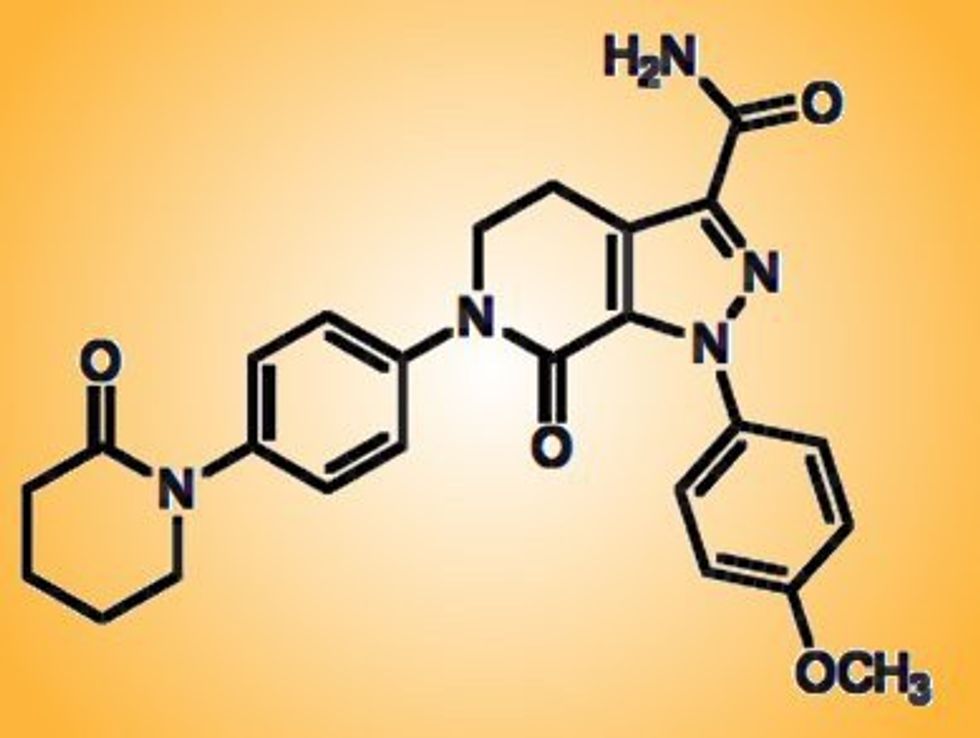
With only a few weeks left in the semester, it is time to reflect on the science and engineering major's worst nightmare: organic chemistry. If you enjoy organic chemistry, I praise you. If you can understand mechanisms with ease, please teach me your ways. In this article (or rant if you so choose), I will highlight what it is like to learn organic chemistry. I hope this will serve as a way for you to commiserate with me or warn you about what you are about to learn: the chemistry of carbon!
The first few weeks of this journey with carbon may seem easy. Hooray for a review of molecular shapes and Lewis structures! However, don't let this fool you. Soon you will dive into the realm of stereochemistry which deals with how molecules are oriented in 3-D space. Wait, molecules aren't all flat and pretty to look at? Sadly, no. The struggle begins here with drawing molecules so that they look three-dimensional. Beyond that, you study mirror-image molecules, and one might poison you and one might not, so you better know the difference! And it only gets worse from here!
Once you sort of become comfortable with how molecules behave by themselves, you soon shift gears to learn about how different molecules react with each other to form new molecules. This is where the true battle starts. Welcome to the world of organic synthesis and mechanisms! In all honesty, some of the reactions are interesting, but when you have to know hundreds of them, the two you like don't seem as cool anymore. And not only do you have to know what products form and what reagents to use, you also have to know how the reactions occur. Mechanisms are the step-by-step recipe for a chemical reaction and show where electrons move during such a reaction, and they are easily the hardest thing to memorize in organic chemistry. Looking back, I miss the days of Markovnikov addition to alkenes, because now I have to know the mechanisms for hydrogenation of carboxylic acids and other carbonyl compounds (let's just say I need to study more because I don't know what that means; I just copied it from a heading in my notes). Carbon is a versatile element and can bond to many other elements to form very complex compounds, and this is just partly why organic chemistry is so challenging.
What also makes any organic chemistry class difficult is the professor's way of grading. Partial credit is rare and depends on the professor. Some are generous and take pity on your struggles; others show no mercy. If you forget one small part of a structure or a mechanism, you can lose a lot of points very quickly. Perhaps the worst part of any exam in organic chemistry is the sheer length. If you thought a class couldn't drag any longer, take an organic chemistry exam, and you will know the definition of never-ending. Achieving an A in these classes takes serious effort, but it is doable.
I hope I didn't scare anyone away from taking an organic chemistry class. It is a truly special part of the world of chemistry whether you love it or hate it. To those who have endured organic chemistry, I hope you can relate to what I have stated here and have survived to tell your story. When the semester ends, enjoy some ethanol (responsibly of course) and relax, because you now know how to make the alcohol you drink!

















