


Ah, to live in the age of Buzzfeed feminism and Facebook activism.
I read Malcolm Gladwell’s New Yorker piece “Small Change” in one of my women’s studies classes last year. The piece revolved around a discussion of weak ties versus strong ties—think civil rights sit-ins versus a social media crusade for a stolen cellphone. Gladwell’s piece has been one that’s stuck with me and that I consider daily as I check my social media and engage in conversation with my peers.
When scrolling through my Facebook newsfeed, there is no shortage of posts revolving around LGBTQ+ issues, female empowerment, gun rights, abortion, social justice at large, etc. etc. And each time I see these, my first instinct is to feel relief that all that talk about our generation being apathetic and uninvolved is maybe not true after all. But, after deeper consideration, Gladwell’s article always comes back to me.
It's not that social media crusaders are bad people. In fact, I often find myself guilty of it. Awareness is important, and social media has allowed our generation the ability to share thoughts and ideas on an incredible scale at an incomprehensible speed, but between the shares, retweets, and reposts, does the core of the issues we so passionately post about get lost?
When scrolling through my Facebook newsfeed, there is no shortage of posts revolving around LGBTQ+ issues, female empowerment, gun rights, abortion, social justice at large, etc. etc. And each time I see these, my first instinct is to feel relief that all that talk about our generation being apathetic and uninvolved is maybe not true after all....but between the shares, retweets, and reposts, does the core of the issues we so passionately post about get lost?
Recently, I’ve been thinking more critically about myself—about my own postings, my own shares, my own retweets. Has any true and meaningful change been the product of my tireless Internet crusade? Yes, I stood with Planned Parenthood, but did I make an effort to write to my congressmen? Yes, I consider myself to be a staunch feminist, but did I participate in a slut walk to show solidarity in support of my sisters? Yes, I support the #BLM movement, but did I confront the boy in my history class that made a racial slur?
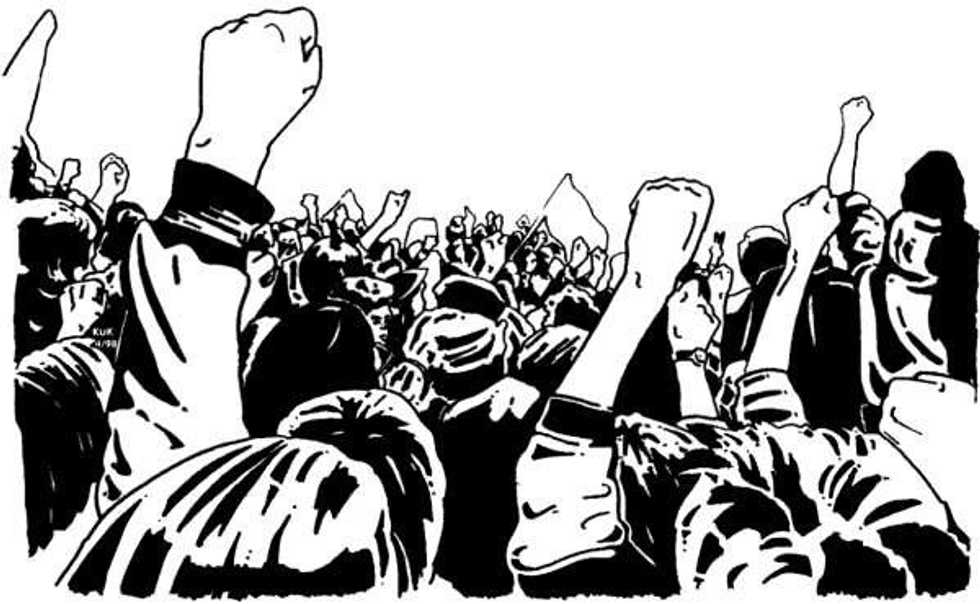
Here, I run into my own reliance on weak ties—believing that a single Facebook post will be enough to change the world and make up for the difficult conversation about social justice that I did not participate in earlier that day. It’s not that weak ties and social media activism don’t have their place and can’t be incredibly powerful - it’s that they must be coupled with strong ties and actionable activism in order to enact true change.
So the next time I go to click “share” on an article that resonates me, I will challenge myself to consider the “strong tie” action I could accompany it with. This might be a letter, a confrontation or a conversation that denotes what Gladwell considers to be "high risk activism." Our generation has a responsibility not to forget the impact and transformation strong tie activism has had in this world. True change stems from a conviction so deep that to not take action would be a disservice to the cause you fight for.

















