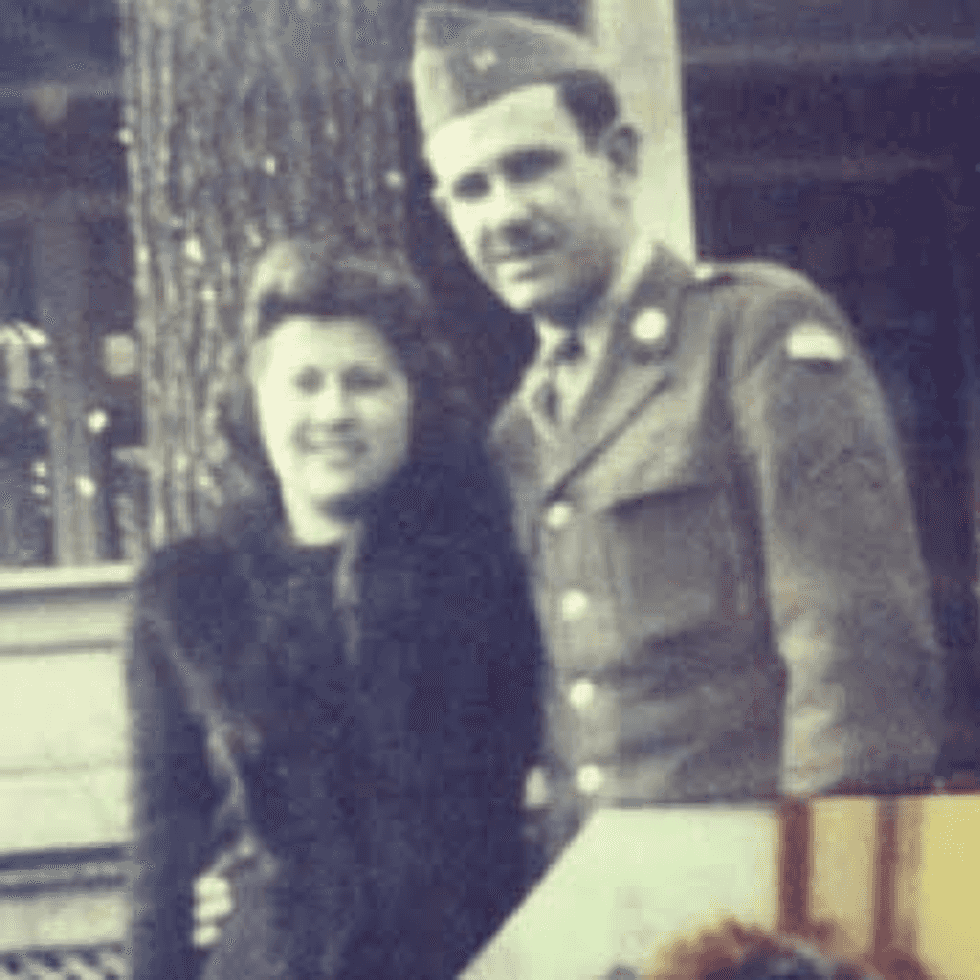
Memorial Day is a day that comes every year where we observe and honor those who have died serving in the armed forces. It is also a day to acknowledge those who have served our country in any capacity both past and present. This is something we should do every day but it is important that we dedicate days to remind us of the sacrifices of those who have risked their lives for our freedom. In honor of this Memorial Day, I wanted to tell the story of a young man named Charles Michael Infantino, born in 1916 to an immigrant family, who was one of nine brothers and sisters. His American dream went from working countless hours for days on end during his young life until he enlisted in the United States Army at 29 years old.
Corporal Infantino was a part of the 722nd Engineers division in the United States Army. On his first day in combat, he was sent in on what was supposed to be the second wave of men sent in during the Battle of Leyte. The engineers were a lightly armed division and not supposed to be the first men in, but communication failed and they were sent in on the first wave. That morning during the Invasion of Leyte approximately 750 soldiers went into battle lightly armed, and by nightfall approximately 250 soldiers remained.
When nightfall fell, Corporal Infantino was put on “fox hole duty” for the relief of a fellow soldier. Infantino was forced to crawl to the fox hole because of sniper fire and when he was approximately 20 feet away from reaching the soldier in the fox hole that he was supposed to be relieving, a mortar round hit the fox hole and instantly killed the soldier in the fox hole and severely wounded Infantino. A concussion, broken blood vessels in Infantino’s chest, and a broken leg were amongst the list of injuries the Corporal suffered. While severely wounded, Infantino was able to crawl back to company lines and while on his way back he spotted one of his lieutenants buried up to his neck in sand, and severely wounded also. Infantino freed his lieutenant and they both crawled back to their fellow troops. That was Corporal Infantino’s first day in combat, he was twenty-nine years old.
The extent of Infantino’s wounds led him to be placed in a hospital tent in the Philippines and then shortly after he was transported to a U.S. Army hospital ship where over the course of the next week the hospital made its way to New Delhi and was anchored there for approximately three months. During the three months the hospital ship spent anchored in New Delhi, it survived nightly bombing runs by the Japanese air force.
All in all, six months later back in the United States, his wife Antoinette Infantino was trying to obtain information on whether or not her husband was amongst the soldiers who had passed or survived the Battle of Leyte. Antoinette was able to get a hold of a General in Niagara Falls, New York who was able to tell her that Corporal Infantino was alive and recovering from severe wounds on a hospital ship in New Delhi. Antoinette and Charles were later reunited at the end of 1945 during his final assignment guarding Italian prisoners of war at Old Fort Niagara in Youngstown, New York.
During Corporal Infantino’s time served in World War II, he traveled from the Philippines, to New Delhi, to the Hawaiian Islands, and then back to the United States. At the end of 1946, Corporal Charles Michael Infantino was honorably discharged from the United States Military with two Purple Hearts and various other medals.
Corporal Charles Michael Infantino was my grandfather and ultimately my best friend until he passed in 2003. He never spoke of war to anyone other than my father and only on very few occasions when he wanted to tell his story. He never complained, he just spoke proudly of the time in the service that he spent, fighting for his country that he loved so dearly. While his life led him to be tough as nails, I never saw that side of him. Being the youngest granddaughter in the whole family, I only saw the loving side of him. Sure I knew he carried some of what he had been through and what he had seen with him every day, but most days I only saw the loving elderly man who spoiled me. His PTSD was a reminder that you can take the man out of the war, but not the effects of war out of him, even when he had been removed from war decades before hand. The strongest man I knew spent the last two weeks of his life safe at home, but a victim to the thoughts and memories of war that kept him up at night. What he had seen and what he had to endure in his early life fighting for our country left an imprint on him that left him in a cold sweat, reliving every bloody battle, every tear shed, and every life lost, until he passed. He died a father, a grandfather, a best friend, a loving husband, an amazing human being, and a two-time Purple Heart recipient veteran of World War II.
When my father told me this story, I couldn’t believe the things my grandfather had endured or seen, especially on his first day in combat. With shock on my face my father uttered words I will never forget about his father’s gut wrenching first day in combat, he said, “Your worst moment, could be your finest hour. It just depends on what you are made of.”
War is not pretty, the lasting effects that many men, women, and families have to endure from war is not pretty. Freedom, is not free, freedom is fought for, and freedom is earned. Someone you know fought for your freedom, someone you don’t know fought for your freedom, and some have fallen in the fight for your freedom. This Memorial day, express your gratitude for the beautiful freedoms you get to experience every day because of someone else’s sacrifice.