


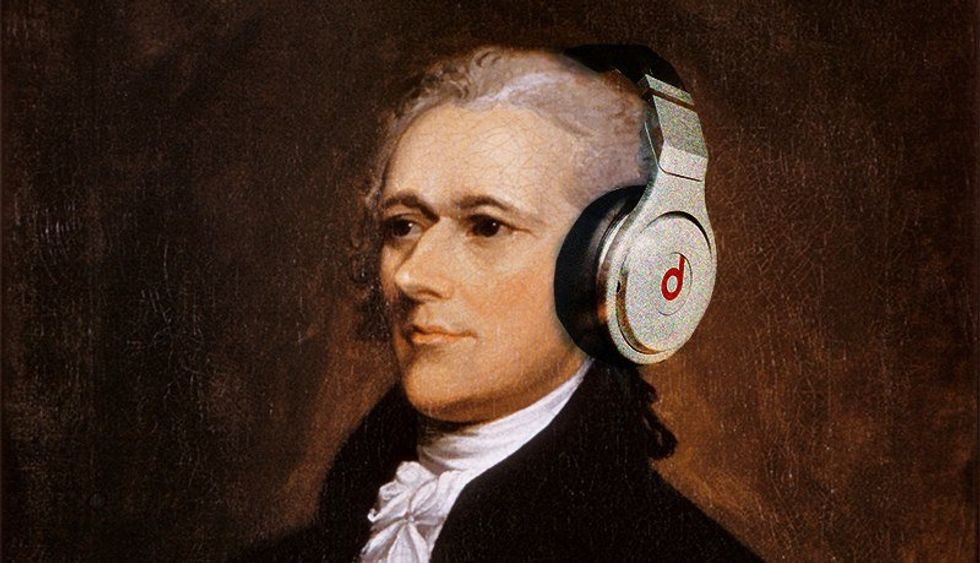
Like millions of listeners across the country, I’ve been bitten by the Broadway bug. "Hamilton" has taken the New York stage by storm. Tickets to this musical retelling of the nation’s Founding Father are selling for prices up to $3,000 a piece. But what is it that makes "Hamilton" so captivating to Americans?
1. The unique approach to historical recollections.

So, we've all had to drill through a U.S. History textbook at some point in middle or high school. We've studied the events chronologically, from the uprising of the American colonies to the legislature created to keep this young nation coherently intact. While we assumed that there were real people behind these developments, our textbooks never encouraged us to make a personal connection to them. Using music effectively communicates the determination, strife and love that it took to set the foundation for the America that came to be. Incorporating hip-hop, rap and pop genres attracts a newer, wider and arguably younger audience to the Broadway phenomenon that would have otherwise only reached traditional Broadway audiences. Soon, the characters of our middle school social studies class become relatable men and women, voicing revolutionaries and resurrecting the often overlooked genesis of the U.S.
2. The "rags-to-riches" theme at the core of the plot.

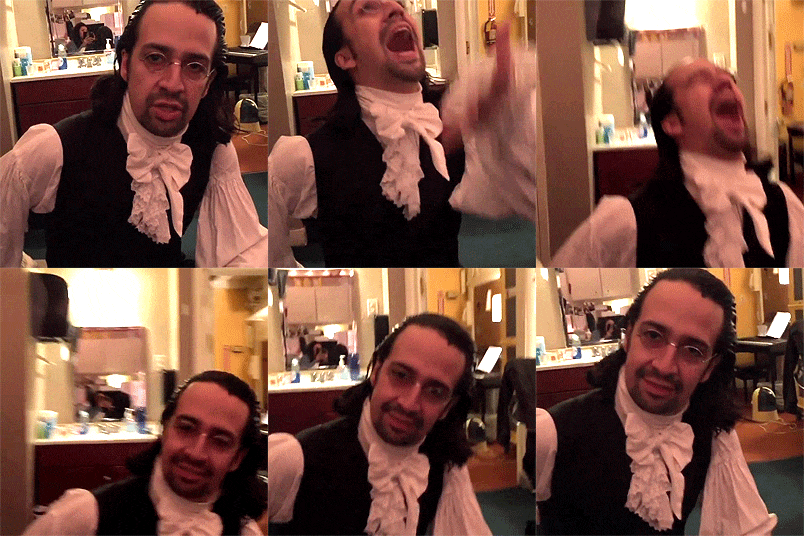
Actor, composer, writer and rapper Lin-Manuel Miranda fashioned the script and score of "Hamilton" with mindfulness of his own story. His parents immigrated to the U.S. from Puerto Rico to continue to pursue a higher education. Lin-Manuel himself was born in New York, in a diverse neighborhood within Washington Heights. Miranda's life is inevitably threaded to that of his titling role in the musical, as Alexander Hamilton had immigrated to New York from the Caribbean island of Nevis. The story highlights Hamilton's persistence in advancing as a political influence while introducing the audience to the adversity Hamilton faces for being an immigrant in the nation he helps build.
3. The empowering messages behind the Schuyler Sisters number.
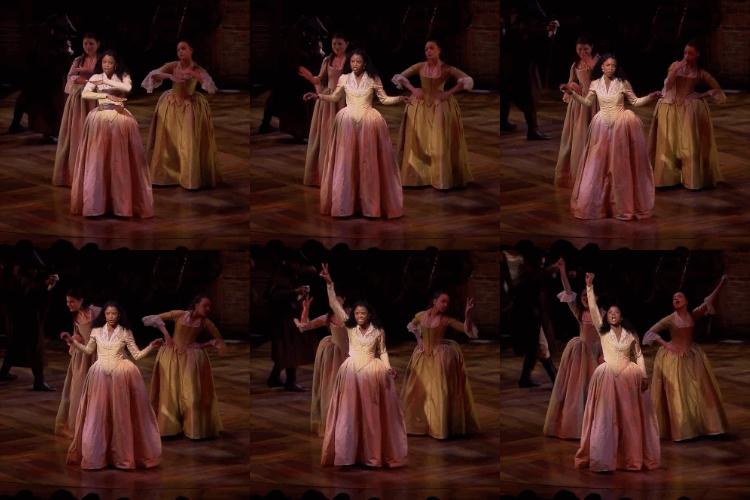
"We hold these truths to be self-evident that all men are created equal. And when I become Mrs. Jefferson, I'mma compel him to include women in the sequel."
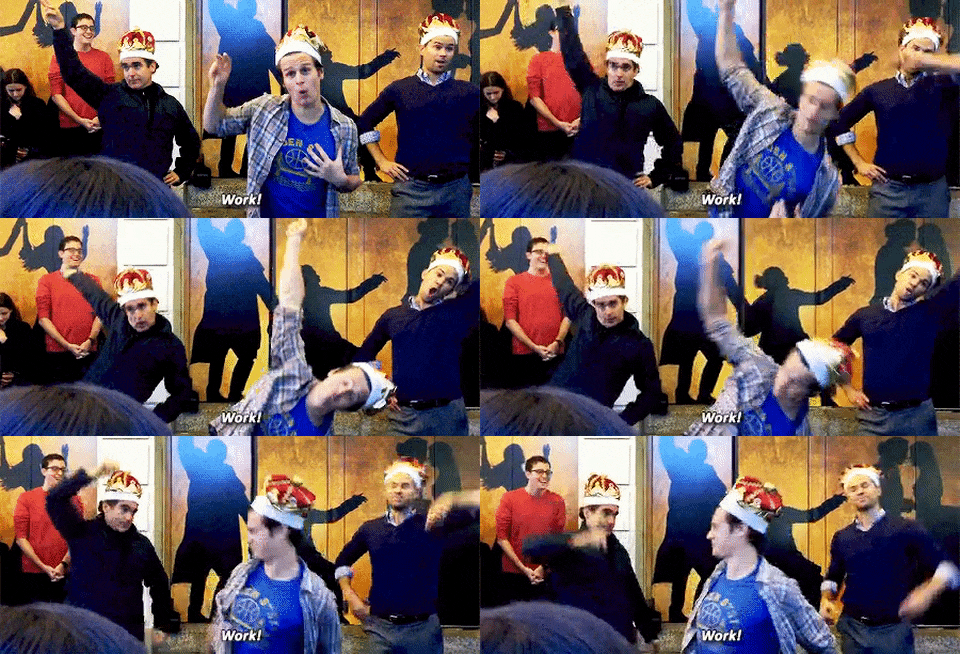
"Hamilton" lets the mothers and daughters of the revolution "be a part of the narrative." Angelica and Elizabeth Schuyler are dynamic characters that play great roles in Hamilton's life. Their story of love steals the hearts of showgoers, making the story of Hamilton all the more "human" and less "history." Not to mention, the incredible vocal talents of the Schuyler sisters are absolutely addicting.
4. Angelica's heart-wrenching regrets.

I mean, if it's a historical account, there's very little chance there can be any spoilers in this article, right?
The Schuyler sisters are depicted as the most selfless characters in the show. Their bond is so strong that older sister Angelica gives up all romantic prospects of Hamilton for her younger sister, Eliza. Her beautifully tragic story is culminated into a song called "Satisfied," taking place in a flashback during Eliza and Hamilton's wedding. We continue the story with knowledge of Angelica's festering feelings for Alexander. Even so, we know that she would never turn her back to her sister (especially not over some male, pshh).
5. King George III: The Comedic Relief (?....!)
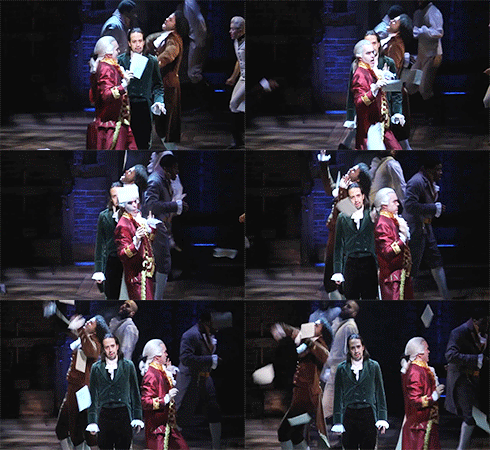
Isn't it tickling how the greatest enemy in our textbooks becomes the character distracting us enough to stop crying between the battle of Yorktown and the birth of Aaron Burr's beloved daughter, Theodosia, and Hamilton's pride and joy, Philip? King George very much treats his "relationship" with the American government like an abrasive courtship. (First hearing the soundtrack on shuffle play, I initially thought this was a song dedicated to a runaway Queen.) His threats to "kill [revolting Americans'] friends and family" or "send a fully armed battalion" to "remind [them] of [his] love" are just type of hyperbole we need during the tense parts of the play. If anything, Google "What Comes Next?" and tell me you can't just see an ecstatic King jestering about his throne room with dreams of American downfall in his head.
6. Jasmine Cephas Jones as Maria Reynolds.

In an exhausted stupor from a restless summer away from his wife and children, Hamilton gives in to dishonest temptations. As much as we want to hate his helpless mistress Maria Reynolds, Cephas Jones's powerful belts and riffs make it impossible to not fall in love with her in "No To This." I've been scouring the internet to find a video of this performance (I know I'm a terrible person — don't pirate Broadway hits, kids!). It is no where to be found and it is upsetting. Alas, we are left to chide Hamilton for "the pants [he] unbuckled" and the whole thing is left to imagination until we cough up the three grand to see it live. Shame on you, Alexander Hamilton!
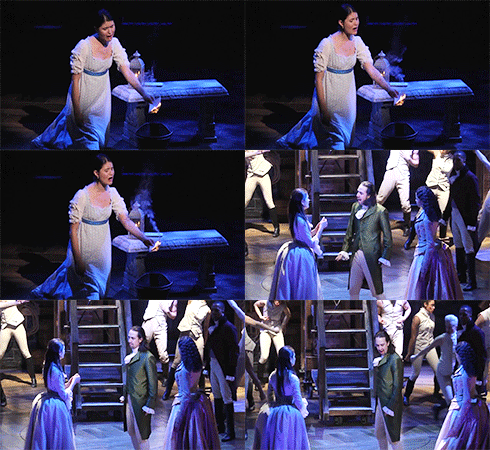
7. Phillipa Soo as Elizabeth Schuyler Hamilton.

Soo erases her gentle and adoring courtship with Alexander by burning his love letters upon learning of his affair with Reynolds. Again, we see the refreshingly strong character as she takes ownership of her feelings, leaving "historians to wonder" how she responded to Hamilton's betrayal.
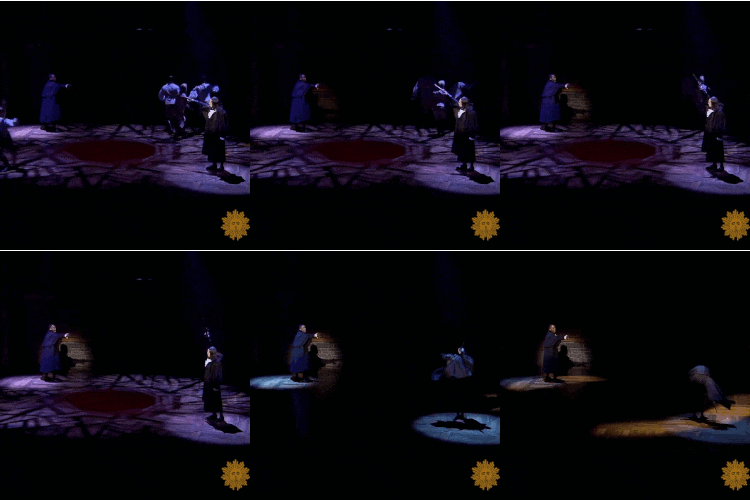
7.5. Shout-outs to New Jersey

*holds head in hand* "Everything is legal in New Jersey." Shame on you, Chris Christie.

8. Aaron Burr isn't just "the villain" in our textbook.
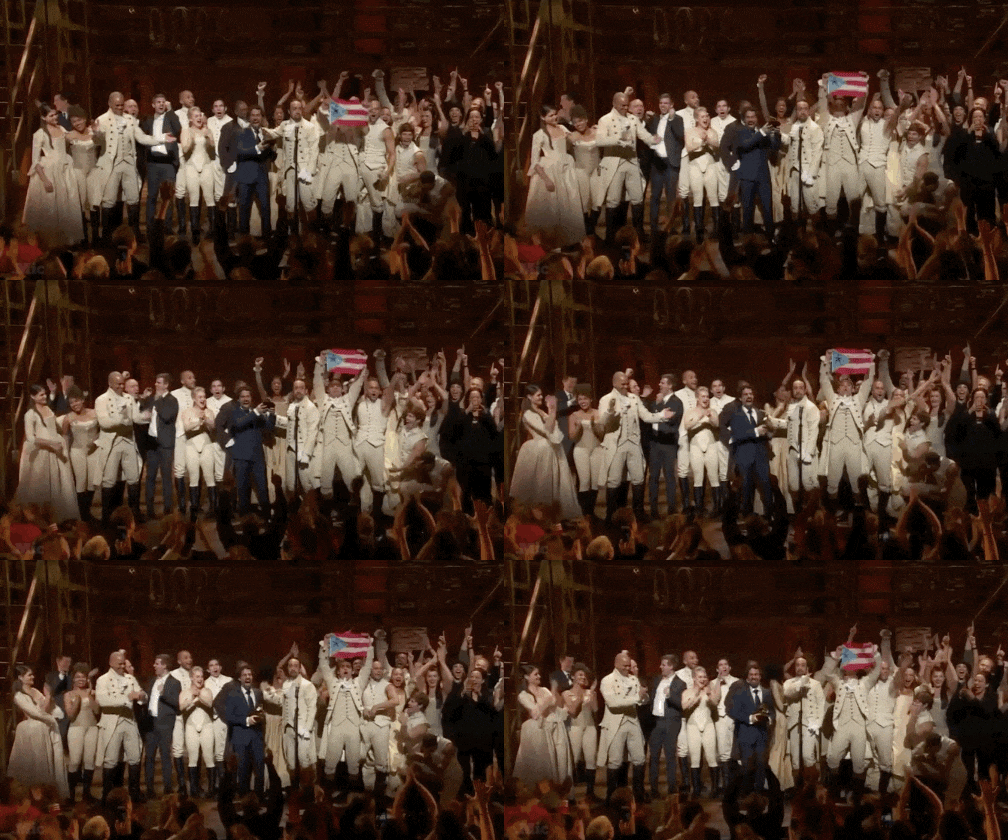
Burr's friendship with Hamilton is tumultuous, yet dates back to Hamilton's college days at King's (now Princeton University). Burr's fatal duel with Hamilton in 1804 ends in vain. Burr breaks into a surge of regret at the end of "The World Was Wide Enough" (preceded by Lin-Manuel's free-verse performance of Hamilton's death).
9. Who lives, who dies, who tells your story?

Didn't start to cry for the estranged Eliza? Not a tear for the wounded Philip counting down to the end of his life with his mother by his side? Was that a lump in your throat when Hamilton lets go of consciousness? Well, if none of that had quite gotten through to you, the ending song will surely leave you with streams of pure emotion running down your face. Eliza's beautiful declaration of her actions after Hamilton's death perfectly tie up the story of our nation's founding.
10. For a historically-based musical, "Hamilton" is astonishingly contemporary.
It is clear that not much has changed in the human nature since the 18th and 19th centuries. We still cultivate our ambitions by working, studying and fighting for the notion of a better life and a better society. We still fall in love only to have our hearts broken, whether it be by infidelity or by the sound of our wailing children. We survive and thrive against all odds, because we instill values and goals within ourselves that fuel us. The embers of the American spirit enlighten us all — whether we are immigrants, working class, middle class or upper. Our history does not end with the 22nd chapter of our middle school textbooks. The story of life, liberty and the pursuit of happiness continues through you.















