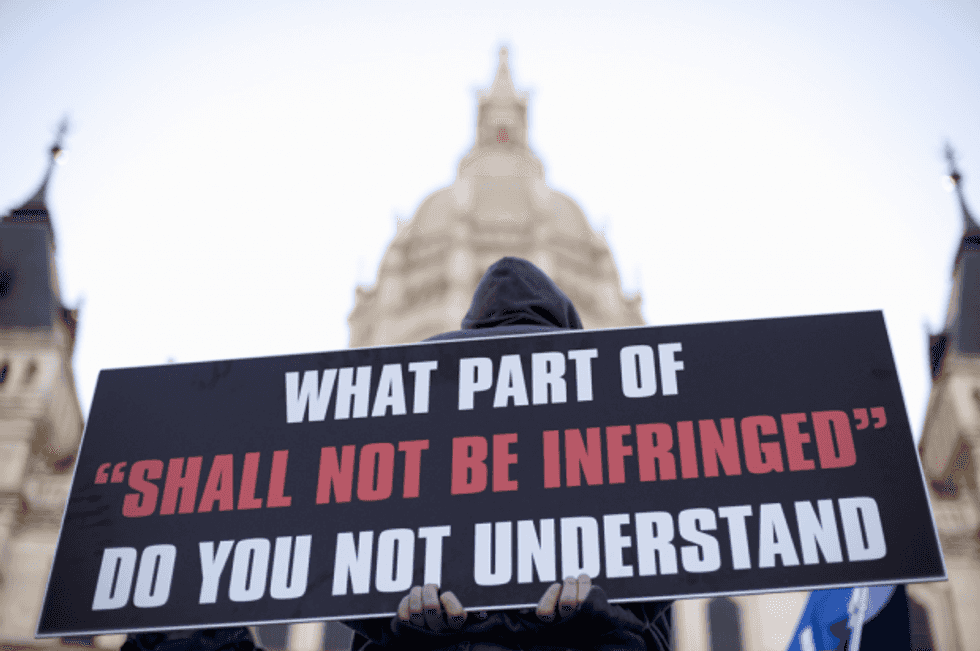
“A well regulated Militia, being necessary to the security of a free State, the right of the people to keep and bear Arms, shall not be infringed.”– The Second Amendment to the U.S. Constitution.
Often, the debate over meaningful gun reform is slowed by the relentless tenacity of second amendment enthusiasts. With this comes many misconceptions and misinformation over what the second amendment actually entails. Its meaning over time has changed, and the continued struggle against gun reform with second amendment arguments wastes the time and resources of our judicial system.
In actuality, the second amendment did not apply to the individual ownership of guns by citizens until 2008 when the Supreme Court made a drastic policy shift in District of Columbia v. Heller. Before 2008, the second amendment only applied tin the arming of militias. This did not cover an individual’s right to own guns. This is important to consider, because it allows us to put the second amendment debate in the right context. When politicians speak of the infallibility of the second amendment, or represent it as an unchangeable right that has existed forever, they are presenting a disingenuous argument that is out of touch with reality. The second amendment doesn’t mean just one thing, it means many different things to different people and it has been interpreted differently over time.
Since this decision, there have been numerous attempts to stop gun regulation based on the second amendment, which have overwhelming ended in failure. In fact, many of the regulations that have been challenged have already been addressed by the Supreme Court. A report by the Law Center To Prevent Gun Violence stated that “In Heller, the Supreme Court identified several examples of presumptively constitutional regulations, including laws prohibiting firearm possession by felons and the mentally ill, forbidding guns in sensitive places such as schools and government buildings, and regulating the commercial sale of firearms. The Court also noted that the Second Amendment is consistent with laws banning “dangerous and unusual weapons” and laws “regulating the storage of firearms to prevent accidents.”
But these arguments are still being used to impede gun regulation, wasting the time and effort of the judicial system and slowing meaningful change.
When we have conversations about the second amendment, we must realize that it is not a permanent roadblock, nor does it prevent us from making meaningful reform. It is also important to note that most gun legislation, short of banning guns completely, does not violate the second amendment. We owe each other a more informed debate than what is currently taking place, in honor of those who have died in gun-related shootings and the 9500 people who are statistically likely to be murdered by guns this year, according to Forbes.