
This is an op-ed article on period shaming and how I, as a female myself, feel some feminists are going overboard with making a statement while also contradicting what they truly believe. This is not meant to offend anyone; rather, it is meant only to encourage a new perspective on the issue.
The other day, I found Temple University student Louelle Denor's photo. She appears to be holding her used menstrual cup, blood dripping down her hand and all. She notes the reason for her post with the following caption:
It's come to my attention that women are having their images removed for showing menstrual blood (and no nudity). This is very seriously fucked up. If this was a picture of blood from a finger laceration, there'd be no issue. Yes, this blood is from my #vagina . It happens every month. The thing I'm holding in my hand is a #softcup #menstrualcup and it's awesome but messy to remove....
Now you probably think that it's the image that has me so annoyed with feminists and period shaming. It's not. Because she's right: something so natural and a part of life shouldn't be kept in the dark. People should know all about it, even what it looks like, to get a better understanding of the menstrual cycle, female reproductive system, and the female body.
However, some of the comments left on Huffington Post's article, Woman Told To Kill Herself After Posting Photo Of Menstrual Blood On Instagram, are ironically just as distasteful and discomforting. The article exposes how people can react so distastefully to something that is a common occurrence for women.
I understand some are defending Denor. But there is one comment in particular that made me do a double-take.
A woman named Louise Kilduff posted the following comment:
The same mechanism generating menstrual blood (if it really was) is responsible for the development of a nice pair of tits. No woman on the internet is called a "feminazi" for displaying those.
I bleed, therefore I am, deal with it.
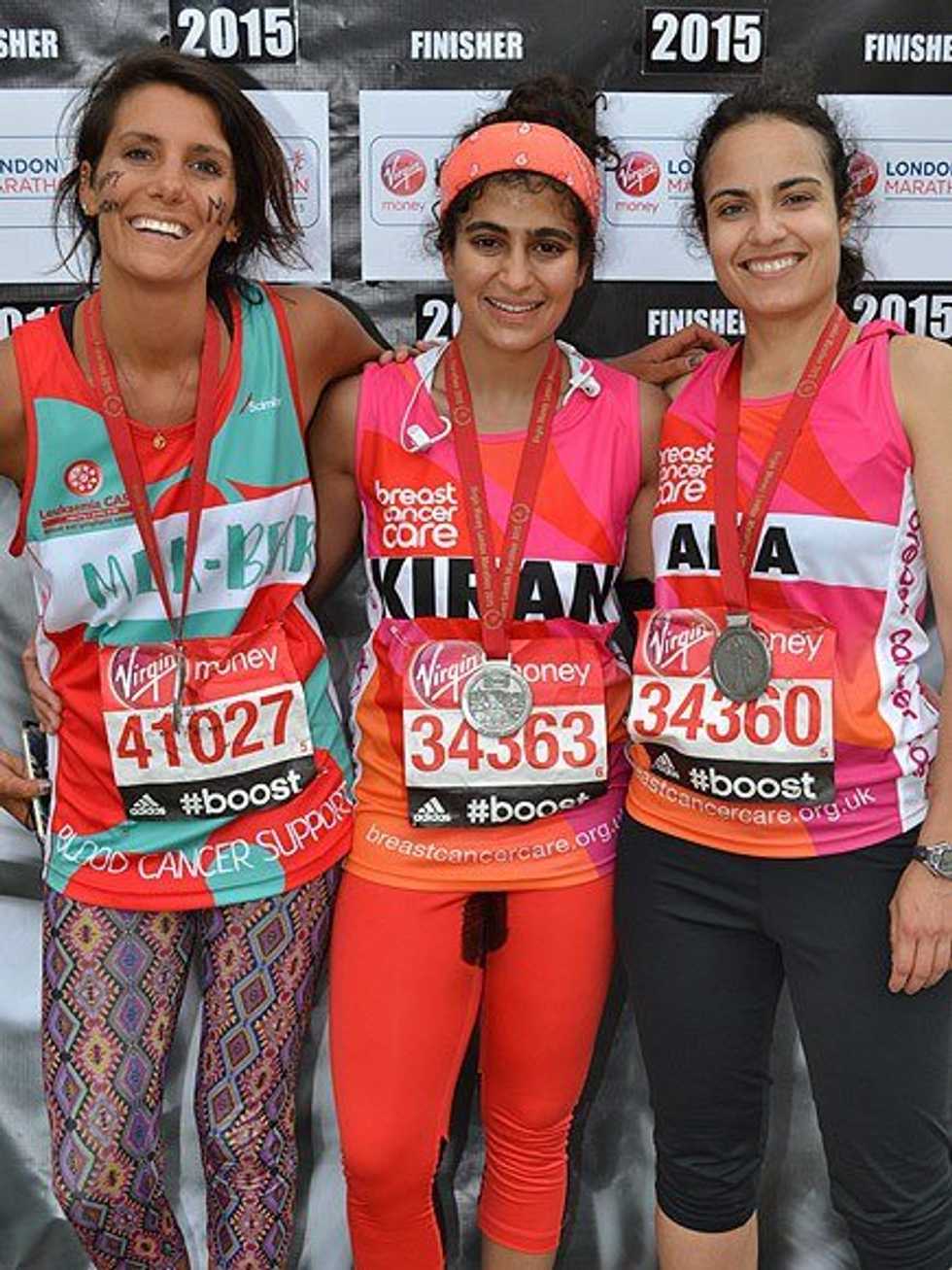
Now, if I'm not mistaken, "I bleed, therefore I am" portion implies, "I bleed, therefore I am a woman, a feminazi woman, deal with it." I've seen comments like this one posted far too many times, claiming that bleeding is all about being a strong, brave woman. These kinds of reactions especially emerged from when Kiran Gandhi ran a marathon without any proper feminine hygiene precaution taken into play beforehand.
Here's why it bothers me so much: I personally feel that the women who are advocating for an end to period shaming should watch how they present the issue. There are women out there who are incapable of having a period, or do but are unfortunately infertile. I understand you're trying to start this movement to end "period shaming," but not once have I read an article where a self-proclaimed feminist took into the account for women who can't have a regular period or can't have kids. And quite frankly, how are you a feminist if you aren't taking into consideration women of all kinds of backgrounds? In other words, some women cannot bleed; does that make them less of a woman who can bleed, who can show off their used menstrual cup all over the Internet?
I think it's inconsiderate. No one period shames anymore, besides little kids and grandmas. Grandmas typically think using tampons means you aren't a virgin (in 1931, they were seen as ‘sexual’) Little kids see periods as something new that they don't understand, so they just think it's "yucky." Once I hit 13-years-old, all of my friends had their periods and we ALWAYS told each other when we had it and complained about cramps together. Boys didn't exactly want to hear this, but they did not shame us for what we told; they were going through their own kind of puberty, as well.
So if having a period doesn't automatically equal being a woman, what is being said about trans women (MTF)? They can't have a period, does this make them not women? What about women who cannot ovulate? Furthermore, what message are we sending to young girls who are "late bloomers?" With everyone bragging about their periods and being proud of it, how are we impacting the girls who are still eagerly waiting to receive this gift which "makes them a woman?"
I'd like to hear the answer from a feminist standpoint, please.