On Friday night, November 13, I was sitting in the nosebleed section of Stade de France, a stadium just north of Paris, watching a soccer match with two friends. We painted our faces and cheered on our newly adopted team alongside 80,000 screaming French fans.
Sometime in the first half, we heard a loud bang. I turned to my friends and asked concernedly, “Was that a gunshot or something?” It sounded like it had come from just outside the stadium and was not part of the program. One of my friends reassured me that it was definitely a firework and there was nothing to worry about.
Several minutes later another bang rang out. This time it was met with some confused applause and cheers. No one was sure what had caused it.
And then I heard a third; it was more distant, and from the opposite side of the stadium as the others. This one was so quiet I think many people didn’t hear. There was still no sign anything was amiss.
It wasn't until after halftime that the first text came in:
Are you OK?? I heard about the explosions at Stade de France!
From then on, we spent the rest of the match on our phones, bombarded with concerned messages and searching for any news on what was happening.
The men sitting behind us even chided in broken English, “Why would you come to a game to be on your phones?”
Five minutes later they too were glued to their phone screens. With around 10 minutes left in the game, it looked like the word was getting out in the stadium. The mood had changed from exuberant to more solemn within minutes. Tensions rose slightly, but people were still cheering on the game.
I held the hand of my friend sitting next to me; she was shaking. No one knew exactly what was going on, and the game was continuing as if there was no issue.
We continued to receive wild reports from our friends who were elsewhere. They said that terrorists had taken hostages in a club and there were 10 people dead. We thought they were misinformed. That couldn’t be true. 10 dead?? No way.
The explosions we heard near the stadium probably weren't connected to the events in Paris, we thought. It could be a coincidence.
In the 85th minute of the game, the tension in the stadium was palpable. I grabbed my friends and said, “Let’s leave. Now.” I was beginning to think this incident was much bigger than we thought. We hustled out of the stadium with an increasingly large group of people and made our way to the Metro station.
The mass exodus was made up of a lot of families. Fathers scooped little ones into their arms and pushed hurriedly through the confused crowd. Mothers pulled a chain of children by the hand towards the Metro; panic apparent on their faces. Groups of teenage boys broke out into runs inciting even more nervousness among the fast-walkers.
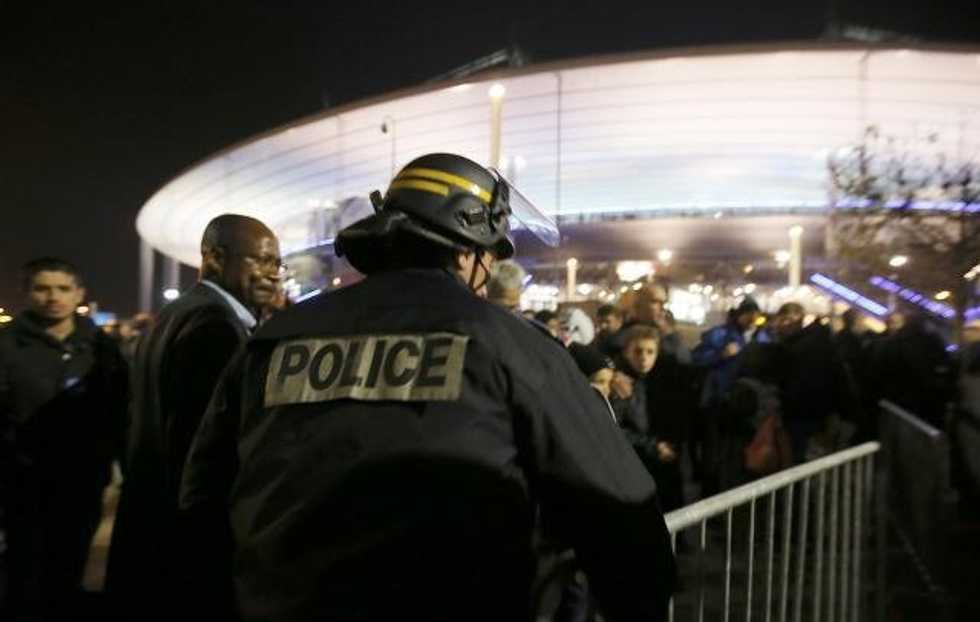
The police had cordoned off some areas around the stadium and scores of them were directing traffic or keeping peace inside the Metro. We jogged past explosive-sniffing dogs down the stairs into the packed station.
The three of us, with our arms linked, shoved onto the train. We knew we needed to get home as quickly as possible.
At this point, we knew a Cambodian restaurant had been attacked by gunman, and that there were people dead in the 10th and 11th districts from a possible terrorist attack. We spent the next 30 minutes on the Metro with no internet and no open lines of communication in utter terror.
We arrived at the stop where my friends needed to get off and I said, “Stay safe, I love you guys.” For the next 20 minutes, I was by myself trying to get home, but I wasn’t alone. I was surrounded by people of every race, religion, and nationality. There was a feeling of solidarity shared amongst strangers on the train. As an ambulance went flying by, we looked at each other as if to say, “What’s happening is awful, but we’re here now and we have each other.”
I made it home safely and stayed up half the night responding to messages from friends back home and monitoring the devastating situation.
It was later reported that the first suicide bomber had been turned away from the Stade de France by security when they discovered his vest. While backing up from the security guard he detonated his bomb killing one person. The Wall Street Journal reported that the bomb was supposed to go off inside the stadium and cause a deadly stampede.
I remember the thorough pat-down I received upon entering the stadium that night from a large female security guard, and I am eternally grateful. If it weren’t for men and women like this who risk their lives to protect others, the attack would have been far worse.
The terror of that night will live on forever in the collective conscience of the French people. As we mourn those who were lost in this senseless act, we can’t help but still feel scared and confused. We begin to lose our faith in humanity, but then we hear stories about a brave security guard who saved thousands, and parts of that faith remain. France will make it through this tragedy and it will be stronger for it.