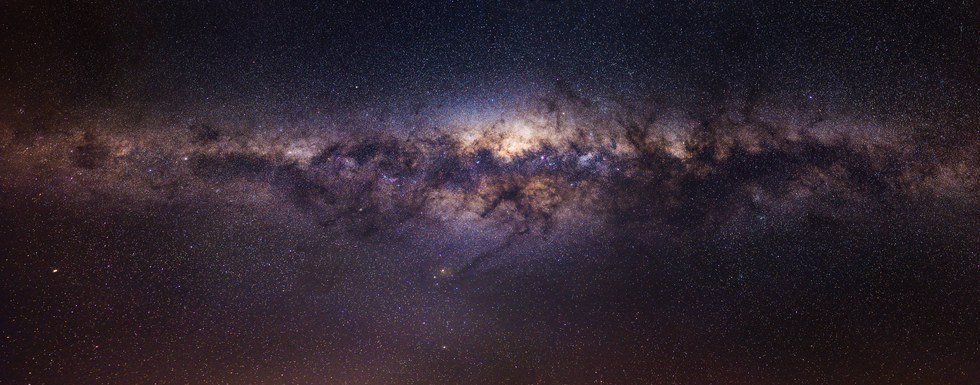
Humans have always looked to the stars for inspiration. Since the beginning of time, space has been a prime source of curiosity for us here on Earth. Ancient empires regarded the cosmos as the place of the gods and gazed into the night sky in search of answers. Religions used the stars to form constellations to tell stories or explain the history of civilizations. Art, poetry, and writing have all incorporated the sky above us into them through the ages and to this day we still have an undying fascination with outer space.
Thanks to scientists and astronomers such as Nicolaus Copernicus, Galileo Galilei, Isaac Newton, and a host of more, the study of the Universe was kept alive throughout history, but specifically the last 60 years or so received increased interest among people. The Space Race was a prime component of the Cold War and resulted in large leaps in the field of space exploration. In 1959, the first satellite was launched into space. Two short years later and the first human was launched into outer space. Eight years after that in 1969, Neil Armstrong and Buzz Aldrin were the first humans to set foot on another cosmic body, the Moon. Around this time science fiction also started to become more popular. Shows such as Star Trek and The Twilight Zone along with movies like Star Wars and 2001: A Space Odyssey hit televisions and theaters and ever since sci-fi has become one of the most popular genres of entertainment all over the world. Now movies such as Interstellar, Gravity, and most recently The Martian have gotten people wondering, when will our next great space endeavor be?
The short answer; within most of our lifetimes. Humans have had their eyes on traveling to Mars ever since we reached the Moon and now it is looking more and more like a possibility. The release of the blockbuster film The Martian along with the extremely well timed release of news from NASA that there is liquid water on Mars has people talking about how soon we can set foot on the Red Planet. Recently a plan by NASA has been released that details the future exploration of Mars. This plan would have humans orbiting Mars around 2033 and suggests we could put humans on the surface of Mars as early as the year 2039. 2039. One hundred years before that and we hadn’t even ventured into space yet. The 2nd age of space exploration is fast approaching and who knows how it will change the Earth. Privatized space companies such as SpaceX have plans of colonizing Mars and people seem eager to volunteer. Other companies such as Virgin Galactic (yes it’s a real company) aim to develop commercial spacecraft that will provide spaceflights for future space tourists. Humans want to be in space. It’s engrained in our DNA and now we are closer than ever to making that a reality. Who knows, maybe in the next one hundred years we will be able to make the Kessel Run in less than twelve parsecs, but for now, fourth planet from the Sun, here we come.