


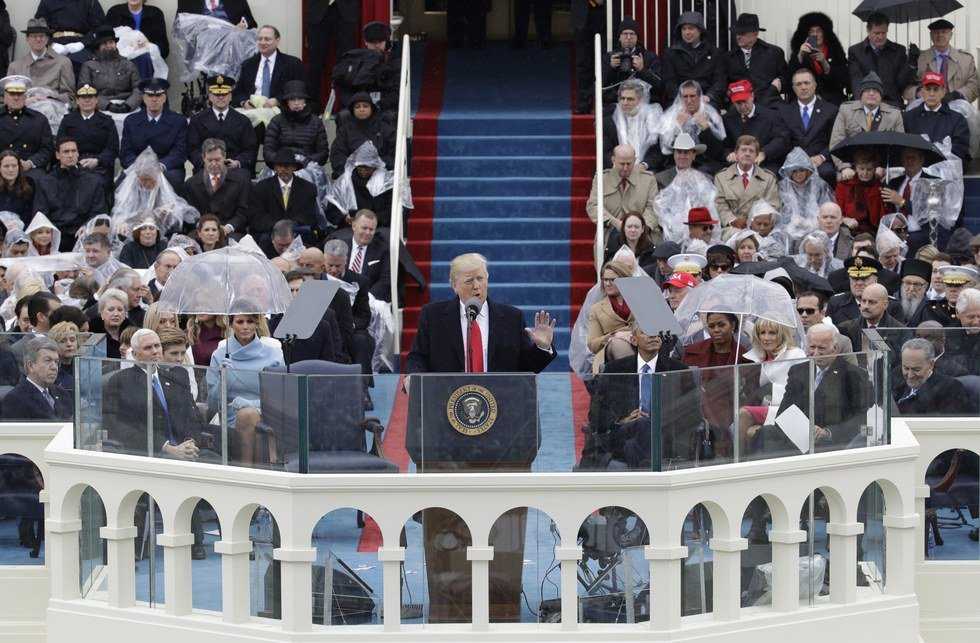
This past November, American citizens faced a decision that eventually defined a generation. The choice, as personal as it was political, came between two candidates immensely different from each other, both in ideology and public image. On the left, an experienced but often condemned Senator who outlasted the political revolution of a charismatic progressivist. On the right, a polarizing and powerful political outsider who pushed the envelope on political correctness. And although there was an abundance of other choices in the middle of the political spectrum, the American people chose the latter.
Now, the same people are faced with another choice, arguably more important than the pivotal one three months prior: to panic, or not to panic. A large portion of people have already made that choice, denouncing the 45th President on terms of either the rhetoric he produced or the policies he plans to implement. Other voters have remained calm, either silently or vocally supporting President Trump and his views. And then there’s the third group of voters, neither cheering for his legacy nor denouncing his name. They may be silent, but they understand the future of the country is no laughing matter, nor should it be undermined by people whom cannot accept its fate. Whether or not these citizens voted for President Trump is irrelevant. What matters is that they support something greater than themselves and the President: this country.
In a time where division is unnecessary, our country is more divided than ever. Women can’t march in peaceful protest without receiving a barrage of backlash from either gender, while intelligent conservatives are instantly labeled as “racist” or “misogynistic” without even getting a chance to explain their stances on prevalent issues. Although November’s choice was bound to create a dichotomy between Democrats and Republicans, no one could have anticipated the divide would be as strong as it is now. The current political system, both outdated and oversimplified, offers no help to this national separation, for it is designed to produce a rift between the red and blue. Voters face the black and white choice of left or right, as if the linear political spectrum is programmed to ignore any space in-between.
That is exactly where this country needs to be: the space in-between. The fate of the United States does not depend on petty behavior, whether it be painted red or blue. It does not depend on violent protests that advance an idea no more further than from its inception. And it certainly does not depend on one man alone. It depends on the willingness of its democracy, the relationship between both parties and the desire for progress. It depends on the American people, as it always has and always will.
Once again, the American people have a choice. They can panic, or they can choose to remain calm. No one is required to support President Trump, nor are they required to like him. But the time to stop worrying is now. The fate of this country depends on it.















