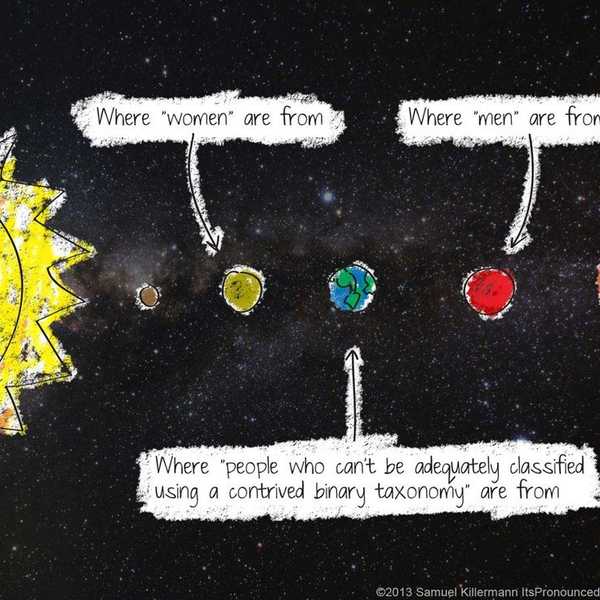
This month, a wide variety of people have scrambled to their keyboards with a barrage of commentary about the anti-transgender discrimination laws currently being written (and in some cases passed) in the United States.
The recent wave of anti-transgender laws either have or will spike the ratio of violent encounters transgender (and cisgender-nonconforming) folk will face. Make no mistake about it: these bills have already provoked an onslaught of transmisogynist rhetoric. Transmisogyny describes the aggressive oppression that trans feminine folk face, both as trans people and as women. These bills probably haven’t generated any new transmisogynist dialogue, so much as revealed what was already there.
There are a variety of things you can do to help. There are also a variety of things you can refrain from doing, because if you do them, you risk an unintentional contribution to the massive amount of already existing cissexist conversation.
Do visit trans equality, and take a few minutes to improve your understanding of people of the trans experience as well as the daily transphobic situations we experience. Do check out this list of 52 things you can do for transgender equality.
Do hit Google and give $5 or $10 of your money to trans artists: writers and poets, musicians, whoever. Help us by giving us and our content a chance, and by allowing especially trans feminine presences to gain respectable and fair visibility in the media world.
Do offer to go with the trans people in your life to the bathroom. Most people reading this will probably be from New York, which fortunately has decent protection legislation. That doesn’t mean we aren’t still at risk, though. I’ve had people make extremely uncomfortable comments in both men’s and women’s restrooms, and even one comment is enough to set a precedent of fear that takes months to get over.
Do use your social media platforms (Twitter and Facebook especially) to raise awareness by sharing articles about current events that affect transgender people. Do use your platform to share and retweet transgender perspectives on transgender issues.
Do treat trans people as individuals. One narrative does not represent all, and it doesn’t even necessarily represent some. Some trans people dig the “born in the wrong body” narrative, some don’t. Some trans people are fine getting grilled with questions about surgery, some justifiably consider it an invasion of privacy. Some trans people won’t visibly display signs of distress at being misgendered, mishandled, or asked the wrong questions, but that doesn’t mean it’s okay for you to do it.
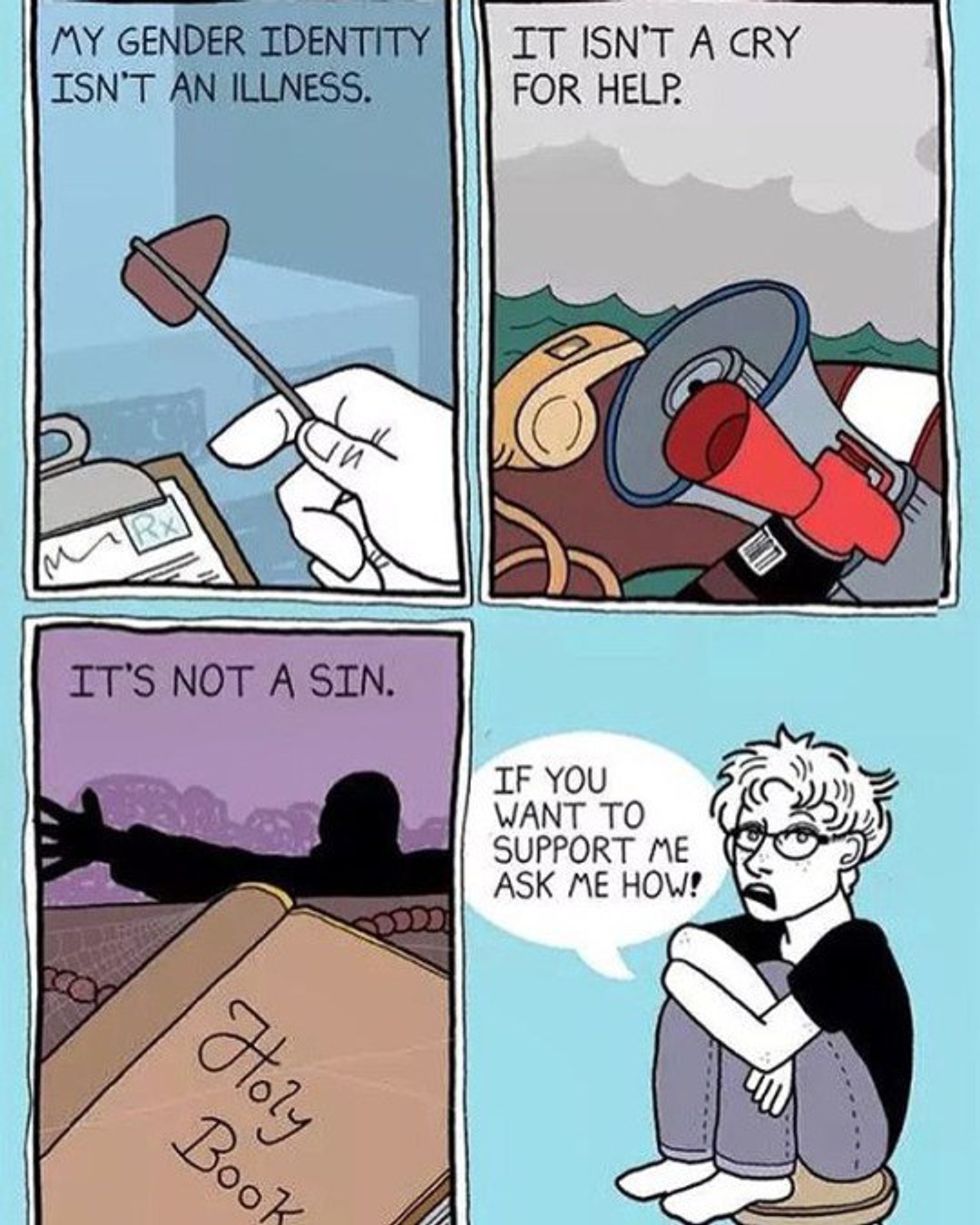
Do not use language like the following: “I don’t care what you are: boy, girl, flower, alien, whatever!” It’s nice and shows us that you’re trying, but that type of language tends to be slightly dehumanizing. We aren’t flowers, ghosts, aliens, etc. We’re just trans, and we’re a who, not a what. You shouldn’t have to compare us to inanimate objects and mythological creatures to understand that where we’re coming from is authentic and deserving of respect.
Do not assume that because you read an article written by a white trans masculine person (me) that you know everything there is to know about trans people. It’s all about minimizing the amount of harm you exact (even if you don’t mean to), and maximizing the good you’re capable of doing for protecting and supporting us.
Do not let yourself off the hook from misgendering your trans friends because “they’re pretty cool about it.” Trans people are often made to feel apologetic for the way they express their gender from womb to tomb, and sure, mistakes happen. But if you consider yourself an ally, you’re not going to keep misgendering people you care about, or trans people as a general statement.
Do not perpetuate the “cis-passing trans guy in a woman’s restroom” narrative when vocalizing your support for trans people in the fight against these horrific bills. This argument has recently generated a lot of heat from trans voices, and rightfully so.
First, it perpetuates the most comfortable idea of a trans person for cis people: a trans person who passes as the “opposite” gender from the one they were assigned at birth. No part of gender or sex is a dichotomy, and there are trans people who don’t pass (and don’t feel the need to).
Second, unbeknownst to many sharers and supporters, it supports transmisogynist rhetoric: the argument only succeeds when its audience feels “scared” around men, which is precisely the transphobic commentary being used against trans women (and especially trans women who don’t pass).
While this conversation hurts trans masculine people by insinuating that they have to pass, it hurts trans feminine people more by subliminally invalidating their gender in totality; and it doesn’t leave much room for non-binary people or trans people who don’t want to pass.
Ultimately, these posts hold trans people to unfair and cissexist standards, and besides utilizing shock value to garner some supporters along the way, they don’t do much in the name of progression for helping cis people understand people of the trans experience.
All in all, tensions between the government, transphobes and transgender people are on the rise, and it’s arguably more important than ever for you to educate yourselves on trans issues.
Depending on a variety of factors like socioeconomic status, race and location, we aren’t safe and we don’t feel welcome in a plethora of public spaces. If you consider yourself a cis ally, this is the time for you to really start listening and paying attention.