
Over the past few years there has been an increasing presence of terrorist and hostile forces in Africa. I believe that this increase should be a call for the United States to gain more influence in the less developed regions in an effort to provide stability and tranquility to this important region of the world.
In the Horn of Africa, the U.S. has and will continue to face a host of obstacles in recent years, including the rise of Union of Islamic Courts, conflict between Ethiopia and Eritrea, strife in Sudan, and more. It may sound like I am calling for the U.S. to make Africa the new Middle East, but I am certainly not. I am speaking about increased diplomatic presence, not sending more of our troops.
As a global power, the U.S. should increase diplomatic relations and support for nations in the region that are making progress to increase the quality of life of residents and promote the creation of legitimate governments.
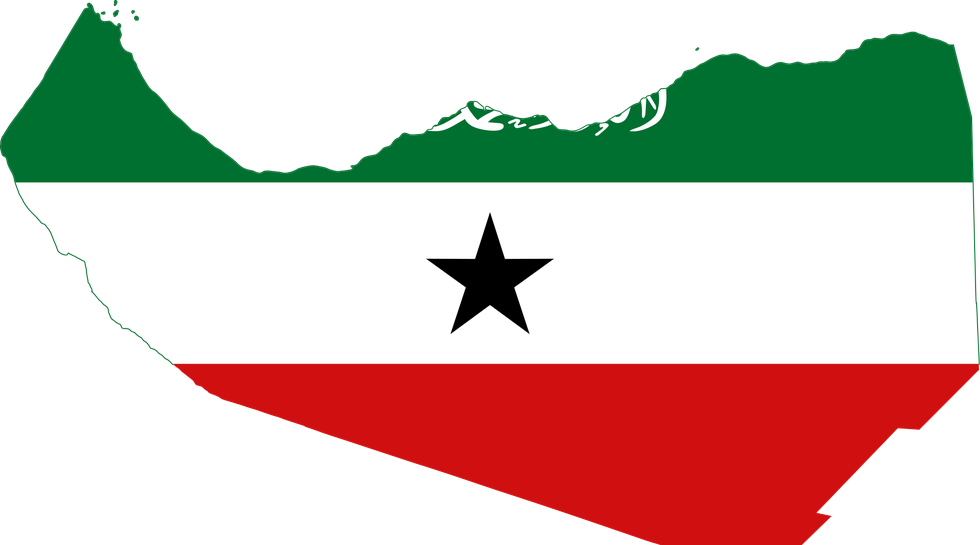
There are several African nations that are actively taking strides towards those goals, and many that the U.S. has partnered with. However, in the large diplomatic field there are some nations that the U.S. has not taken the initiative with, despite the nation’s efforts. One of these is Somaliland, which has self-proclaimed its existence since 1991.
Since its inception, Somaliland has hosted free elections, has fostered an environment friendly to oil companies and economic growth, and created a sound currency system. As the U.S. continues to aid the Horn of Africa’s charge for progress, a leap forward would be recognizing Somaliland not only as a sovereign state, but also as a partner in promoting democracy and economic stability.
In 1960, the territory of Somaliland was united to its southern neighbor (Italian Somaliland) to form the country of Somalia after the end of British colonial rule in that region. When Siad Barre lost his authority of Somalia, Somaliland declared their independence and began to set up their own government. Under the Barre regime the Isaaq tribe in what is now Somaliland was the victim of genocide, which led to the support for establishing a new nation. Their government has been relatively successful in avoiding the conflict and corruption that Somalia has faced the past 20 years.
They have not been formally recognized by a sovereign nation, although Somaliland and Somalia have both agreed to continue the Anakara Declaration talks about cooperation and improving relations, when they move to Djibouti. The international community is stepping up in a show of support for the consideration of Somaliland as a sovereign nation.
In only 10 years and virtually on its own Somaliland set up a democratic government and has enjoyed peace that has escaped their southern neighbor, Somalia. The international community has refused to recognize Somaliland. This is largely due to the hope that a united Somalia/Somaliland would become a powerful unit in the Horn of Africa. However, the inequality between these two entities suggests that a merger would bring down Somaliland. Western nations who have significantly more resources have been unable to balance Somalia, therefore the chances that Somaliland could are slim.
According to the Montevideo Convention on the Rights and Duties of Sates there are four requirements for statehood to be met. The area in question must have “a permanent population; a defined territory; government; and capacity to enter into relations with the other states.” Somaliland has met all of those legal requirements that the US agreed to as a signatory. From a purely technical standpoint, Somaliland has met the legal standard for being a sovereign state. But there are also strategic reasons to grant Somaliland US recognition.
Somaliland occupies a strategic position with over 500 miles of coastline. Because of its position, allowing Somaliland to slip through international hands would essentially be a large step back from efforts to eradicate terrorist activity in Africa. Somaliland is a growing Islamic nation that has successfully chartered a constitution and held free elections. Without the backing of allies though, it is possible for other African nations to halt their increasing influence by forcibly removing their independence, creating a power vacuum that could create a safe haven for terrorist activity in an already unstable region. Contrary to creating a precedence for secession, recognizing Somaliland would create a precedence for US rewarding nations who exercise responsible self-help and democratic principles.
President Hassan Mohamud of Somalia and President Ahmed Silanyo of Somaliland agreeing to send representatives for talks between the two nations is a good sign that international recognition of Somaliland would not result in worsened relations with Somalia. Past talks and current talks being held by Turkey and Djibouti are also indicators that a strategic North Atlantic Treaty Ally of the US and a regional body would not be opposed to, and potentially in support of, US steps towards recognizing Somaliland. Considering that currently undisputed territorial boundaries follow that of pre 1960 colonial lines of British Somaliland and Italian Somaliland, there is no strong necessity for disagreement over borders.
The US is world renowned for getting involved in other countries’ business and have a stigma of acting out of self-interest when supporting certain nations right to exist (remember the Vietnam War?). However, Somaliland’s success creates an opportunity for the US offer its support for a nation truly making progress for its people. If the US chooses to take the initiative and begin seriously investigating Somaliland’s sovereignty, the US could put itself on the right side of history.