I used to despise posting political opinions on Facebook. To be honest, I still am sometimes wary of posting anything that may be “controversial” on social media. I hated the people who had full-on political debates in the comments of a Facebook post, and I hated the people who tweeted their ignorant opinions without doing any research first.
Then younger me, who cared so much about what others thought, and cared so much about preventing any arguments and conflicts, grew up.
Martin Luther King Jr. once said, “Our lives begin to end the day we become silent about things that matter." How is the world supposed to know you exist if you don’t speak up? That’s the beauty of how modern-day social media provides such a direct outlet to share ideas and start conversations. I became more vocal on my perspectives on current events — I write articles and I share informative posts. But at what point is there a line between creating dialogue on important topics and relying solely on social media as a source of voice?
There’s a certain type of activism called “media activism,” which historically has been used to form grassroots movements through spreading information by means of non-mainstream media. A few decades ago, this may have meant underground newspapers to organize protests and campaigns, or sharing censored news stories. With the advancements in technology today, media is a more-than-common method to share news, opinions, and even for political activism.
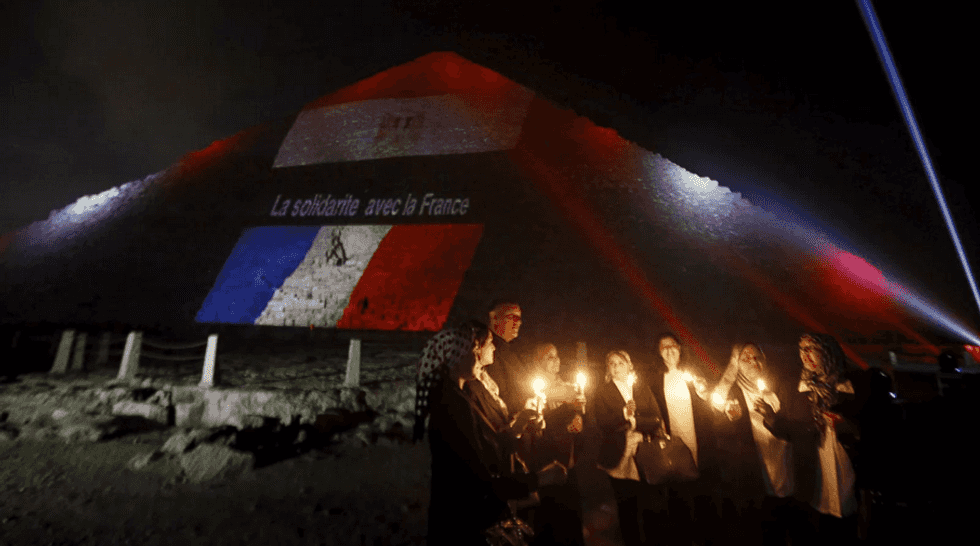
However, what media activism has transformed into today is what is referred to as “social media activism.” I’m talking about people who use social media as a form of media activism, or the people who post their opinions — both informed or uninformed — on sociopolitical issues on Twitter, or the people who change their profile pictures to the blue, red, and white filter on Facebook in support of France.
So what’s wrong with this? Essentially, the whole point of social media is to be connected online with others to share opinions, whatever they may be. It’s truly amazing that we have such platforms to speak our voice. The problem is that, with social media activism increasing, we are exposed to so much online, and we can quickly form an opinion on any topic without much thought. We take to social media when we want to support an idea, but we don’t know how to express our own views. And with all the travesties going on around the world currently, we take to social media when Facebook offers an option for us to show support with just the click of a button.
The question is: Are we are changing our profile pictures just because everyone else is doing it? Do we feel morally obligated to do so? Do we feel bad, or are we worried that someone will judge us if we don’t?
Recently, 129 people died in a terrorist attack in Paris. I think I can speak for all when I say that this news is very saddening and completely awful, as we leave places in our hearts for each of these people. But what about the 43 people who died and the 239 injured in suicide bombings in Beirut, Lebanon, the day before? What about those who died from French airstrikes in Syria and Turkey? What about the 7.0 earthquake that hit Japan? What about the shootings in the U.S.? What about every refugee who lost their homes because of terrorism? What about the hundreds of people who die each week because of their race, gender, or sexuality?
If we are going to change our pictures or post statuses every time we wanted to show sympathy for lost lives, we would be changing our pictures every single day. Don’t get me wrong, what happened in Paris hits home for many of us. But if our idea of “solidarity” ends at social media sympathy, then we really need to reevaluate the way we are employing media activism.
It’s not that we shouldn’t be changing our pictures and posting articles to show support, but rather, we should be employing social media activism in a meaningful way. We should be using social media to raise awareness and educate others. What we shouldn’t be doing is changing our pictures just because everyone else is doing so.
Nour Kabbach, a Syrian refugee quoted in The New York Times said, “Imagine if what happened in Paris would happen there on a daily basis for five years. Now imagine all that happening without global sympathy for innocent lost lives, with no special media updates by the minute." Perhaps it is not Paris we need to be posting statuses for, but the world.
I ask that each of us just stop for a moment and reconsider what we are truly achieving before you type that hashtag or filter your pictures. Reconsider what social media activism is all about and turn that into something that can be meaningful. Social media empowers us to use our voices, and what we need to do is to use it in the right way.
So use your voice, but use it meaningfully.