
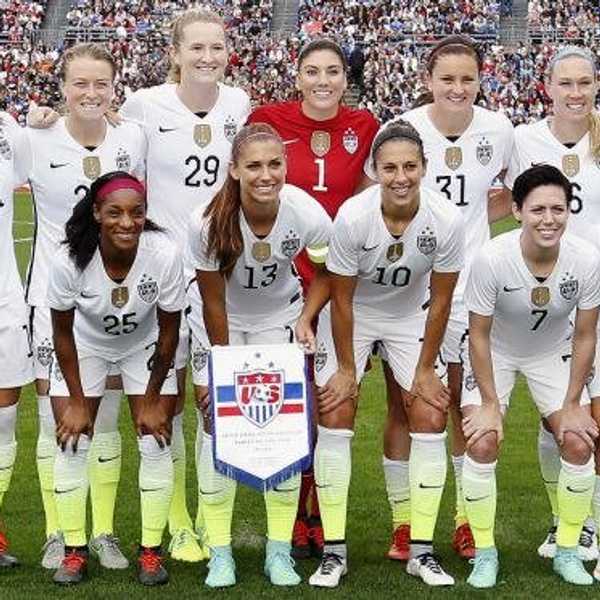
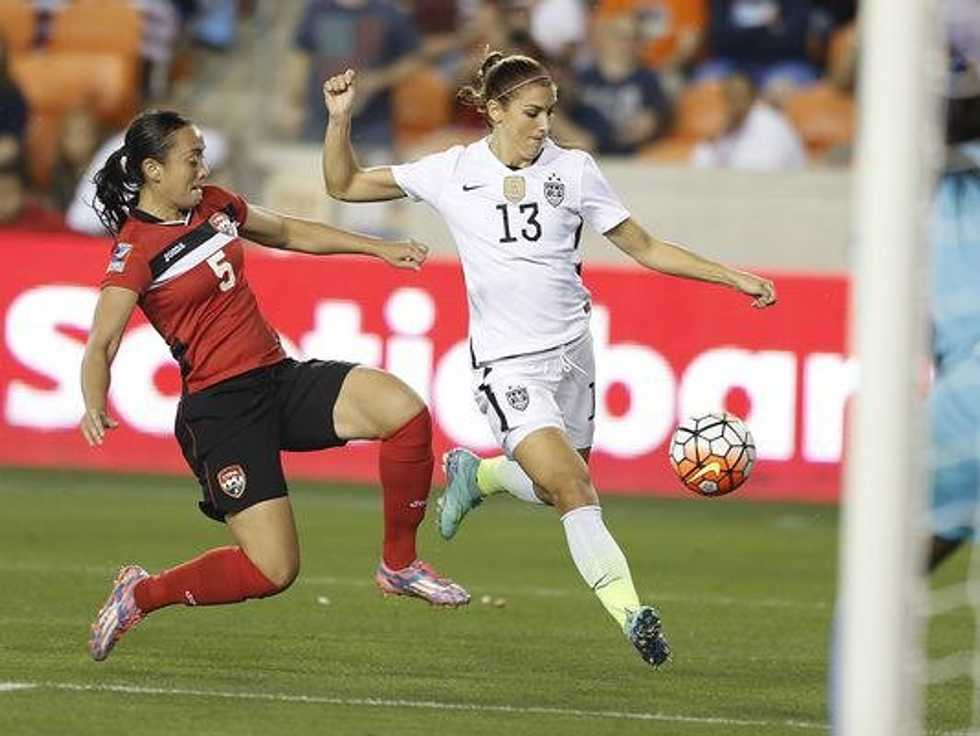
U.S Soccer is the association that delegates pay to the men’s and women’s national soccer teams who play internationally. Within the last month, five players on the women’s team filed a lawsuit to the Equal Employment Opportunity Commission. Hope Solo, Carli Lloyd, Becky Sauerbrunn, Alex Morgan, and Megan Rapinoe filed the lawsuit, citing that the women earned as low as forty percent of what their male counterparts earned in the past year, despite outperforming them in their respective field. In fact, the women’s team has three World Cup championships and four Olympic championships under their belt. They are essentially the best in the world. So what are the arguments for each side?
The main argument against this wage incongruence is that the women’s soccer team has historically earned more net revenue than the men’s team due to the former’s phenomenal performance on the field. The five players in the lawsuit apparently produced paperwork of financial reports that proved that the women’s national team have become U.S. Soccer’s main revenue machine despite U.S. Soccer’s claim.
However, one player who filed the law suit, Hope Solo, explained that the men “get paid more to just show up then we get paid to win major championships.” This statement is not without truth in that, despite the mediocrity of their team, U.S Soccer officials claim that the men’s team produced revenue and attracted a crowd twice that of what the women’s team attracted. Also, television revenue of the former team is a multiple of that of the latter team. This is the potential rationale behind the wage disparity. Yet, last year when the United States women’s team defeated Japan in the Women’s World Cup, 25.4 million viewers watched. This was a record for men’s and women’s soccer in America.
The women’s team countered that, in the past year, they went above and beyond their financial prognosis to produce an excess of sixteen million dollars in revenue. U.S. Soccer negated this argument, stating that this year was exceptional and not representative of the past several years for which the players are arguing for compensation. Evidently, the task of proving equal working conditions among the men’s and women’s national teams will prove difficult as each team is often immersed in very different situations. Regardless of how many viewers they garner or how many games the win, the underlying factor is whether the women’s team works equally as hard as the men’s team.
When asked why they had not filed the lawsuit ten or twenty years prior when they first noticed the wage gap, Lloyd replied, “We have been quite patient over the years with the belief that the federation would do the right thing.” Upon not receiving what they claim would be “just” compensation, the five women who represent the entire team decided to sue.
Though this law suit may appear to only benefit the national women’s team, it has forced other sports federations to reevaluate how they pay their men’s and women’s teams. As it is a civil rights case, many are looking forward to seeing it progress as it is representative of many women who feel that they deserve fairness in terms of wage revenue.