

In a sport recently shamed by evidence of widespread corruption under the aegis of its uppermost governing body, the two ongoing tournaments demonstrate what most fans already know; in soccer, controversy is not the exception but the rule.The Copa America took place amidst controversy for the home nation that is as comical as it is serious; at the same time, the Women’s World Cup took place in Canada, where a perpetrator of assault works to defend the U.S.’s goal and athletes are unfairly forced to play on AstroTurf.
In the first game of the knockout stages, Chile faced rivals from the opposite coast, Uruguay. The first half began in as mild a manner as you could have expected from two notoriously hot-tempered national teams. To the dismay of the favorite and host nation, Chile, it appeared as if an undermanned Uruguay (still lacking Luis Suarez from his world cup ban) were going to fight for a draw and penalties in hopes of going through. Everything seemed to change in an instant in the 64th minute when star striker Edinson Cavani was sent off for Uruguay after pushing the face of Chile defender Gonzalo Jara. At first glance, it appears as if tensions came to a boil and Cavani overreacted; nothing too out of place in a soccer match. However, a closer reveals what looks like a clip from Freddy got Fingered, as Jara is seen sticking his fingers into Cavani’s backside to incite a reaction.
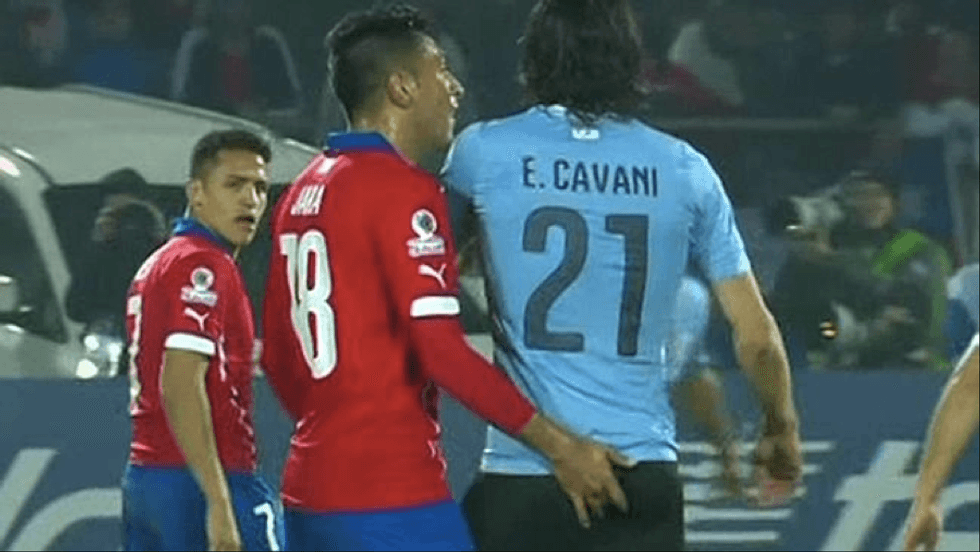
Well, incite a reaction he did, and Uruguay were forced to see out the final 40 minutes of the game a man down. Inevitably, Chile scored and advanced to the semifinal stages. In response CONMEBOL (the governing body of South American soccer) suspended Jara from the final two games of the tournament and gave no further punishment to the Chileans. When you look at this in the grand scheme of things; Jara is a hero. He’s not an indispensable player (in fact he was debatably the worst in Chile’s starting line-up), and yet, short of scoring the winning goal, was the single most important player in earning a spot in the subsequent rounds.
Now maybe I’m looking at this from the wrong perspective, but if the Chilean national team is able to proceed unpunished, then the incentive structure is all off. The team, not just the player, should be responsible for their actions and should face repercussions after the fact. And all of this wouldn’t be nearly as big a deal if one of Chile’s best players hadn't been caught drunk driving literally days before this event. Arturo Vidal, after failing to defeat Mexico in the group stages, decided to get hammered and wreck his Ferrari 458 Italia. During his arrest he was quoted saying “you can put me in handcuffs, but you’ll f*ck Chile.” Great guy. He ended up being wrong, though, because the Chilean national team and CONMEBOL have done absolutely nothing about it and are allowing him to play uninterrupted.
Now you could make an argument about these players being role models to kids, or about how the national team has the responsibility to require at least the legality of their player’s actions, but I think it’s pretty obvious to all third-party observers that he should not have been allowed to carry on playing in the tournament. CONMEBOL, however, would likely lose significant profits if one of the faces of not only the Chilean national team, but the tournament as a whole, was unable to play for the majority of the tournament.
Jump north a couple thousand miles and soccer is continuing to disappoint players and fans. Standing in goal for the United States, violent offender Hope Solo put a cap on her illustrious career with a 2015 World Cup title, despite having been arrested on assault charges last year. Now, I understand the argument that it is not the coach or management’s responsibility to play judge, jury, and executioner when judging the lives of their players off the field, but she for sure did it.
Back in June of last year she was arrested after an altercation in which she, her sister, but mainly her nephew, were injured. She claims that the nephew (even though she showed up at the house unprovoked and drunk and he was the one with significant facial damage) proceeded to attack her. She, the purported victim, also had to be restrained by police officers, shouting at them, “You're such a b*tch. You're scared of me because you know that if the handcuffs were off, I'd kick your a**." On second thought, she’s probably innocent.
But what could top off this heaping dose of horribleness in the world of soccer? Maybe a little sexism! Despite consistent complaints from players, FIFA is forcing the athletes to play on Canada’s AstroTurf fields. While this may sound insignificant, these photos posted by Sydney Leroux beg to differ:
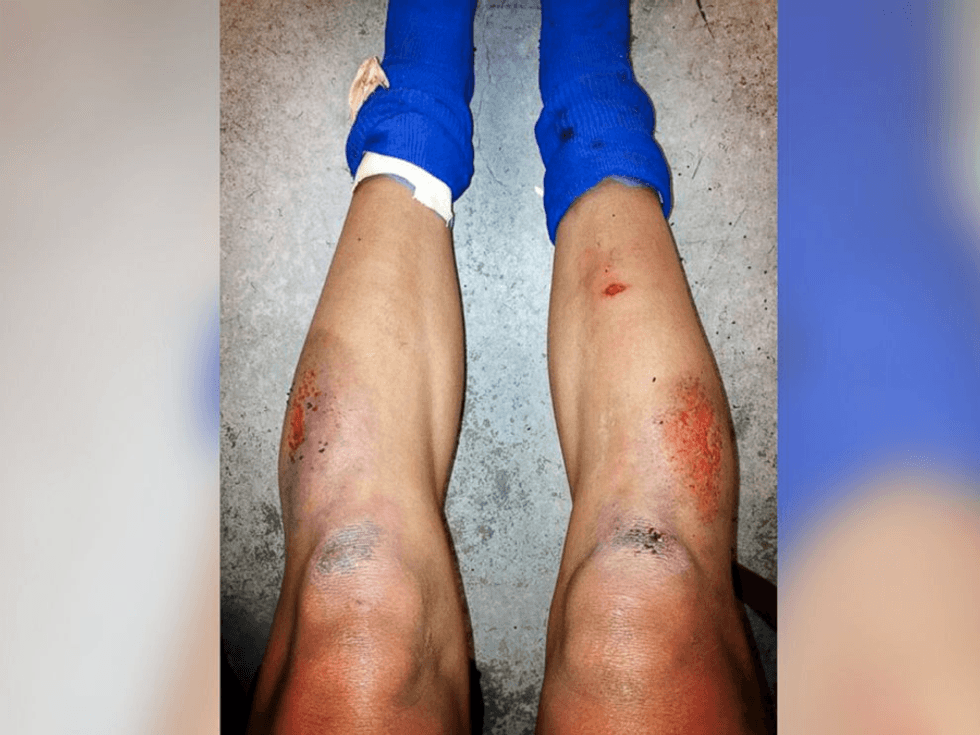
Not only can the turf cause the skin to peel off players legs, but it leads to field temperatures approaching 110 degrees Fahrenheit. Now you’re probably saying, yes, this is bad, but does it really constitute sexism? Yes. Men never have and will never be forced to play under these conditions and if a male player from a high-profile team (like Sydney Leroux from the US) posted a picture like this, fan and administrative uproar would be unprecedented. It seems as if, for men, this narrative of “the beautiful game” and “the sanctity of the game that needs to be protected at all costs” is upheld, but when it comes to women… yeah, sure, they can play too.
As these tournaments come to a close this weekend, I hope the soccer community can reflect on the kind of image it is giving off as a whole. Maybe the world’s most popular sport needs to grab a slice of humble pie and get to work reforming the areas in which it fails to meet fan’s expectations.