
Many visionaries, among them the likes of Spielberg, the Wachowskis, Scott, Gilliam, Kubrick, and Carpenter, have tried their hands at the expansive landscapes involved in a dystopian film. Some directors have come from a satirical angle ("Brazil," Gilliam), or have tripped entirely into the new dark ages ("1984," Radford). Some even try to reconcile a hope for humanity ("Cloud Atlas," the Wachowskis). Almost all of dystopian fiction, however, aims at pinpointing a future separate from our own, yet entirely recognizable in terms of the human experience.
Korean director Bong Joon Ho takes a stab at the genre in the form of "Snowpiercer," a strange, resonating story about the last survivors of an Ice Age-like apocalypse, taking refuge in a specialized train bound forever around the Earth. Bong’s film pushes the limits of humanity, and fully realizes the bizarre reality that is the Snowpiercer train, a marvel of modern engineering. 17 years after the apocalypse alluded to from the film’s eerie beginning voice-over credits, circa 2031, an economically stratified class system has arisen, one that is on the heels of a revolution.
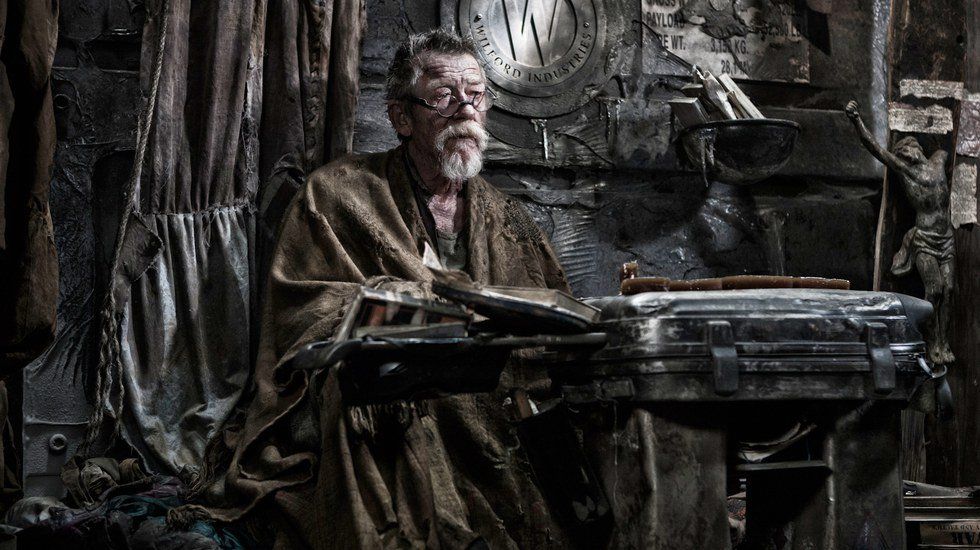
And it comes in the form of the motley lower-class crew. Chris Evans plays Curtis, who makes it apparent from the start that he is the leader of his people; although, he claims, it is an unwilling position. The real leader, a paraplegic well-meaning old man, Gilliam (John Hurt, who else), believes more in Curtis than he does himself. Their people live in squalor; a veritable pit of grubbiness in the most unhygienic form, living in the very last section of the train. They haven’t seen daylight or felt the sun since they got on the train, and are forced to eat black slabs of “protein bars” (spoiler: yeah, right) for survival. Yet they are able to laugh and love as if the Earth were whole again--a deceiving yet necessary quality of desperate people. The world outside is as harsh as it is inside, but, to them, it is free.
Curtis has planned and waited meticulously to force his people’s way to the front of the train, where the engine and its creator, Wilford (a creepy Ed Harris) of Wilford Industries, lie, in an effort to gain control and redistribute the wealth of the upper class. Edgar (Jamie Bell) plays a plucky young man, a willful sidekick to Curtis’s plans; he lacks decisiveness, though, and Curtis often shirks him off, much to Edgar’s annoyance. Curtis has long contemplated the ability of the guard’s guns to shoot. He also knows the train’s door designer, Namgoong Minsoo (Kang-ho Song), is in a sort of cryogenic freeze up ahead, and he has the ability to open all of the doors. He, however, is a drug addict, subject to the high of Kronol, a noxious block of waste, that Curtis uses as payment.
The audience quickly realizes why there is such a desire to escape. In a train representing a microcosm of the Earth, all of its beauty and ugliness is also contained therein. “Population control” is an often brutal daily mandate, and children are plucked from their parents hands by a cannibalistic, polished young woman, with no guarantee of them ever being seen again. This is a reality for two citizens, Tanya and Andrew (Octavia Spencer and Ewen Bremner). Wilford and his equally skewed subsidiaries see all operations of the Snowpiercer as efficient, and think that everyone should know their place. Tilda Swinton has an impressionable role as Mason, a hideous, spineless yet sassy subsidiary in charge of maintaining order. Order can be used loosely, though, as it is achieved through barbaric means.
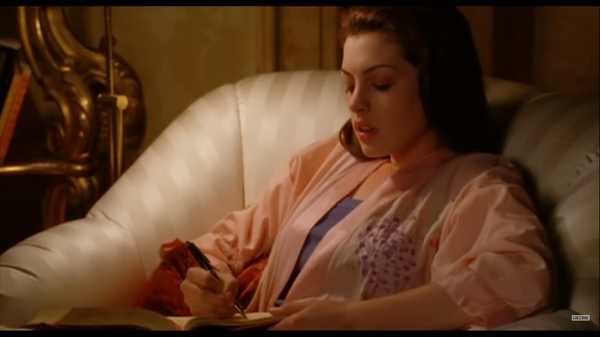
Each scene builds on the last to fully encapsulate the characters and the desperation they succumb to. A particularly synecdochical scene involves the small, cutesy grammar school classroom of the train. Here the rich children, the “train babies" (given they were born on the train and know no other reality), are schooled not only in mathematics but also history, especially the train’s history. A stereotypically chipper, obnoxiously pregnant school teacher (Alison Pill) recites the well-known tale of the Revolt of the Seven. As the train makes it’s way past a snowy mountainside, seven figures are seen frozen in time; the ones that tried to escape. The moral of the lesson is summarized in a haunting little song the children then sing along to: “What happens when the engine stops? We all freeze and die.” The camera swivels around the high-on-life face of the teacher as she plays the piano.
Brainwashing at its finest.
Scenes similar to the classroom are not peculiar in Bong’s allegorous film. His vision is crisp and diverse but raises more questions than it answers in the 126 minute runtime. The production design is superior in almost all aspects, and fully captures a comprehensive world. In terms of plot, many scenes cannot be summarized easily, or without giving away the richness of the plot, revealed layer by layer. (Edgar’s character seems flat, for instance, but his fate carries the heart of the film’s meaning.) The film was based on "Le Transperceneige" by Jacques Lob, Benjamin Legrand, and Jean-Marc Rochette, a French graphic novel. It was written and adapted for the screen by Bong and Kelly Masterson ("Before the Devil Knows You’re Dead").
"Snowpiercer" starts and continues in mystery with an ending as muddied as the events occurring before it. Perhaps his message is muddied on purpose; it communicates that we lack understanding of our desires, as they only exist perfectly in our minds. Perhaps it is a religious or political commentary. Bong, nonetheless, has hatched an ingenious film of terrifying proportions and style. It is a veritable nod, and inspiring addition to, the dystopian genre.