

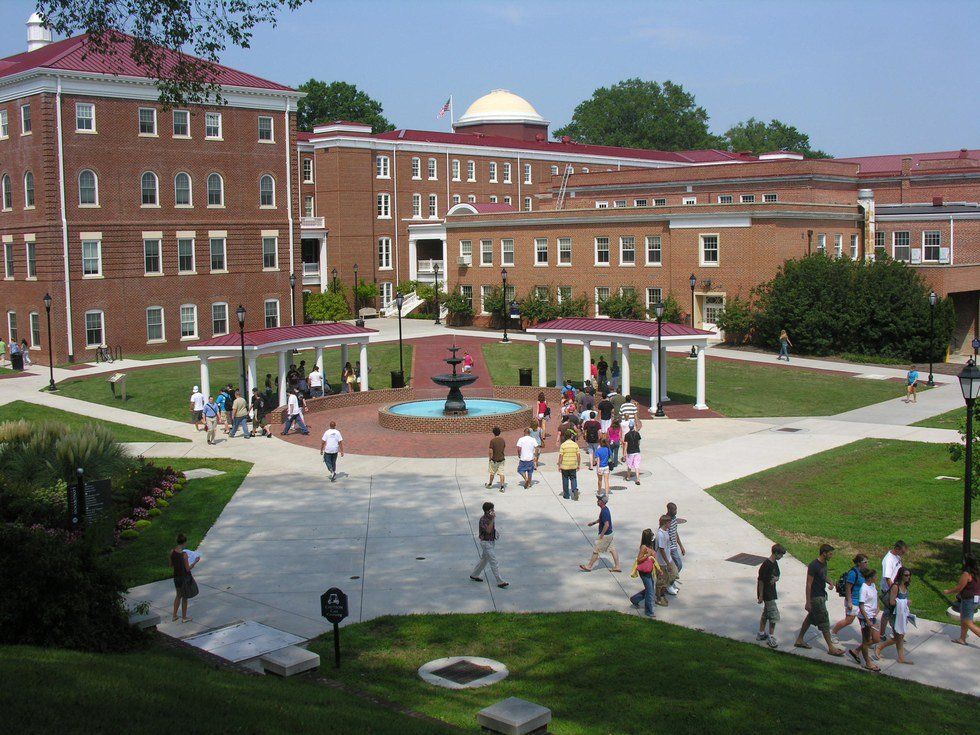
Most people assume that, when going to college, you are not going to know every person in your graduating class the way you did in high school. This is one of the social norms that high school students associate with every college they apply to. But it doesn’t apply to every college and is often stereotypical. It especially does not apply to relatively small colleges, which may only have an undergraduate population of 4,000 or less.
In these schools, not knowing someone from your graduating class is less likely than it is at larger schools. A fact to consider when comparing schools. Usually, if a college applicant sees an undergraduate population of more than eight to 10 thousand students, they feel overwhelmed by the magnitude of that school’s student body. They are more likely to feel isolated and are less likely to participate in school functions.
Smaller colleges are built around the principle that every person within the school community needs to feel welcome in every way possible. The administrations of these schools do everything in their power to make sure that each student, commuter or resident, feels welcome and in tune with the rest of the school. In fact, smaller universities tend to consider their students and faculty to be a close-knit community. There may be a lot of downsides to smaller universities (such as lower division sports, a smaller curriculum and less major selection options), but students in these communities get more individual attention than students in larger universities.
When selecting which universities to apply for, students should consider the student-faculty ratio. This is a widely used statistic that showcases how likely the faculty is able to communicate with their students on a more personal level. This appeals to students who may need help in some subjects. A close student-faculty ratio means smaller classes and that teachers are more willing to communicate one-on-one with students. This is opposed to lecturing to a class of 500+ students.
Two prime examples of the benefits of a student at a smaller university are sporting events and Greek life. At my university, our sporting events are advertised to the whole student body. Most everyone is encouraged to attend our basketball games since that is our biggest sport. With the ability to have a good amount of the student body in attendance, the passion for the school circulates and students feel more involved in their community. Greek life at smaller universities is also comprised of close-knit communities because the amount of students who join is even smaller than the size of the student body. At smaller universities, the members of a fraternity or sorority can consist of just 30-50 students. This makes some students even more interested in Greek life because they know that the fraternity or sorority is a closer community of students who know one another and communicate regularly.