


In the transition period between graduating college and pursuing an occupation, I have had a lot of time to consider the choices I made regarding my education. Did I choose the right major? Did I make the most of my college experience? Did I attend the university that was best for me? After a lot of self-reflection, I am 100% certain that the answer to all these questions is “yes.” Through this time of uncertainty and doubt, I can say for certain that I value my experience at my school and in the program I pursued.
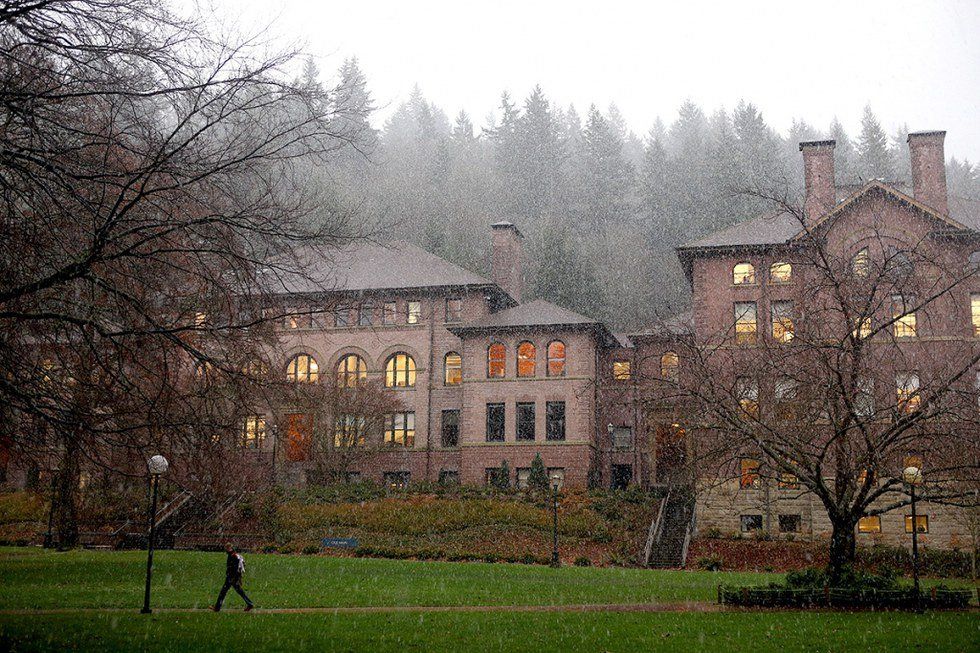
I attended Western Washington University in Bellingham, Washington. While it certainly isn’t the smallest school in the state, WWU’s student population is about half of the student populations at the larger universities in Washington, such as the University of Washington and Washington State University. In its little corner of the country, Western’s campus is not too big, and not too small: “Not so big that you feel like a number; not so small that you have to conform to a mold. Large enough for you to define yourself and small enough that you make a difference.” This is the case for several other smaller universities around the country. While an institution may be small, that does not mean the students there receive a second-class education. There are several benefits of attending a smaller university.
1. The class sizes are small.
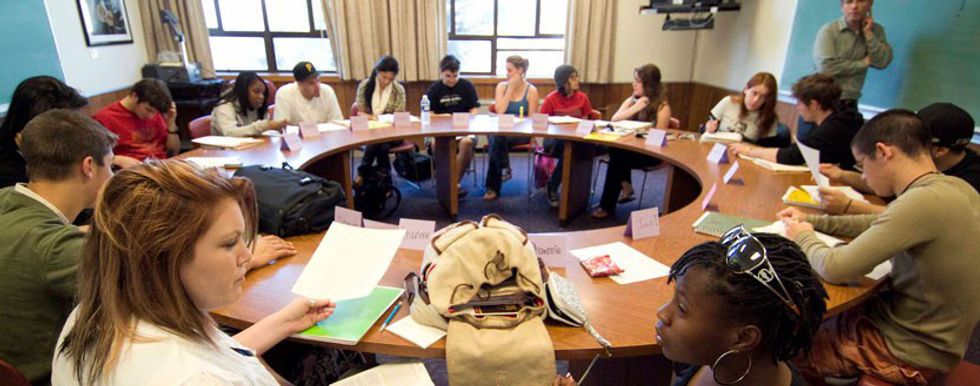
With the exception of 100-level lectures, very few classes will exceed 30 students. In my experience, having a small number of students per class allowed me to be an active participant in the classroom, which was vital for my success as a communications major. My professors knew who I was, but so did my fellow classmates. By the end of each quarter, I could identify each individual by name, which was even more convenient when I’d inevitably see them in future communications classes. As I moved up in course level, especially in 400-level thesis and seminar courses, class sizes could be as small as 10 students. This was great for me, as it allowed for more in-depth feedback on my work from both my professors and peers, denser discussions, stronger friendships, and some awesome letters of recommendation as I prepared to graduate.
2. You build strong relationships with professors and advisers.
At many larger colleges, classes are taught by TA’s and graduate students more than the professors themselves. In all the classes I took at Western, my professors always instructed students directly, while TA's gave only an occasional presentation or graded tests. My professors and advisers always knew my name and remembered who I was, as they did with most other students they worked with. To have these relationships with my professors was a huge part of my success as a student. They worked with me outside of classroom hours to perfect my work, give me advice, or even just to have a friendly conversation. At the end of almost every quarter during my senior year, the more enthusiastic professors would plan a group dinner, hike, or activity to celebrate a successful quarter. To feel like a person of value, as opposed to simply a name with a letter-grade attached to it, was a really valuable part of my college experience.
3. There's more hands-on learning.

With smaller class sizes in seminars, labs, and otherwise, there is more opportunity for hands-on learning and experience. Personally, this worked well for me as I learn better by doing than watching or reading.
4. The campus itself is small.

Smaller numbers make for smaller facilities. I knew where everything was and it was always easy to get there. I hardly ever had to go far to get somewhere. Making it to classes on time was a breeze, and if I had meetings on different sides of campus, I still didn’t have to walk far. Walking from the north side of campus to south only took a few minutes. Not to mention, the walk was always enjoyable as Western’s campus is absolutely stunning.
5. You write more papers.

For some, this may not be a huge factor in picking a college to attend. It wasn’t for me, but it was a factor in picking a major. I love writing. As my professors had less students, they had more time to read the papers they assigned. So, they often assigned more. It was a lot of work, but it was always worth it to know that my papers were being read and critiqued thoroughly by the professor rather than skimmed over by a TA. Which brings me to my next point:
6. There's more careful evaluation of your work.

As my professors and peers had less students per class, they could devote more time to looking over my assignments. While many students shutter at the thought of getting a draft back smothered in red ink, it’s a writer’s glory. Red ink means constructive feedback. As I was able to receive more thorough constructive feedback on my work, I could improve it that much more. I owe so much gratitude to the professors that took the time to evaluate my assignments so carefully, as I was always proud of the final paper, presentation, or research study I’d turn in at the end of each course. Having professors that genuinely care about me and my work helped me learn and get more out of my education.
7. Registering for classes is a lot easier.

Large universities definitely get points for offering a greater variety of classes and schedules. However, with about twice as many students, registering for classes can still be a pain, especially as students progress into course levels where the class sizes drop. While my smaller university didn’t always have multiple time periods for the classes I wanted, there were always other options. Additionally, instructors were often flexible about waitlists. In my final year, there was only one class I needed that I couldn’t get into. I registered for another, and thankfully, my advisor understood my reasoning as to why it should count as the credit I needed. So, it all worked out in the end!
8. There are individually designed majors.

Within WWU lies Fairhaven School of Interdisciplinary Studies. With different requirements, opportunities, and grading, Fairhaven created an even smaller community of students and administrators within Western’s campus. At Fairhaven, students had the opportunity to participate in small, seminar-style courses, receive narrative letters of evaluation instead of letter grades, participate in independent and international studying, and design their own degrees.
Fairhaven is just one example of a small school that will allow you to design your own major. Several other small colleges will provide students with that same opportunity that they may not get at a larger institution with stricter course requirements and guidelines.
9. There's a strong sense of community.

Even without a Greek system, Division 1 sports programs, or huge social events, students at small universities sure know how to network. There are still several opportunities available for campus involvement in interests as diverse as art, politics, outdoor activities, and intramural sports.
Especially at my university, it seemed that everyone was so friendly and positive all the time. I ran into my friends and classmates on campus constantly and still found so many opportunities to meet new people. We may not be big in numbers, but we are big in passion for our university, education, and each other.
10. I mattered.

Even if I left relatively little impact at my university as a whole, I left an impact on all the people I met and the professors who guided me. I always felt like an important participant in my community, as opposed to merely a number. This extended outside my college campus, as well. Going to school in a city, as opposed to just a college town, contributed to my personal connection to my university as both a student and a resident.
Each individual has their own preferences for what they want out of their education and college experience. There are also strong benefits to attending a large university that you wouldn’t get from a small university, especially depending on your personality type and goals. Many of the points above can apply within large universities, as well.
However, I am a strong believer that a school shouldn’t be chosen just for its namesake or popularity. The college experience is an important one and it goes by far too quickly. Each individual should choose an institution that is right for them, that will give them the greatest memories and experiences, as well as education. For me, that was Western: not too big, not too small. Just right.

















