
Deciding to serve one’s country through military service is one of the most selfless, respectable and courageous things a citizen can do.
Signing up for the draft, although currently mandatory for adult male citizens, also requires bravery. Knowing that you could be whisked away from your family, your job and your life on a moment’s notice is, well, scary.
For too long, the discussion of requiring women to sign up for the draft has been a way to shut down conversations about feminism and women’s rights. It’s easy for someone against those causes to say, “If women really wanted equality, they’d be fighting to sign up for the draft.” For years, the situation has been a bit of a catch 22. Yes, full gender equality would imply that women should also have to sign up for the draft. However, in the same way that men celebrate turning 18 by buying lotto tickets and cigarettes instead of showing off their newly-instated draft status, volunteering to go to war isn’t something that most women – people in general, honestly – are jumping to do.
Despite previous conversation, though, it’s all about to change.
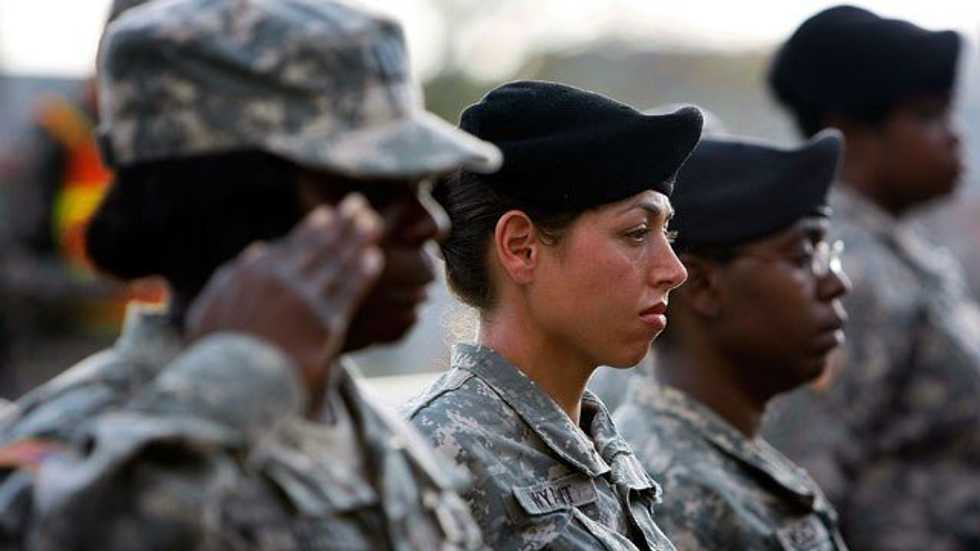
An amendment to the 2017 National Defense Authorization Act would require all women over the age of 18 to register for Selective Service, just as men do currently. With an exponentially increasing female presence in the military over the last few decades, it’s a move that only makes sense in modern times. With female Marines, Army Rangers and combatant commanders, requiring women to register for the draft is the next logical step towards equality. Gender should not be a barrier of entry for any place in the world, service included.
However, the conversation isn’t as simple as whether or not it’s fair. There is a major epidemic regarding women in the military that should be discussed in conjunction with the proposed amendment. That epidemic is sexual assault.
A study conducted by the American Journal of Industrial Medicine claims that one in three women are raped during their service in the military. The same data states that over 70 percent of women are sexually assaulted in some way during their service.
What’s even more disturbing is the infamous response the military has to sexual assault. A quick Google search can uncover hundreds of stories of victims, male and female, who have come forward about sexual harassment, sexual assault or rape to their superiors while serving in the military only to be punished, either corporeally or by dishonorable discharge.
A study done by military research firm RAND Corp. states that in 2014, 62 percent of those who had come forward about sexual assault during their time in the military faced some kind of professional pressure or retaliation within the military after making their report.
When it comes to discussions regarding gender equality, solutions can’t be simplified no matter how tempting it may be. When you’re talking about leveling the playing field, it makes sense to put everyone behind the same starting line, but it’s not ethical to allow half of that population to run on packed dirt while the other half runs on quicksand. If a situation was created where women were required to sign up for the Selective Service and we were to go to war and utilize drafted troops, sending them into danger not only on the battlefield but also among their own peers is blatantly irresponsible.
The responsibility to change this heavily institutionalized issue lies primarily in the policies of the Department of Defense, but that doesn't mean that citizens can't help. Taking sexual assault allegations seriously, not punishing victims for speaking up and educating people on consent and healthy sexual relationships are all things that can be done both in the military and outside of it to increase awareness and potentially lower the number of victims.
Though this proposed amendment has yet to pass in the House of Representatives, it has the potential to become reality. To everyone who’s cheering for this bill as a win for gender equality, I urge you to look at the full picture and ask yourself: if nothing changes, is the outcome going to achieve equality, or is it just going to appear that way?