

American adolescents eagerly await the day they blow out 21 candles on their birthday cake. Although licking the cream cheese or chocolate icing off hot wax is an appealing treat, the true indulgence will come as that first bottle of champagne is popped open, and fizzing foam splashes the extravagant party decor.
Since July 17, 1984, America’s youth has anxiously awaited for their 21st birthdays, when they can gulp down their first legal alcoholic beverage. The United States is one of only four countries in the world that require a person to turn twenty-one before legally consuming alcoholic refreshments. The National Minimum Drinking Age Act, signed by President Ronald Reagan, is perhaps the most influential law on America’s youth.
This raises many questions. How is it that adults, ages eighteen to twenty, have full responsibility to drive, vote, enlist, marry, divorce, purchase and sell homes, cars, insurance, and be convicted in court, yet are unable to purchase alcohol? Has the government entrusted too many responsibilities to these young adults if they are seen as incapable of holding their liquor?
For years, this topic of the legal drinking age in the United States has been debated, again and again. Possibly, there is no right or wrong answer. Quite frankly, it may never be determined at what age a person is or is not adequately mature to make responsible decisions regarding drinking, or any developed responsibility for that matter. Perhaps, in order to determine the age of maturity for the responsibilities adulthood requires, the government should provide and proctor a customized aptitude test for every single American citizen. Of course, in order for this test to accurately depict each citizen’s maturity throughout the years, the survey or exam would need to be conducted nearly annually. As asinine as this may seem, it appears to be the only logical attempt at documenting whether or not a person is responsible to consume alcohol, ride a bicycle, or even wipe their behind.
This being said, for 31 years, the drinking age has remained at 21 years old, despite any protest or debates regarding the matter. At some point in time, every amendment has been refuted and argued, or defended and praised by senseless democrats, close-minded republicans, and coffee-shop hippies. Passion for any cause will always be respected, but these outspoken American citizens have about as much say on the drinking age as Miley Cyrus does on this week’s winning lottery ticket.
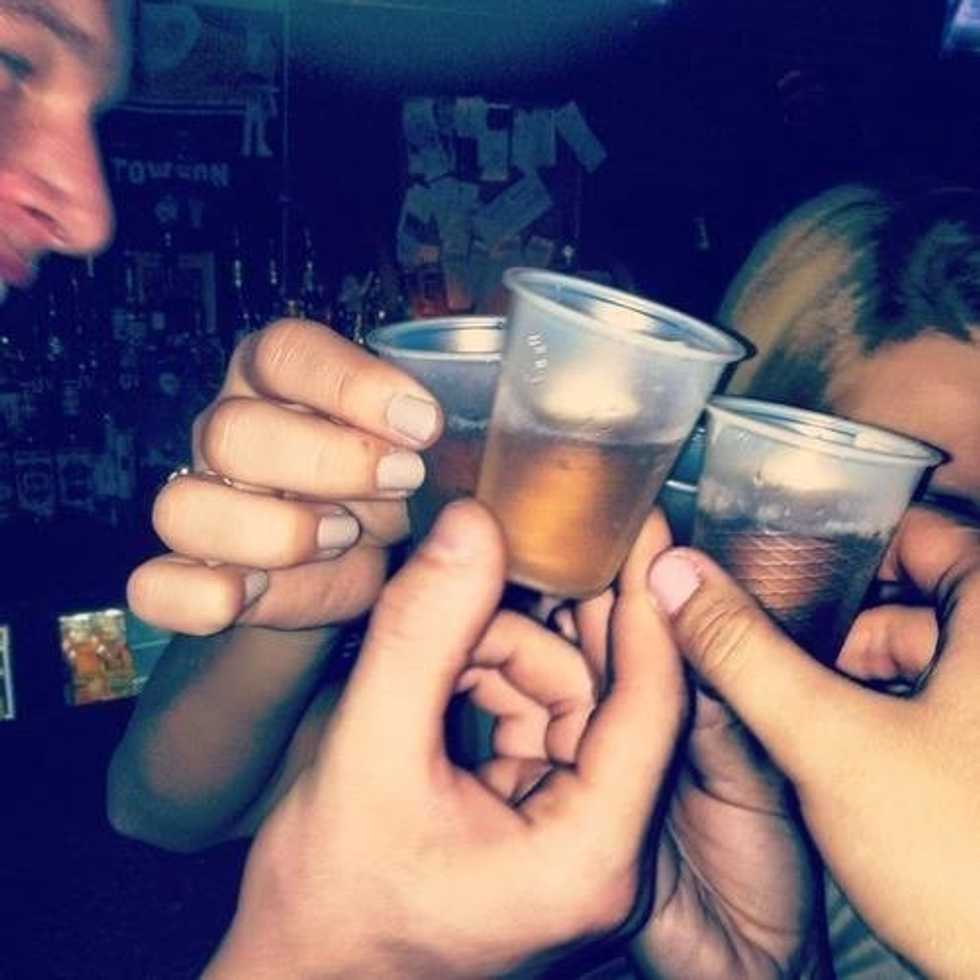
As a college student in a small Texas town, the sleepless nights of bar-hopping, shot-taking, binge-drinking and boy-searching that fulfill the time between English papers and Biochemistry tests are known as girls’ nights out. Meeting new faces at new bars every other weekend becomes a merrymaking ritual, until those faces appear on the ten o’clock news. The inconsolable truth remains that nearly three thousand 16 to 20-year-old's die every year in alcohol-related accidents or fatalities. Although studies have shown a decrease in drinking and driving variables since 1980, just four years before the law was passed, the numbers are still much too high.
America is considered to be the most successful, driven, ambitious and goal-oriented society in the world. To say that the homeless panhandlers and illegal immigrants degenerate this reputation, is to regard that someone’s incarcerated uncle lessens their personal self-worth every Thanksgiving and Christmas. The United States, though complete with its fair share of crazy relatives, continues to uphold the prestigious reputation of world leader.
According to the United States census in 2012, 18 to 20-year-old's compose nearly 10 percent of the population; 10 percent of the U.S. population encompasses more than 31 million human beings. If 31 million more adults were liable to buy and consume alcohol, more accidents might occur involving motor vehicles or unused condoms. Although the census did not present Trojan’s estimated sells in 2012, there was an increase in population from the year before. Alcohol, according to country singer Brad Paisley, “Can make anybody pretty, can make you believe any lie, make you pick a fight, cause a few break ups, a few births, make you new friends, or get you fired from work.” Although all of these make for great stories, pictures, and coffee-table books, the comprehensive effects over-indulgence has on society prove mostly negative.
The legal age of consumption in the United States should remain at age 21 so that accidents and deaths may be prevented, and ambitions and dreams kept alive.
Just as small minds will never understand big spirits, some will never understand why Reagan raised the drinking age, or why low socio-economic schools enforce expensive school uniforms. Why is the sky blue? What is the purpose of the pinky toe? Some, most in fact, of life’s unanswered questions seem so scholastic, yet are completely straightforward. In a nutshell, schools like uniformity, blue is a nice color, and pinky toes help with balance. With the utmost respect, President Reagan probably thought to himself, “If I raise the drinking age, there won’t be so many damn car wrecks or unwanted pregnancies, which means less traffic for me…Where’s a pen?”
Sometimes life will toss out incomprehensible ideas to fathom, and sometimes, the facts are just undeniable truths. Just as mothers tell their children, “Because I said so,” the government has a bossy bone too. Peace will be found when humanity finally grasps that not everyone is out to get them. Although it may be taboo to say, the American government truly does have the well being of its free people in mind. If the drinking age was once again lowered to 18, would this mean the legal age to obtain a driver’s license would be 13, and therefore, a learner’s permit age 12? This would present the possibility of hormonal pre-teens starting their menstrual cycles and getting their first erections behind the wheel. While this may create a better economy for automobile companies who create fluid-resistant seat covers, there would be a significant rise in annual car accidents.
Based on the stories of older friends and family, the majority of life’s most elaborate experiences happen before middle age. If the legal age of consumption was lowered to 18, a significant sum of those events would occur much sooner, leaving the last three quarters of life with little expectation. Because of this, tears might diminish the 21 flames on birthday cakes; and 40-year-old birthdays might seem less like celebrations, and more like commemorations. All in all, the law is the law, yet homosexuals do not deactivate their homosexuality because their state has yet to legalize gay marriage, nor do scared teenage girls cease to terminate their pregnancies, despite their states upholding a pro-life stance. Though blatantly cliché, if there is a will, there is a way; fake I.D.’s will always be attainable, someone will always know the bass player in the band, and a cute sorority sister will always find a way to sneak bar wristbands. Underage drinking will continue to exist, despite the law or a parent’s instillment, but maybe it’s possible that a conviction may so potently agitate a naïve teen next Friday that they soberly take the wheel for the liability of their friends.