
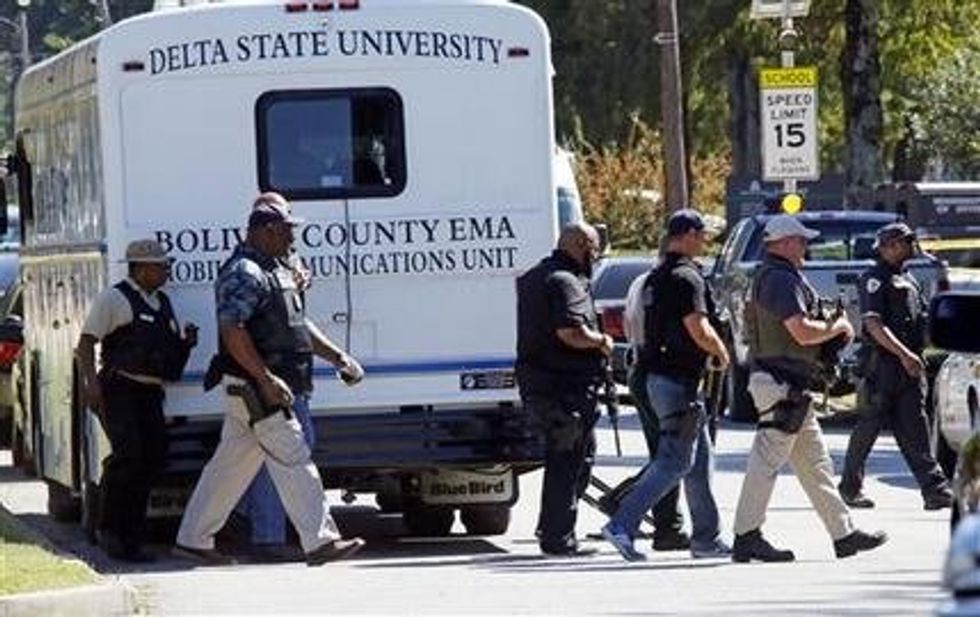
When I was in high school, we had a handful of lockdown drills. All of the students would scramble across the room to the wall where a shooter couldn’t look or see anyone through the doors. The lights were shut off. The windows were closed and blinded, and everyone was bidden to be quiet. Drills like these, just like fire and tornado drills, are meant to protect students and prepare them for the eventuality of danger while in school.
That was just a drill, though.
At Delta State University in Cleveland, Mississippi, about 3,500 students were placed on lockdown when an active shooter murdered one of their professors on campus on Sept. 14. The suspect, strongly believed to be Shannon Lamb, an instructor of geography and education classes, died of a self-inflicted shotgun wound when pursued by police later in the day.
Lamb had killed Amy Prentiss, a woman with whom he shared a house, and Ethan Schmidt, a history professor at Delta State.
Students nearby in classrooms when Schmidt was killed in his office reported hearing a series of pops, and went quiet, according to student Charlie King, who gave an interview to AP News.
King went on to say that fellow students thought it might be firecrackers or doors shutting, but that the noise did sound like gunfire. Then an armed police officer swept into the room and told them to get against the wall away from the door.
Campus shootings happen somewhat frequently, although students never believe it will happen on their campus. Crime is always there, with theft and rape occurring weekly, if not daily. According to the Huffington Post, there were 27 shootings on or near college campuses in 2013.
Some wonder if schools shouldn’t be better prepared for such events. At some universities, academic buildings are built to be “riot-proof” and include thick, reinforced windows at levels hard to break into, doors that with the flick of a switch will automatically lock, and other measures of safety.
At Northern Michigan University, a new measure was placed for the 2015-2016 academic school year to protect students in resident halls. Now the resident halls are locked 24/7 and only students with ID cards programmed to their dorm can enter or let others inside at all times, instead of just during curfew or quiet hours.
Is it enough, though? Are campus text alerts for emergency programs, campus wide emails, and the word of mouth enough to protect students and professors from tragedies?
Truthfully, no. No one can prevent every eventuality. However, simple measures such as those listed above can help, and if an active shooter were to come onto campus, it would hopefully minimize casualties.
Hearts go out to the students and faculty in the Delta State University community in the loss and tragedy of their professor. Stories like these are just one more in the discussion of campus safety across America.Source Credits:
Associated Press: http://hosted.ap.org/dynamic/stories/U/US_MISSISSI...
Huffington Post: http://www.huffingtonpost.com/2014/01/13/shootings...