


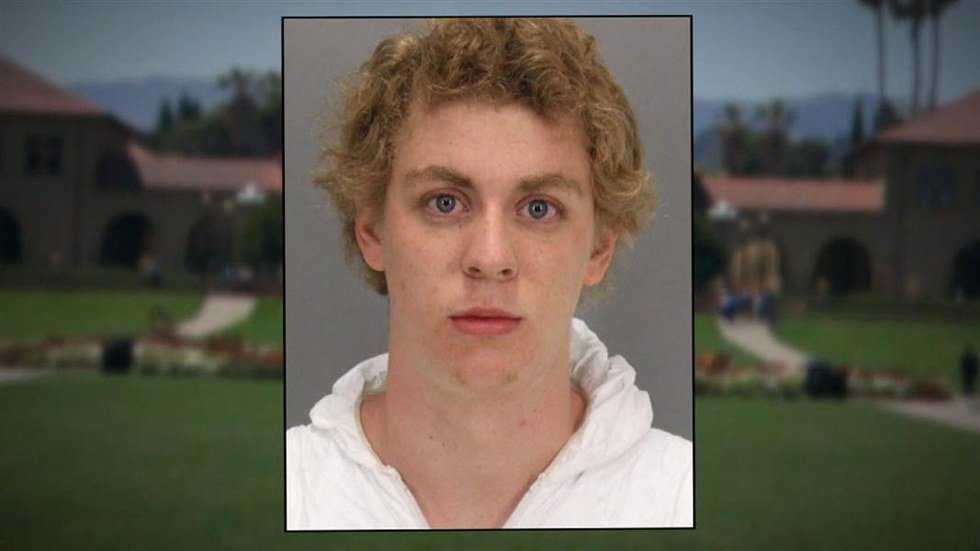
I admire the Stanford sexual assault victim for choosing to speak out against Brock Turner, even though more concern was shown for Brock Turner than the victim. She did something that I could never do, and she inspires me to try to pick up the pieces to find healing. I know how the justice system treats victims, and I chose to never press charges against my attacker. Seeing what happened to the victim confirmed my worst fears, but the way that she approached the situation and her statement gives me hope. It gives all survivors hope. In fact, when she ends her statement by saying that she stands with all girls and women who have been in the same position she has been in, that gives me hope. Even when the justice system seems to fail sexual assault victims, we can stand with each other and heal that way. The Stanford sexual assault victim is an inspiration to all survivors, and people like me take comfort that people like her are speaking out against what happened. The greatest justice she has done for herself and for others is that she has chosen to speak out and confront the defense, no matter how hard they try to dismantle her argument.
I encourage everyone to read her statement here. Besides standing in solidarity with all rape survivors, the most moving part personally for me was when the victim said:
If a first time offender from an underprivileged background was accused of three felonies and displayed no accountability for his actions other than drinking, what would his sentence be? The fact that Brock was an athlete at a private university should not be seen as an entitlement to leniency, but as an opportunity to send a message that sexual assault is against the law regardless of social class.
The justice system privileges those who come from privileged backgrounds and this should not be the case. The defense continually tried to find flaws in the victim’s case and made claims that her sister seemed to be OK in an attempt to desensitize the situation. More aggravating than all of this is the fact that Brock Turner refuses to admit that he raped this woman. He only admits to his intoxication and uses that to attempt to justify the rape, claiming that he was confused and did not know what he was doing. To make matters worse, Brock Turner’s father expressed his outrage for his son’s short sentence:
His life will never be the one that he dreamed about and worked so hard to achieve. That is a steep price to pay for 20 minutes of action out of his 20 plus years of life. The fact that he now has to register as a sexual offender for the rest of his life forever alters where he can live, visit, work and how he will be able to interact with people and organizations. What I know as his father is that incarceration is not the appropriate punishment for Brock. He has no prior criminal history and has never been violent to anyone including his actions on the night of Jan 17th 2015.
Read the father's statement here. It shows why very few victims feel comfortable coming forward, and it shows how prevalent rape culture is in our society. The father is attempting to display the son as the victim, but he was in fact the attacker. The actions that Brock chose to do, whether he was intoxicated or not, changed that woman’s life forever. However, a woman who drinks is asked why she drunk so much or why she chose to wear certain clothing. The woman is always seen as at fault most of the time and the defense used questions like these to prod the sexual assault victim in order to attempt to find holes in her story.
That’s why I didn’t come forward. It’s been nearly three years since the incident occurred, but I know how the justice system works. It doesn’t work for people like me. The proof is in the lenient sentence that Brock got. He should have gotten at least two years, but he got a mere six months with probation. Even though the sentence was not ideal, the Stanford sexual assault victim gives us all hope and inspires us to try and pick up the pieces and try to find a way to continue living life. It might be hard moving on, but day by day it becomes easier. The Stanford sexual assault victim found the strength to tell her family. Through this, I am finding the strength to write this article, to tell people what happened to me, and I am beginning to feel secure in the support system I am beginning to develop. Her revictimization in court was not in vain. She helped me find the means to begin the healing process, three years after the fact.

















